
 •
Rating:
•
Rating:
THE REVIEW
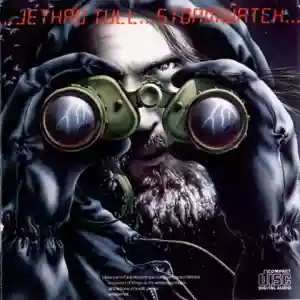
So, after releasing the good but not very inspired 'Heavy Horses', the band launched a new album on the market, this "Stormwatch" (we're in 1979).
Generally, this album is classified as the end of the so-called "folk triad" (to be precise, as all Tull fans will know, 'Songs From The Wood', 'Heavy Horses' and this 'Stormwatch'). Indeed, a certain folk component is present in the album (just think of "North Sea Oil" or "Dun Ringill", excellent songs in typical Tull style), but there are still some old progressive ghosts, like the marvelous and long "Dark Ages", with its dark atmospheres (with a title like this, of course, it's the least one might expect), epic and with a driving rhythm, or a beautiful pure hard rock song, "Something's On The Move", with its powerful riff and definitely connected to more classic hard rock, as well as tracks like "Old Ghosts" and "Orion", which betray a certain beginning of style change (especially the former), while remaining linked to the folk à la Jethro Tull. We also find two pleasant instrumentals, "Warm Sporran" and the closing "Elegy", the first styled like a bluesy march, while the second, in my opinion, the absolute masterpiece of the album along with the aforementioned "Dark Ages", is set against a more bucolic background (today I'm into grandiose terms), resulting in something very evocative, thanks to the interweaving of flute and acoustic guitar, to which the electric guitar is then added, somewhat reminiscent of the excellent instrumental "After The Ordeal" by Genesis in 'Selling England By The Pound'.
"Flying Dutchmann" is a song suspended, instead, between hard rock, progressive and folk, cute but unnecessarily prolonged. In 'Stormwatch', we then find the first Tull song I feel I can call bad: yes, I'm referring to "Home", cloying and useless, which could have been saved only if it ended after the first chorus, but it relentlessly goes on for three minutes (seems short, but if a song is bad, it feels like an eternity), although, fortunately, it's not so bad as to be unlistenable (if I had to make another comparison with Genesis, I would suggest that musical syrup which is "Your Own Special Way" from Wind & Wuthering); however, "Home" takes away almost nothing from the album, which proves to be by far the best, in my opinion, of the entire folk triad, also thanks to a rediscovered fluidity of Anderson's writing, which seemed to have been at least diminished with the previous 'Heavy Horses', which I think is beautiful but too repetitive.
'Stormwatch', therefore, decently closes the decade of the '70s, before the beginning of electronics with A... But that's another de-review.
Loading comments slowly
Summary by Bot
Stormwatch, released in 1979, concludes Jethro Tull's folk triad with a strong mix of folk and progressive rock. While some tracks revisit classic hard rock, others reflect a stylistic shift. Despite one weak song, the album is praised for its fluid writing and evocative instrumentals. It marks a key moment before the band's transition to electronic influences.Tracklist Lyrics Videos
Jethro Tull
Jethro Tull are an English rock band formed in 1967 and long led by Ian Anderson. They are known for blending progressive and folk rock around Anderson's prominent flute and for landmark early-1970s albums such as Aqualung and Thick as a Brick.84 Reviews
Other reviews
By v8interceptor
This album seems to me to recover the general sound explored in BURSTING OUT.
Weary album but still an album by JETHRO TULL so worth having to understand the development of sound and creativity.
