
 •
Rating:
•
Rating:
THE REVIEW
In 1977, Jethro Tull released their 10th studio album, the remarkable "Songs From the Wood".
The progressive sound was decidedly set aside, and the predominant genre of this album is folk rock, with rural and pastoral atmospheres. However, there are also moments that lean towards rock, with the excellent Martin in great form. The result is truly exceptional, as well as very original and unusual, especially when compared to the trends of that period. It’s a sort of happy oasis for lovers of this style. This album will mark a "reconciliation" among the band's fans, as some albums preceding this one had not greatly excited some of the fans. Even the critics returned to more favorable judgments. Together with the subsequent "Heavy Horses" and "Stormwatch," it will form the noted and appreciated folk trilogy.
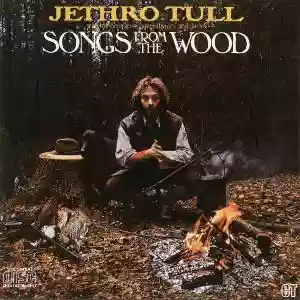
The album cover already brings us into its atmosphere. It actually depicts Ian Anderson in the middle of a forest, in the guise of a hunter. The creation of this work involved an undoubtedly thorough and careful musical research. Many tracks breathe a Celtic atmosphere, tied to ancient British traditions, and in its creation, they employed elegant and unfortunately somewhat obsolete instruments, like the mandolin and even the lute! An additional confirmation of the group’s technical qualities. Besides Anderson, Barre, Barlow, Evan, and Glascock, the band's historic arranger, David Palmer, officially appears also as a keyboardist.
With the start of the title track, we are catapulted into a nearly fairy-tale atmosphere, with Anderson's sweet singing and Glascock's interventions, followed by a crescendo initially acoustic, then evolving into a robust rock, with great interaction between electric guitar, flute, and keyboards. This song will become a fan favorite. The following "Jack In The Green", often performed live, is a brief and sunny semi-acoustic song. In this piece, ALL instruments are played by Anderson. With "Cup Of Wonder", we are faced with a fast and compelling electro-acoustic folk rock, with a very pleasant musical interlude. The fourth track, "Hunting Girl" is another of the album's cornerstones. It leaves folk aside for a moment and settles on decidedly hard rock territory. Following the organ startup, it is an exhilarating rock ride performed in a truly masterful way. Besides Barre’s gritty riffs, Glascock's powerful bass rhythm is truly remarkable. "Hunting Girl" will be a highlight in live performances.
The following "Ring Out, Solstice Bells" is perhaps the least successful song of the work. It's a pleasant song with Christmas atmospheres, highlighting Barlow's qualities on the drums, but it can become tiring after a while. Another masterpiece, however, is "Velvet Green". I was astonished upon my first listening! The start has a medieval imprint, with a beautiful lute sound (played by Barre) and then continues in acoustic folk with true instrumental virtuosity and a gorgeous vocal performance. The ending reprises the initial theme. How many could write a song like that? Closing your eyes with a vivid imagination, one could see both medieval courts and Celtic druids!!! Truly beautiful! "The Whistler" is another excellent semi-acoustic track with that touch of originality that never hurts. The protagonist of the musical breaks is indeed a whistle, I believe a pipe, with a truly unique sound. After that, we arrive at another masterpiece. The eighth song, "Pibroch (Cap In The Hand)," is something phenomenal, starting with the title. "Pibroch" literally means "bagpipe variations usually on martial themes" (!!!). Very long, it begins with a very acidic and distorted guitar, to which drums, flute, and voice are added, forming the main theme, with a definitely somber atmosphere. Remarkable are the two musical digressions, with superb interweaving of flute, mandolin, and lute, overlapped by percussion, keyboards and probably bagpipes, given the title, which confer a truly solemn air to the piece. Astonishing! The concluding "Fire At Midnight" is a short piece fully respecting the general stylistic groove. Very pleasant here too is the instrumental interlude, with an original electric guitar-mandolin duet.
Ultimately, this work is another of the standout pieces in Jethro Tull's discography, which perhaps doesn’t reach the levels of some previous masterpieces (the final score would be 4.85), but it is truly impeccable and fundamental in the history of this glorious band. A record that truly cannot be missing from the collections of all lovers of great music.
Loading comments slowly
Summary by Bot
Songs From the Wood marks a distinctive pivot by Jethro Tull into folk rock, featuring pastoral and Celtic influences. The album blends acoustic and electric sounds, showcasing strong musicianship from Ian Anderson and Martin Barre. Key tracks like the title song and Pibroch highlight the band's originality and technical skills. Widely regarded as part of a beloved folk trilogy, this album reconciled fans and critics alike. It remains essential for lovers of folk-infused rock music.Tracklist Lyrics Videos
Jethro Tull
Jethro Tull are an English rock band formed in 1967 and long led by Ian Anderson. They are known for blending progressive and folk rock around Anderson's prominent flute and for landmark early-1970s albums such as Aqualung and Thick as a Brick.84 Reviews
Other reviews
By Pibroch
Goosebumps for 8 minutes.
"Songs From The Wood" is a solid album, well executed... with no weak spots.
By simak14
Ian Anderson’s group leaves everyone speechless with this extraordinary contribution to popular music.
The perfect mix of instruments and studio production makes them even more powerful.
By v8interceptor
I believe there’s a third lineup-identity with a completely standalone trajectory that debuts precisely with SONGS FROM THE WOOD.
The production generally takes care to give a polished sound, and hence the true DNA of Jethro Tull is not felt.
