
 •
Rating:
•
Rating:
THE REVIEW
The Isle of Wight Festival held at the end of August 1970 was the English response to Woodstock, featuring some veterans of the American gathering such as Hendrix, The Who, Ten Years After, Joan Baez, along with exciting "newcomers" like Joni Mitchell, Leonard Cohen, the Doors, and even the king of jazz rock, Miles Davis, fresh from the success of his electric album "Bitches Brew".
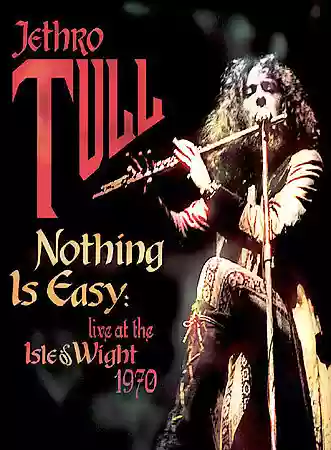
When Joni took the stage on Saturday afternoon, the sight of the crowd made her shiver, as if witnessing the assembly of extras in epic films like Ben Hur. The deafening whistles from the thousands of yellow, blue, and red dots even crowding the surrounding hills made her nervous, and for defense, she had only a guitar and her provocative voice. That same evening, the Doors performed, and unfortunately, Jim Morrison was by then a bloated and tired homeless man, a creature gloomily locked within himself. Another musician, already at the end of his life, was to perform on the final of the three days, it was Sunday, and late in the evening, there was a contest between Hendrix's roadies and those of Jethro Tull to set up the equipment first. And the Jethro won the battle but not the war. In fact, in the introduction to this album, Ian Anderson states that Wight wasn't the best concert of their lives, and I sincerely remain perplexed because both in terms of sound quality and performance, we are at absolute levels.
At that moment, Jethro Tull was at the peak of their popularity in England, and their second album "Stand Up" had topped the charts successfully combining folk with rock blues, but the brewing explosion of progressive music was spreading its sweet aromas, ousting guitars from the leadership of various bands and handing the scepter over to keyboards. But in the case of Jethro, the supremacy went to an unusual instrument for rock: Ian's flute, who with clear cynicism had gotten rid of rival Mick Abrahams, replacing him on guitar with the trusty Martin Barre.
At the Isle of Wight festival, the group was coming off their third album "Benefit," which had shown a certain phase of transition and adjustment, and indeed on that stage, Jethro Tull abandoned the intense folk of their studio work to unleash a performance of great electric intensity. Just listen to the opening "My Sunday Feeling" to realize the rock blues energy put on stage by the group, almost as if the tension accumulated during the preparation for the performance needed to be released with a good outburst. When Ian introduces a new song by introducing "My God," a shiver runs down your spine at the sound of those sick guitar chords and the blasphemous voice mocking that "God of nothing": Jethro manages to create live a pathos difficult for anyone else to achieve. There is no shortage of a "Bourée" even more jazzy with a magical interlude of distorted bass solo by Glen Cornick and the beautiful opener of "Benefit": a long "With You There To Help Me" led by John Evan's restored piano improvisations and Anderson's flute assaults. The same rendition of their masterpiece "Dharma for One" is charged with electric tension leading up to Clive Bunker's explosive drum solo while "Nothing is Easy" revisits the folk blues supported by the fine rhythmic work of bass and drums up to the final instrumental dance led at a overwhelming pace. The closing medley composed of "We Used To Know/For a Thousand Mothers" puts Martin Barre on the pedestal, and at one point, it feels like listening to the Who in the midst of Townshend's famous windmill guitar strums.
After a concert like that, the audience could go home and live off "musical interest" for a few years, but in the middle of the night, with humidity advising retreat into sleeping bags, there was still Jimi to listen to! And although he wasn't exactly a friend, try to guess who the flamingo Anderson dedicated this album to.
Loading comments slowly
Summary by Bot
The review covers Jethro Tull's memorable 1970 live performance at the Isle of Wight Festival. It highlights the band's powerful fusion of folk and rock blues, Ian Anderson's distinctive flute, and Martin Barre's guitar work. The album captures a peak moment just as progressive rock was emerging. The reviewer is impressed by the sound quality and energy, calling the concert a high point in the band's career.Tracklist Lyrics
Jethro Tull
Jethro Tull are an English rock band formed in 1967 and long led by Ian Anderson. They are known for blending progressive and folk rock around Anderson's prominent flute and for landmark early-1970s albums such as Aqualung and Thick as a Brick.84 Reviews
