
 •
Rating:
•
Rating:
THE REVIEW
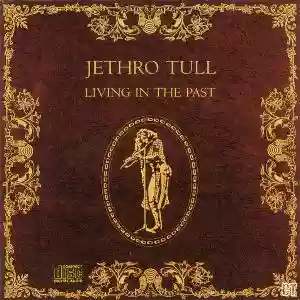
The 1972 is a year of grace for Jethro Tull: first comes the masterpiece 'Thick as a Brick' and not even a month later 'Living In The Past' arrives. Calling a collection "Living in the past" is an original idea in itself, even though in some ways it is not just the first "best of Jethro Tull".
It is a collection of songs up until then only available on 45s, it includes unreleased tracks and finally it is even a live album, as two tracks are recorded live. Only a band like Jethro Tull could invent something like that. After all, in 1972 Jethro Tull is riding the wave after the astounding success of 'Aqualung' and after several line-up changes, it seems appropriate to celebrate the band's first 5 years of activity.
First, guitarist Mick Abrahams leaves to make way for Tony Iommi (!) and then permanently for Martin Barre, then John Evans joins on keyboards but Glenn Cornick leaves the bassist position to Jeffrey Hammond-Hammond and finally drummer Clive Bunker gets married and hangs up his drumsticks, so Ian Anderson draws from his old group (the John Evan Band) and calls back the excellent Barriemore Barlow.
From a publishing point of view, this album is a mess: songs included on the American version of 'Benefit' are not released in Europe, they are found on the European version of 'Living in the past' and vice versa, and moreover, the British version differs from the ones listed above. If we then find ourselves with the first version released on a CD with three pieces excluded for space reasons, it seems necessary at this point to review the 2-cd version, the definitive one, where everyone's satisfied because all the songs from the different editions are present.
This version of 'Living In The Past' is wonderful, because, in addition to being in a cardboard case, it also contains a booklet that is identical to the original 33 rpm, with color photos and song credits. It’s a pity that it is so hard to find and especially so expensive (the price currently fluctuates around 80 euros).
Let's start with the first CD: A Song For Jeffrey, the first real manifesto of Jethro music that emerged from the bluesy 'This Was'. Love Story is a single also from 1968, with Ian making the mandolin sing with his magic touch. Christmas Song is a wonderful ballad, always with the mandolin in the forefront and with strings arranged by David (now Dee, sigh!) Palmer. The title-track is a famous 1969 single that reached number 3 on the UK charts. Besides being a big hit (mostly a hit in a 5/4 time signature!), it is also one of the most beautiful Jethro Tull songs. Driving Song is a 1969 B-side, which still shows some blues remnants but with a very catchy riff. Does the mythic Bourée really need an introduction, the most thrilling classical music rearranged in a rock key?
Moving on to Sweet Dream, a 1969 single, with a section of horns and an orchestra. It had quite a commercial success and is a track. Singing all day is an unreleased track and is a good rock piece with a bluesy bass and a slow interlude. Teacher was only released as a single in Europe and on the American version of Benefit in 1970. There is also a rare version without the flute but with the Hammond organ, where the singing and guitar vary from the original. It’s a classic old-style Jethro piece, with a wonderful interlude where the band goes wild. Witch’s Promise is a 1969 single, with two fantastic flutes played overlapping each other, and is another of the great classics. Inside we have already appreciated on 'Benefit', as well as Alive And Well And Living In, but they weren’t on the American version of 'Benefit'. Just Trying To Be is one of those beautiful acoustic pearls, inexplicably unreleased until 1970. Anderson’s voice is at its peak, the acoustic guitar is influenced by his exquisite touch, and the celesta played by John Evan fits in well.
The second CD opens with 2 live tracks at Carnegie Hall in New York, where Jethro performed, donating the proceeds to a community for recovering drug addicts. After Ian Anderson's hilarious introduction, John Evans starts the show with By Kind Permission Of, a long grand piano solo, with pieces of Schubert and Beethoven popping up here and there, in addition to the flute, finally culminating in a fantastic ending with the entire band participating. John Evan proves to be a phenomenal pianist. In Dharma For One the star is Clive Bunker, with a long drum solo, also proving to be technically skilled. Notice how this song is completely different from that of This Was, with the addition of a nice vocal part.
Wond’ring Again is undoubtedly the most beautiful song on the entire album: Chilling acoustic guitar, those few electric guitar notes placed perfectly, the keys superbly arranged. A unique magic until the end, where Ian ends with something similar to the Wond’ring Aloud that appeared on 'Aqualung' (but few know that Wond’ring Again was written first, in 1970). Hymn 43 and Locomotive Breath are the wonderful and aggressive songs taken from 'Aqualung'. What a voice and what flute solos! The acoustic ballad Life Is A Long Song is an unreleased piece from 1971 and marks Barriemore Barlow's debut on drums. Up the ‘Pool talks about Ian Anderson's youth memories spent in Blackpool, among guitar phrases. Dr. Bogenbroom begins with a classic harpsichord arpeggio and is a pleasant song. For Later is one of the first pure progressive tracks, a solid and well-composed instrumental, very difficult to play. Nursie is another one of those acoustic pearls that could have been part of 'Aqualung'. Beautiful and poignant, it revisits the theme already addressed in Cheap Day Return, namely Ian Anderson's sick father. This theme is also revisited in Thick As A Brick (What do you do when the old man’s gone, do you want to be him?).
In America, the album climbs to number 3 on the charts, in England to number 8. 'Living in the past', in its multiple versions, is a phenomenal record that one never tires of listening to over and over again.
Loading comments slowly
Summary by Bot
This review praises Jethro Tull's 1972 compilation album 'Living In The Past' for its unique mix of singles, unreleased tracks, and live recordings. It highlights the band's lineup changes, musical evolution, and the album's status as a definitive anthology of their first five years. The 2-CD version is picked as the best edition, despite its rarity and high price. Overall, the album is acclaimed as a timeless classic among Jethro Tull’s works.
Jethro Tull
Jethro Tull are an English rock band formed in 1967 and long led by Ian Anderson. They are known for blending progressive and folk rock around Anderson's prominent flute and for landmark early-1970s albums such as Aqualung and Thick as a Brick.84 Reviews
