
 •
Rating:
•
Rating:
THE REVIEW
Good evening everyone, it's been a while since I made a stop at DeBaser...
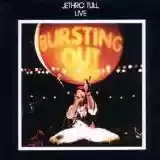
And while I'm listening to a Live performance of the Progressive FAMILY Group through my headphones, I'm reviewing the first official Live album in the discography of JETHRO TULL.
BURSTING OUT:
It seems that Ian Anderson ensured that the band had a sound and execution bordering on PERFECT before releasing a Live document. Already in the double Living in the Past, there were 2 Live tracks, but still, they were not exactly official pieces, let's say. That time, the lineup was Anderson, Barre, Bunker, Evan, Hammond. This time, however, the lineup and pride, I believe, of the Leader offers the dual keyboardist formation Evan-Palmer, plus Glascock on bass, and of course, Barre on guitar and Barlow on drums. Anderson doesn't hesitate for a moment and presents the double Vinyl formula right after already releasing a studio album, Heavy Horses, which, despite being excellent, wasn't really remembered much either during that year's Tour or in this concert.
With David Palmer joining the group, the setup changes a lot, possibly because he is a conductor at heart. The band plays, in fact, limiting improvisation to zero, and perhaps I would add that the numerous Live performances since 1976 are now just a memory, meaning the band appears planned, responsive, and motivated but at the same time less spontaneous. The precision in execution is close to the coldness of studio work.
These songs are the result of several dates, but the evaluation won't be influenced. The total absence of tracks from Benefit and Passion Play is striking, which, despite being considered humanly dark by Anderson, are the heritage of the Fans but also of the group itself. To be honest, Heavy Horses is also somewhat ignored, as are all albums a bit strained in terms of interpersonal relationships, like Minstrel in the Gallery and Too Old to Rock 'n' Roll...
THE SONGS:
No Lullaby, linked to an intro to open the concert, is more functional than the original due to duration reasons. Sweet Dream, on the other hand, is reimagined but just as functional (needless to say, with the various upcoming lineups, this won't always succeed). There are songs I would have honestly done without, like Skating Away; Jack in the Green, instead, significantly improves its original version, as does Hunting Girl. A New Day Yesterday is, however, transformed to launch Anderson into a solo, which is a shame because, during the 71/72 period, this song was driven by a masterful team effort that isn't quite present here. One Brown Mouse, on the other hand, I consider one of the less successful pieces from Heavy Horses, and even here, it doesn't raise the bar. From such a valid album, I would have preferred many other pieces, which, unfortunately, during the golden age, were ignobly ignored. (...) Songs from the Wood is cut from its prog section during mastering, perhaps for space reasons on the vinyl. It remains also one of the worst-recorded songs, as you can even hear the crackling, bordering on Bootleg. Thick as a Brick, on the other hand, is massive, even though I've never appreciated the medley chosen in the 13 minutes...
Too Old to R'n'Roll remains a poor episode here as well; Conundrum is an excellent piece of virtuosity that the band, according to some sources, performed as early as 1975, composed by Barre and driven by Barlow, who delivers a heavy drum solo. With this song, any doubts are cleared about the band having a leading role in developing Anderson's compositions or ideas. The group's prog soul, somewhat mockingly, fades right into the piece Minstrel in the Gallery, reduced to a single and with revised tone and speed (already by the end of 1975), giving the piece something commercial. (Aside from the damage, the joke). Cross Eyed Mary okay, Aqualung nice but too monumental and dragged out, Quatrain a small game by Barre, and Locomotive Breath I feel inclined to prefer the version with the double bass drum Perry performed during the Under Wraps Tour, and certainly the triplet version the band played in 1980. In closing, The Dambuster March, which the band alluded to as early as 1972.
IMPRESSIONS:
It seems that the coldness and technical perfection of the band's execution have somewhat stifled, if not outright muted, some classics from the early period while slightly improving others (not by much) of the later period. The sound partially picked up in Stormwatch brings Barre to the forefront, transforming the band and significantly distorting its sound, shadowing Evan (at the time, Anderson introduced him as HIS ICE CREAM MAN for his white suit) and also Palmer, who abandoned Hammond Organs for a whole series of Synthesizers that push the band away from the 70s sound. These Jethro Tull are very different from the compact and tough yet spontaneous ones from the Benefit period and its relative Live performances, Anderson's voice is filtered and slightly lower than in the early days, Barlow is monstrous on the drums, and Glascock has a readiness that doesn't make Jeffrey Hammond missed.
It remains a Live album that perhaps distorts the sound a bit, or maybe it's the sound itself that distorts the band, which could hardly include other classics and enhance them, but with this type of Sound, I would have included many more pieces from Heavy Horses, making them truly unique. Anderson won't repeat the mistake with the next album, which is well documented.
Loading comments slowly
Summary by Bot
Bursting Out, Jethro Tull's first official live album, showcases meticulous execution and a dual keyboardist lineup. While technically impressive, the album sacrifices some spontaneity and excludes key fan favorites. The sound is precise but feels somewhat cold compared to earlier live performances, with mixed results on song choices and arrangements.Tracklist Lyrics Videos
Jethro Tull
Jethro Tull are an English rock band formed in 1967 and long led by Ian Anderson. They are known for blending progressive and folk rock around Anderson's prominent flute and for landmark early-1970s albums such as Aqualung and Thick as a Brick.84 Reviews
