
 •
Rating:
•
Rating:
THE REVIEW
People often talk about repetition in the vast world of music. Even when many artists in any genre try to reinvent themselves and offer the public seemingly well-packaged products, they are often criticized and branded as useless records, similar to the previous ones, and lacking depth. Let's be realistic. Blues, rockabilly, country, boogie, rock’n roll, and the various sub-genres birthed by these ragged mothers, a bit like humble and dusty street whores, are conceived with three simple chord progressions of C, G, and F, or by changing the starting note, the sequence remains indifferent. Making history with these three measly chords has been possible mainly thanks to immense talent, undeniable voices, showmanship, and the meticulous ability to divinely exhaust every unfortunate instrument seized or touched by the enchanting fingertips of these universal monsters.
Attention, I don't want to be misunderstood, I know we are talking about the genesis (concerning the '900s), the very first molecules that will slowly mutate into rock, and regardless of the chords, there is one (not the only one, surely) who, when listening to characters like John Lee Hooker or Muddy Waters to name a couple, experiences a drop in the pants from emotion. What this music evokes is incredibly indescribable. Rather, I specify that the blame goes to those who stop giving warmth and creativity to music, shamelessly stripping it of every artisanal garment, selling it and themselves to the highest bidder. It was not even the case for Jerry Lee Lewis, who in the early '60s was forced for a long time to perform for a few dollars in small pubs and clubs to make a living.
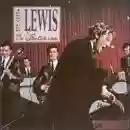
It was thus on April 5, 1964, during some dates in Germany, precisely at the “Star Club” in Hamburg, on any ordinary night among thousands spent wandering the globe, the killer personified his gratitude for what he revered and what had made him what he was. Swollen with candid adrenaline, he offered the audience an impeccable performance that would unknowingly make history. Thanks to that record, which would be released a few months later, Jerry Lee Lewis would return to the spotlight after a few years of obscurity caused by some romantic scandals, which had led to a dramatic downturn in his deservedly and ingeniously accumulated success in the latter half of the '50s.
In his presence, the completely unknown Nashville Teens prostrated, direct accomplices of the perfect crime of Jerry's recent past monsters, who wants to prove at all costs that he knows how to do his job; that night, he is a stage werewolf, with the blood of a demon throughout his circulatory system. When the unfortunate piano senses the looming danger, Jerry charges up, starting to pound on it, and with draconian selfishness, he absorbs every skill, transforming into a fierce, arrogant, rough, and merciless sniper ready to shoot the heart of that audience numbed by the boredom of routine, in need of ecstasy, and forcefully expels all his repressed fury, interpreting his most successful songs with foam at the mouth and twisting other milestones of the previous decade in his own way. It's Hank Williams' turn with “Whole lotta shakin' goin' on” and “Your cheatin' heart”, then Little Richard with “Long tall Sally” and “Good Golly Miss Molly”, and also Ray Charles with “What’d I say”, passing through “Money” by Barret Strong, “Matchbox” by Carl Perkins, “Mean woman blues” by Claude Demetrius, and the immortal “Hound dog”. The audience, satisfied with so much passion, carries him in triumph along with the young Nashville Teens and decrees his consecration.
Even though a handful of songs were lost after the direct recording, it was still possible to package a product of almost 40 minutes of extraordinary level never equaled again, both for the excellent sound and the legendary performance the ensemble realized.
But even 1964 ended by carrying away this grand live event and a brief period of return to the peaks for the Louisiana killer.
Loading comments slowly
Summary by Bot
This review praises Jerry Lee Lewis's 1964 live album recorded at Hamburg's Star Club as a legendary, passionate performance marking his comeback after personal setbacks. Lewis delivers raw, energetic renditions of rock'n'roll classics, backed by the Nashville Teens. The album is celebrated for its exceptional sound quality and electrifying atmosphere, making it an unparalleled historic music moment.Tracklist Lyrics Videos
Jerry Lee Lewis
American singer and pianist, a founding force of rock ’n’ roll from the Sun Records stable. Known for electrifying, piano‑pounding performances and hits like Whole Lotta Shakin’ Goin’ On and Great Balls of Fire; later crossed into country and cut the ferocious Live at the Star‑Club, Hamburg and the all‑star Last Man Standing.03 Reviews
