
 •
Rating:
•
Rating:
THE REVIEW
Pausing for a moment on the chapter dedicated to the British Invasion, let's focus this time on one of the fundamental musical streams of mid-sixties Rock music in the United States: alongside the development of Bob Dylan's folk/rock and the proliferation of the so-called "Blues Revival" of Chicago and its surroundings, in that rich land of colors and Rock sounds known as California, two bands were formed that would soon become the cornerstones of the emerging Psychedelia: The Doors with "Lizard King" Jim Morrison and, especially, the famous Jefferson Airplane with vocalist Marty Balin, rhythm guitarist and vocalist Paul Kantner, lead guitarist Jorma Kaukonen, bassist (also a distinguished collaborator on the Electric Ladyland album by Jimi Hendrix, another master of the genre, in 1968's Voodoo Chile) Jack Casady, and drummer Spencer Dryden.
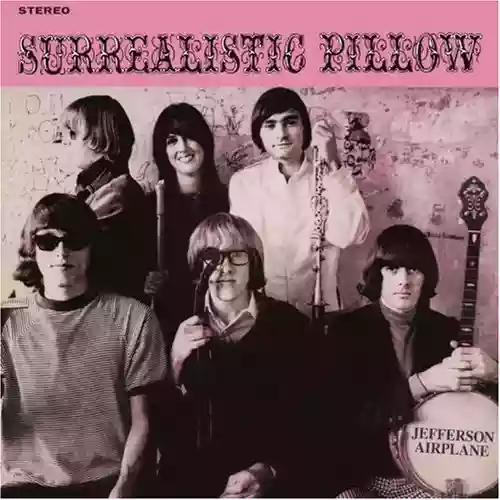
After an uncertain debut, the band’s lineup was significantly enriched by the arrival of the beautiful and stellar Grace Slick (also best friend of the late Janis Joplin), considered, without a doubt, the first "frontwoman" in Rock history, who contributed decisively to the full success of their first official successful album entitled Surrealistic Pillow, recorded in December 1966 and released in February 1967.

In it, the psychedelic form of pieces, usually not exceeding 2 minutes and 30 seconds (or, in some cases, 3 minutes), finds its greatest achievement, especially starting from the first song She Has Funny Cars, known particularly for its carefree rhythm and Kaukonen’s final solo, already prominent. Another nearly universal success is undoubtedly Somebody To Love (recently covered by several contemporary artists, for example, by the Scottish singer-songwriter KT Tundstall who provides an extremely enjoyable Caribbean-style version, in my opinion), written by Grace Slick’s brother-in-law, Darby Slick, and sung by Grace herself, representing the band’s true anthem with a double solo by the usual Kaukonen, one placed in the middle of the piece and the other towards the end, which serves as the ideal cherry on top. My Best Friend and Today, two other very enjoyable songs, feature equally valuable contributions from the future leader of the Grateful Dead, another important psychedelic ensemble of the late sixties Californian scene, Jerry Garcia with his prominent distorted guitar.
This is followed by the very sweet Comin’ Back To Me, dominated by Balin's soft vocals and a set of acoustic guitars and even a sort of flute in the background that allows the song to stand out in environments that so closely resemble the untouched beaches and sea of California itself, for example. D.C.B.A.-25 is another interesting track lasting 2 minutes and 37 seconds (probably one of the inspirational tracks for some of the most popular American Rock bands in the eighties and nineties, especially the famous R.E.M., of which, in my opinion, some influence can be felt) characterized by the usual mid-song solo by Kaukonen. How Do You Feel, which has an intro similar to that of a flute (as in the already mentioned Comin’ Back To Me) in structure and sound seems to come from The Beatles’ repertoire.
Embyronic Journey, on the other hand, is a splendid instrumental track conceived by the extremely volcanic mind of Kaukonen who, thanks to his masterfully played acoustic guitar, launches the song into a purely folk-inspired scenario lasting one minute and 50 seconds. The band's other masterpiece is, in fact, White Rabbit, which undoubtedly revisits (and updates) Lewis Carroll's namesake tale, starting from some of the song's precise verses: "One pill makes you larger and one pill makes you small [...] / Ask Alice, I think she'll know. When logic and proportion. [...] / And the Red Queen's off with her head / Remember what the dormouse said: 'Feed your head!' The conclusion is entrusted to Plastic Fantastic Lover, where Kaukonen's impeccable “lead guitar” serves as a backdrop to an equally fast, but as always well-constructed, song.

The group's first real recording test can thus be considered passed with flying colors, and the next step, which came immediately after the failure of After Bathing At Baxter’s, would be Crown Of Creation from 1968 which, as the title itself suggests, would in fact represent the definitive takeoff of the "Jefferson Airplane" into the ever-clearer skies of psychedelia and, above all, American youth counterculture up to the 1969 album Volunteers, written in the wake of the overwhelming success of the Woodstock Festival (of which the group, along with Hendrix, The Who, and the emerging Santana, were the main stars) that would mark its inexorable collapse.
Loading comments slowly
Summary by Bot
Jefferson Airplane's Surrealistic Pillow is a landmark 1967 psychedelic rock album featuring iconic tracks such as Somebody To Love and White Rabbit. The review highlights the band's key members, particularly Grace Slick's influence, and notes the album's blend of folk, rock, and psychedelic elements reflective of California's vibrant music scene. Its lasting impact on American youth counterculture and later bands is emphasized, cementing it as a classic rock milestone.Tracklist Lyrics Videos
Jefferson Airplane
Jefferson Airplane formed in San Francisco in 1965 and became a leading band of the city’s psychedelic scene. With key members Grace Slick, Marty Balin, Paul Kantner, Jorma Kaukonen, Jack Casady, and Spencer Dryden, they scored major hits and helped define late-60s rock. They appeared at Monterey Pop (1967) and Woodstock (1969) and reunited in 1989.10 Reviews
Other reviews
By VincVega
"Slick's entry into the group brought vitality to the band and the sound."
"An absolutely must-have album, which paved the way for other masterpieces by the American band."
