
 •
Rating:
•
Rating:
THE REVIEW
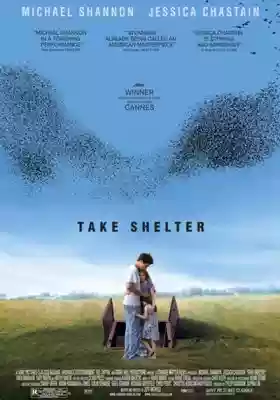
Curtis is a laborer, married to Samantha, with a daughter, Hannah, who has been deaf and mute since birth. Curtis works to keep the medical assistance that helps his family with the costs of his daughter's treatment, even though the expenses are still significant. But there's more: there are also dreams and visions of storms, thunder, birds suddenly dying, and an "acid" storm of biblical proportions. Curtis is haunted by these events. Are they just in his head, and is he the village madman, especially since his mother was struck by schizophrenia at around his age? Curtis decides to take out a loan and build an underground shelter, the only salvation for his impending apocalypse. Is Curtis crazy or not?Panoramic shots, slow camera movements, a soundtrack of "chiseling" and the importance of images: "Take Shelter" by Jeff Nichols (2011) is all about that. A measured pace, rejection of action, dialogues never too "tight." Nichols lets the images speak first: from Curtis's dream-like visions to the greenery of American suburbia. Every single shot seems to be crafted as if it were the last of Nichols's career.
Michael Shannon, an extraordinary actor still little known to the "general" public, once again portrays a man with psychological issues, as he did in films like "Revolutionary Road" and "My Son, My Son, What Have Ye Done," not to mention his ambiguous Van Alden in the series "Boardwalk Empire." Shannon manages to shape a character who is loving with his family but at the same time grumpy, acting without apparent rationality, and seen as the madman in the community. He loses his job, loses a friend, and disregards his brother's reassurances. Because the storm is coming, and the shelter must be completed before the end of everything. Thus, the life of Curtis LaForche, a construction worker, becomes a metaphor for the average American worker: alienated from his job, challenged by his mind, and capable of squandering savings accumulated with sacrifice to achieve his goal. How can we not see in Curtis the humanized symbol of the crisis that has struck the United States and the rest of the world? How can we not see in the apocalyptic storm visions a warning to our society?
"Take Shelter" could be the "before" of the book "The Road" by Cormac McCarthy, the premonition of disaster. Because in that ending, so wonderful and calling into question the two hours of film, there is the gray gaze towards the future of man.
A film to be seen and savored in every minute detail. Talking more about it is misleading for those who haven't seen it yet. Recommended film, for an intimate, whispered work, never over the top. A necessary film.
Loading comments slowly
Summary by Bot
Take Shelter is a meticulously crafted psychological drama by Jeff Nichols, featuring Michael Shannon as a man haunted by apocalyptic visions and mental illness. The film uses slow pacing and evocative imagery to explore themes of family, fear, and societal crisis. It draws parallels between Curtis’s struggles and broader social anxieties, delivering a profound, intimate experience. A recommended film for thoughtful viewers.
Jeff Nichols
Jeff Nichols is an American film director and screenwriter from Little Rock, Arkansas. Known for intimate, image-driven dramas set largely in the American South, his films include Shotgun Stories, Take Shelter, Mud, Midnight Special, Loving, and The Bikeriders.03 Reviews
Other reviews
By Hellring
"Mud is a real film because it speaks of this and of those feelings we are now afraid to communicate."
"In 'Mud,' everyone must find their path, and it is through the curious and innocent eyes of the boys that there is still hope for something different."
