 •
Rating:
•
Rating:
THE REVIEW
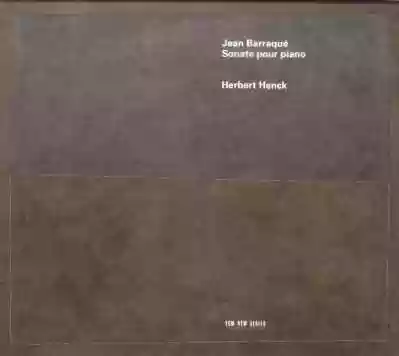
I listen to Barraqué's "Piano Sonata" and I wonder what it means, what it wants to communicate.
Probably it doesn’t want to communicate anything. It is not minimalism, it is not twelve-tone technique. It is a mixture of contrasts, of opposing sensations, of anger and resignation, that follow one another without reason or sense. It's as if Beethoven woke up on any given day in the twentieth century, saw what the world had become, and was quite happy not to be able to hear. Divided into two movements, Tres rapide and Lent, the "Sonata" is a work of vast breath and boundless despair. It's like a great musical monolith, a rigorous and funereal sound pyramid, erected for a god that isn’t there. Beethoven is in the background, there are some estranged moments of Debussy, there is the sparkle of inspiration, in the disintegration of the piano piece there's the glimmer of the birth of electronics.
Describing Barraqué’s "Sonata" is like interpreting a dream you've never had, waking up from a nightmare and discovering that reality makes even less sense. It’s like remembering someone who's no longer here, and finding oneself crying and laughing, simultaneously, as you remember the moments together and at the same time feel their absence.
There are piano notes that resonate in silence, dripping, annoying like a leaky tap, at night. Notes that repeat, relentless, like a bell tolling for someone who was never truly born. There are brutal accelerations, that stop angrily like a car that has driven too much and is now stopped at a light that will never turn green. There are moments of solemnity that celebrate nothing. There’s a discomfort that scourges the soul to detach painful silences and notes whipping like lashes, there’s the senseless joy of children.
One of the greatest, most controversial and dark French composers of the twentieth century, Jean Barraqué was a creative in despair. An inspired demiurge and a censor of himself. Unsurprisingly, Barraqué destroyed many of his works, and only seven remain. The feeling one gets in front of the "Sonata" is that of a great, wonderful neoclassical musical fresco covered by a patina of dissonant absurdity. A piece to be restored in the listener’s ears.
A defense of the unfinished, the precarious, the despair and all its creative potential. A great Penelopean musical canvas that must be reconstructed and destroyed, always and every time, listening after listening.
Loading comments slowly
Summary by Bot
Jean Barraqué's Sonata Per Pianoforte is a profound and complex work that defies straightforward interpretation. The piece blends emotions such as anger and resignation, evoking both despair and fleeting inspiration. It stands as a monumental yet inscrutable composition combining neoclassical influences with modern dissonance. Listeners experience it as a deeply emotional and challenging musical fresco rich in contrasts and melancholy.
Jean Barraqué
Jean Barraqué (1928–1973) was a French composer associated with post-war serialism and the avant-garde. His output is small and often described as intense and brooding; he destroyed many works and left a limited legacy.01 Reviews
