
 •
Rating:
•
Rating:
THE REVIEW
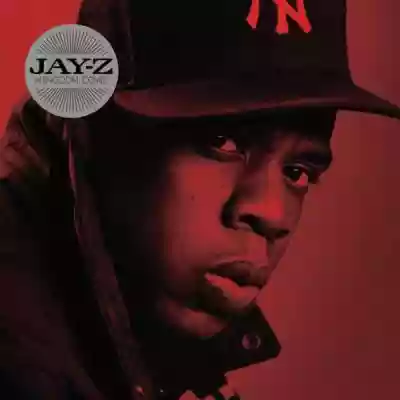
Nobody believed it, or at least very few did. The announcement of Jay-Z's retirement from the scene had surprised the general public and those who only knew him by reputation, but critics and his fans knew who they were dealing with and knew that the period of "retirement" wouldn't last more than 5 years. And indeed, here I am reviewing his new album, released three years after the last "The Black Album." It can be said that Jay-Z took a working vacation, as after the "retirement," he made a documentary about his career (Fade to Black), collaborated with Linkin Park in the smash-up "Collision Course," with R. Kelly in "Unfinished Business," and with many other artists (Kanye West, Lupe Fiasco, and Beyoncé, to name a few) on their albums.
Many thought that this "absence" from the recording studios would lead to an album different from his previous discography, more mature or innovative, and yet it can be said that not much has changed: after listening to the first three tracks, it seems as if Jay-Z never retired. The beats are aggressive as always, and the lyrics are self-celebratory as always (''Lunch with Mandela, dinner with Cavalli/Still got time to give water to everybody'', from "Oh My God"). As you continue listening, there is something new, but it is only exemplified in the album's various collaborations, with Pop artists (Chris Martin, also in production in Beach Chair) and R&B (Beyoncé, John Legend, Usher, and Ne-Yo).
In "30 Something" Jay-Z tells us he is getting older, he has matured, but he still has nothing to prove or learn from the new rising stars of American rap. "Thirty is the new twenty." This, then, is the slogan, cited multiple times in the album, just as the rapper often compares himself to Michael Jordan, associating his Kingdom Come (a title inspired by a comic series where Superman returns after self-exile to a chaotic world) with MJ’s return to the NBA (with the Washington Wizards, to be precise).
The themes covered are varied, ranging from Hurricane Katrina in "Minority Report" (which contains various samples of interviews and testimonies of the tragedy, including Kanye West’s famous attack "George Bush doesn't care about black people") to a tribute to his mother in "I Made It," and the collaborations, as mentioned, are equally varied, but don't fully convince. The only ones who leave a mark are John Legend in "Do U Wanna Ride" and Ne-Yo in "Minority Report," while the others are almost swallowed by the vortex of beats and especially by Jay-Z's flow, as compelling as ever.
A separate discussion deserves the collaboration with Chris Martin in "Beach Chair," a highly evocative song about a hypothetical dream of Jay-Z, because it’s a song that has little to do with hip-hop: which leads to either loving or hating it, depending on one's tastes. Personally, I don't mind it, but I would have preferred it in a Coldplay album with Jay-Z as a guest.
Ultimately, we are faced with an album that doesn’t rank among Jay-Z’s most accomplished works, but remains an excellent choice for fans of the genre: Jay-Z has lost neither his charisma nor his style, and this is the best business card the album can have.
Loading comments slowly
Summary by Bot
Kingdom Come marks Jay-Z's return after a brief retirement, delivering aggressive beats and confident lyrics familiar to fans. The album features notable collaborations with pop and R&B stars, though some fall short. Themes range from personal maturity to social issues like Hurricane Katrina. Though not his best work, it remains a strong album showcasing Jay-Z's enduring charisma and style.Tracklist Lyrics
01 The Prelude (02:44)
02 Oh My God (04:17)
05 Lost One (feat. Chrissette Michele) (03:44)
06 Do U Wanna Ride (feat. John Legend) (05:29)
08 I Made It (03:25)
09 Anything (feat. Usher & Pharrell) (04:21)
10 Hollywood (feat. Beyoncé) (04:17)
12 Dig a Hole (feat. Sterling Simms) (04:11)
13 Minority Report (feat. Ne-Yo) (04:33)
14 Beach Chair (feat. Chris Martin) (05:08)
Jay-Z
Jay-Z (Shawn Carter) is an American rapper from Brooklyn, New York, widely regarded as a major figure in hip hop. He co-founded Roc-A-Fella Records and released influential albums including Reasonable Doubt and The Blueprint; he also collaborated on the Linkin Park mash-up EP Collision Course.20 Reviews
