
 •
Rating:
•
Rating:
THE REVIEW
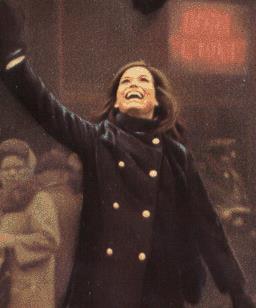
The American society changes significantly from the fifties to the sixties. The concept of a traditional family, understood as a unit consisting of a mother, father, and children (at least two), undergoes new transformations, especially as the society of singles and those who live alone, forming a single-family unit, begins to take shape. This significant novelty emerges in the sixties and will be confirmed in the subsequent decades. The landscape of US-made TV series does not capture this change (unlike cinema which explores it extensively) until 1970 when the first season of "Mary Tyler Moore" is made, a series created by James L. Brooks and produced by actress Mary Tyler Moore who is also the protagonist.
For the first time, the life of a single thirty-year-old in early '70s Minneapolis is portrayed; it marks the beginning of a new form of comedy featuring characters striving to assert themselves in the contemporary world, and this approach will gain wide success in the history of television sitcoms. "Mary Tyler Moore" is the story of television's first emancipated woman, Mary Richards (Mary Tyler Moore), and her neighbors Rhoda (Valerie Harper) and Phyllis (Cloris Leachman), around whom an universe of characters will delineate a well-balanced and consistently stimulating comedic vein with a modern and still relevant twist even forty years later. Seven seasons will be produced until 1977 when Mary Tyler Moore herself will decide to end the experience at the height of its success, with various spin-offs surviving, all three of which achieved moderate success. The actress will later be chosen by Robert Redford to play the role of the cold and insensitive mother in the drama "Ordinary People," the actor's directorial debut in 1980.
Deemed one of the best television series ever produced, it is a cornerstone in the history of television comedy, not only for its content but also for its expression with excellent pacing and perfect acting, it remains a significant reference point today even though contemporary TV series often lack the brilliance and charm that characterize "Mary Tyler Moore".
Loading comments slowly
Summary by Bot
Mary Tyler Moore broke new ground in 1970s television by portraying the life of an emancipated single woman, reflecting societal changes. The show was innovative in comedy, character development, and pacing, cementing its place as a TV classic. Its influence remains strong decades later, with notable performances and spin-offs underscoring its legacy.
James L. Brooks, Allan Burns
James L. Brooks (born 1940) is an American writer, producer and director. Allan Burns (1935–2021) was an American television writer and producer. Together they are credited for The Mary Tyler Moore Show.01 Reviews
