
 •
Rating:
•
Rating: THE REVIEW
J Dilla (aka Jay Dee) was born in '74 in the Motown soul-drenched Detroit to a singer mother and a jazz bassist father. His fate in the music field seemed, therefore, already sealed at birth, and indeed in the early '90s, he began to move in the hip-hop scene, dedicating himself to the sampling of sounds from the countless vinyl records collected during his adolescence.
In '95, he founded Slum Village together with rappers T3 and Baatin, with whom he released the mixtape “Fan-tas-tic, Vol.1”, which brought together his first experiments as a beatmaker, experiments that were then revised and expanded for “Fantastic Vol.2”, Jay Dee's first masterpiece.
During a career lasting just over a decade, he collaborated with the leading exponents of the genre: he almost entirely produced two masterpieces such as “Labcabincalifornia” by the Pharcyde and “Like Water For Chocolate” by Common; he joined Q-Tip and Mr. Muhammad (pillars of A Tribe Called Quest) in the production team The Ummah; he created Jaylib with Madlib; he provided instrumentals for De La Soul, Busta Rhymes, Talib Kweli, Ghostface Killah, reaching more nu-soul-oriented projects like D’Angelo and Erykah Badu.
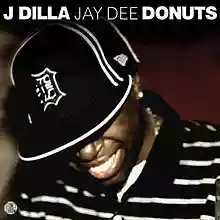
Parallelly, Dilla started a solo career, which ended in the most tragic way: his death in 2006 caused by a severe illness, forcing him to compose the last chapter “Donuts” from a hospital bed. The album is simultaneously an artistic-spiritual testament and a summation of what he experimented with during the various phases of his musical journey.
“Donuts” contains 31 tracks that never exceed two minutes (except for “Workinonit”). Despite the reduced duration, there is never the impression of listening to demos or unfinished compositions; on the contrary, the "donuts" offered by JD are instrumentals of a well-defined and self-sufficient nature, not requiring rhyming verses to refine them. Dilla speaks through his beats and occasionally inserts vocal samples that add shades to the music. This is the case with "Stop!": a voice articulates “Is that real?”, but, influenced by the protagonist's events, it is easy to convince oneself of having heard “Is death real?”.
An album that starts as it should end (“Donuts Outro”) and ends where it should begin (“Welcome to the Show”).
A work profoundly golden age in spirit but that sounds incredibly fresh and never resigned, despite the drama of the moment it was composed. A concentration of black-music: from Jay Dee’s sampler come out, reworked and mixed together, Shuggie Otis, James Brown, Isley Brothers, Stevie Wonder, Dionne Warwick, and many others. A production that is simultaneously dirty and smooth that seals the whole. The Stones Throw quality mark.
In loving memory of James Yancey (1974-2006)
Loading comments slowly
Summary by Bot
J Dilla's Donuts is a seminal instrumental album produced during his final days battling illness. The work encapsulates his mastery of sampling and beat-making, blending soul, jazz, and hip-hop in short yet complete tracks. It stands as a testament to his enduring influence and artistic legacy, showcasing a fresh yet golden-age sound. The album is a profound musical statement and emotional journey reflecting the artist's life and creativity.Tracklist Videos
01 Donuts (outro) (00:12)
02 Workinonit (02:57)
03 Waves (01:38)
04 Light My Fire (00:35)
05 The New (00:49)
08 The Diff'rence (01:52)
09 Mash (01:31)
10 Time: The Donut of the Heart (01:38)
11 Glazed (01:21)
12 Airworks (01:44)
13 Lightworks (01:55)
14 Stepson of the Clapper (01:01)
15 The Twister (Huh, What) (01:16)
16 One Eleven (01:11)
18 Don't Cry (01:59)
19 Anti-American Graffiti (01:53)
20 Geek Down (01:19)
21 Thunder (00:54)
22 Gobstopper (01:05)
23 One for Ghost (01:18)
24 Dilla Says Go (01:16)
25 Walkinonit (01:15)
26 The Factory (01:23)
27 U-Love (01:00)
28 Hi. (01:16)
29 Bye. (01:27)
31 Donuts (intro) (01:11)
J Dilla
J Dilla (James Dewitt Yancey) was a Detroit-born producer and rapper, co-founder of Slum Village (with T3 and Baatin), and a member of The Ummah. He produced and collaborated with artists including The Pharcyde, Common, De La Soul, Busta Rhymes, Talib Kweli, Ghostface Killah, D’Angelo, and Erykah Badu. His final major work, Donuts, was released in 2006, the year he died following a severe illness.01 Reviews
