
 •
Rating:
•
Rating:
THE REVIEW
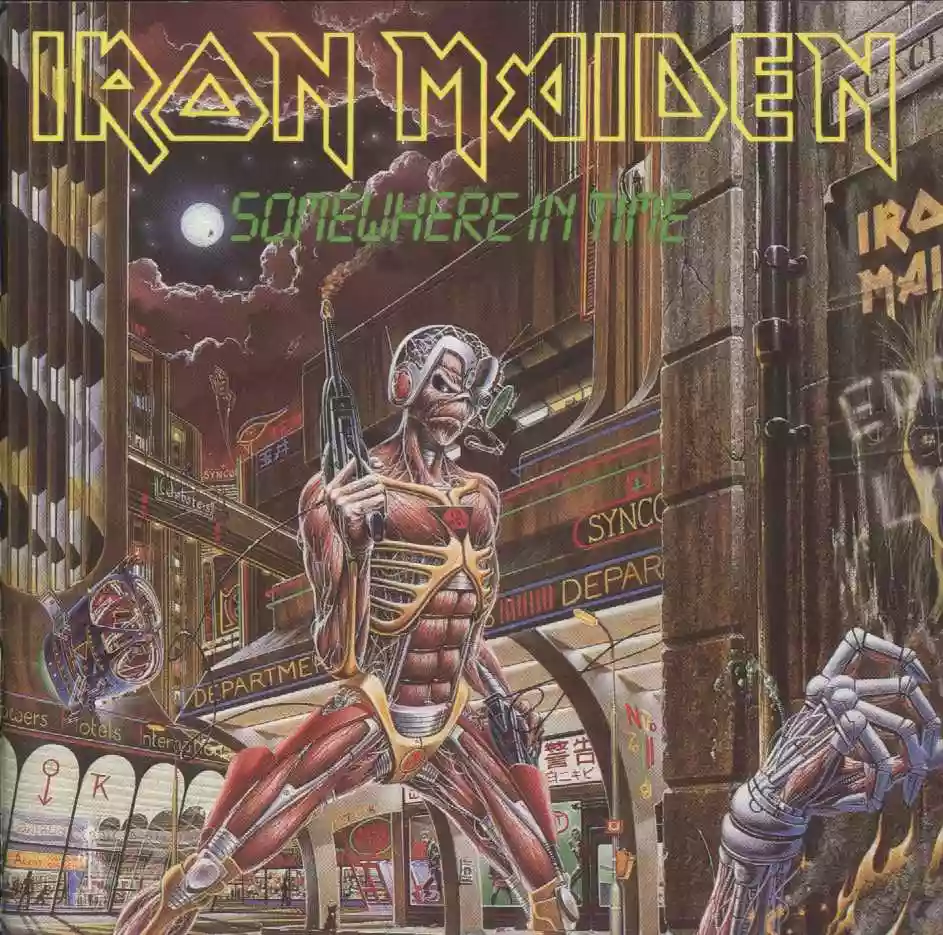
October 11, 1986, the Maiden released a very special album on the market, different from its predecessor ("Powerslave") and full of new experiments. The lineup was the classic one from "Piece of Mind" to "Seventh Son of a Seventh Son" and included: Steve Harris (bass), Bruce Dickinson (vocals), Adrian Smith (guitar), Dave Murray (guitar), and Nicko Mc Brain (drums).
This work brought many innovations to the sound of the Iron Maiden; for example, the guitar and bass synthesizers. This was criticized by some fans who preferred the rawer sound of "Killers" or "The Number of the Beast," but it is certain that we are talking about an album that made history and from which an equally spectacular world tour was derived.
The first track is "Caught Somewhere in Time," which immediately catapults us into a futuristic universe with the intro of keyboards and synthesized guitars that perfectly integrate with the fantastic rhythmic base of the Harris-Mc Brain duo; then the explosion and Dickinson's harsh voice that literally transport us inside these six minutes of pure power and precision of execution. One of the best tracks on the album is the next one, "Wasted Years" (the first single extracted from the album), which, through its melancholic lyrics, invites us to reflect on the time wasted every day. Truly a concentrate of emotions, with choruses wonderfully sung by a Dickinson in top form. The third track is the powerful and energetic "Sea of Madness," which takes us through its powerful riffs to the absolute masterpiece of the album: "Heaven Can Wait." A space-themed song (to stay on theme), perfect in every part. The intro with the keyboards, then the two guitars running fast over Mc Brain's rhythm and Dickinson's voice convincing us that heaven can wait another day.... The lyrics of "The Loneliness of the Long Distance Runner" are very beautiful, evocative and well crafted, and they indeed talk about the loneliness of the long-distance runner.
"Stranger in a Strange Land" is the second single extracted from the album and fully impresses with Dickinson's superb performance. "Deja-Vu" starts with a very calm guitar intro and explodes into a fast and catchy melody, with lyrics that talk about the strange sensations that sometimes plague our minds when it seems like we are doing something we have already done or engaging in a conversation we have already had.... The closure is left to a historically-themed song: "Alexander the Great (356-323 B.C.)." The song opens with a speech by King Philip of Macedonia and then kicks off with the slow snare drumming, like in a march, followed by the epic guitars of Smith and Murray. Then the sound opens up into a typical Maiden melody, with Harris' galloping bass, Dickinson's beautiful high notes, and the awe-inspiring solos of the two guitarists.
In conclusion, an album that brought many innovations to the Maiden's sound, and which definitely ranks among the top works of the most beloved heavy metal band.
Loading comments slowly
Summary by Bot
Iron Maiden's 1986 album Somewhere In Time marked a milestone with new synth-driven sound and classic lineup performances. Tracks like 'Wasted Years' and 'Alexander the Great' showcase emotional depth and epic storytelling. Despite some fan criticism for the modernized approach, the album remains a celebrated classic in heavy metal. It combines futuristic sounds with traditional Maiden energy in a powerful and innovative record.Tracklist Lyrics Videos
Iron Maiden
British heavy metal band formed in 1975, led by bassist and principal songwriter Steve Harris. Famous for epic studio albums, theatrical live shows featuring vocalist Bruce Dickinson, and the mascot Eddie.180 Reviews
Other reviews
By velvetunderground
Iron is like a sea, an ocean of sounds, of shivers, and the swimmer has no choice but to dive in and swim, swim, swim...
Alexander The Great, (just to name one)... a hard rock, dark, (grotesque) a crystal-clear tunnel, horrid... (fortunately pieces like this exist in music, in history, in life)
By MetallAro
The album offers many and original experimentations, starting from the introduction of background keyboards.
I sing, or rather shout the chorus at the top of my lungs, while my parents worriedly call 911.
By juve in B
'Wasted Years' washes away any bitterness: a masterpiece written in collaboration by Adrian Smith.
'Alexander the Great' ... the best song on the album, unfortunately never played live.
By Kirk89
It’s like living in this futuristic world, and one has the sensation of not being able to get out.
Each label you see, even the most insignificant ones, makes you invent an event of history that has nothing to do with it or that has not yet occurred.
By Adrian
"This is it. This is the thought I have matured after listening... they made 'Somewhere In Time'."
"One of the reasons why I consider this album the group’s most successful is precisely the eighth and final track: 'Alexander the Great.'"
