
 •
Rating:
•
Rating:
THE REVIEW
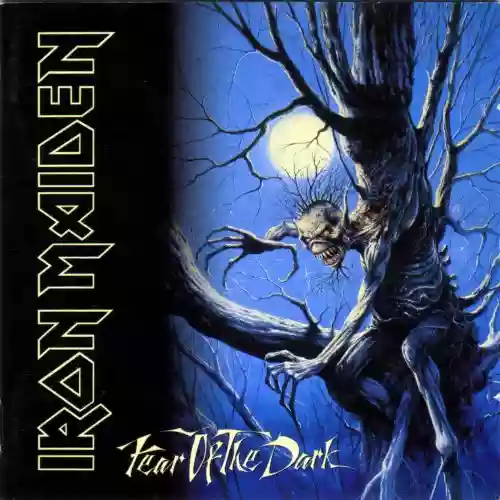
Considered by many to be already finished, after just eight albums, because they were wiped out by the grunge of Nirvana, Iron Maiden released in 1992 an album that is not memorable, but turns out to be one of their biggest commercial successes: the defenders of the faith strike a chord with metal hearts with an LP not outstanding in terms of songs, but which contains some true gems of metal and appears as a heartfelt, warm album, made with heart, and precisely for this reason with some imperfections that reason would have removed.
Janick Gers has finally integrated and finally tries to step out of Adrian Smith's shadow, with mixed results: he nonetheless appears much more mature in his compositions and confident in live performances than he was on 'No Prayer On The Road'. Bruce's performances, who is increasingly tempted by a solo career that won't give him the honors he deserves, are excellent, memorably interpreting some tracks, including the fabulous title track. It starts with "Be Quick Or Be Dead", explosive speed metal with which the boys opened concerts on the promotional tour and on Bruce's farewell (see you later) tour. A perfect track in its structure, these almost three and a half minutes at the beginning are the best start of a Maiden-signed LP since 'Somewhere in Time'; in itself, the piece attacks British bankers. It was then released as the first single, with a frenetically directed video. One can already notice the harmony between Gers and Dickinson, co-authors of the piece. "From Here To Eternity", the second single, is the last episode of the Charlotte The Harlot saga, in which she goes with the devil himself. The track seems like a tribute to AC/DC, who sang "Hell Ain't A Bad Place To Be", while here the chorus is "Hell ain't a bad place, hell is from here to eternity". The track, written by Harris, even if not a masterpiece, turns out to be quite a surprise; vigorous, wild, it is performed by the band with much rock'n'roll spirit, without the performance anxiety that surrounded the entire album "Seventh Son", for example. Indeed, the entire album proposes a return to simpler metal roots, like 'No Prayer For The Dying', only more successful.
"Afraid To Shoot Strangers" is considered among the best moments of the album, with an instrumental part that slightly recalls "Hallowed Be Thy Name". It's evident that it's a track written by Harris, who pours his prog roots into these seven thrilling minutes, so much so that it will also be included in the first anthology, 'Best of the Beast', and will remain in the setlists until the Virtual XI Tour. "Fear is the Key" is again by Dickinson-Gers, but it's rather tedious as a track; Maurizio de Paola noted that it perhaps vaguely sounds like Kashmir by Led Zeppelin, but remains nonetheless an unnecessary piece. "Childhood's End" (Harris) is curious, perhaps reminiscent of "Still Life", doesn't have much impact but results in a decent piece, although introspective. "Wasting Love" is a track that will be much appreciated by the Irons themselves, who won't hesitate to propose it live; it is their first piece truly dedicated to love, not a sappy ballad in Bon Jovi style, but a heartfelt piece with an excellent solo and a very catchy chorus; it was the third and last single. "The Fugitive" is somewhat a waste of time, while "Chains of Misery" is strange, not quite in Maiden style, with sounds that vaguely recall Whitesnake and all '80s hard rock, and it's an experiment that hasn't failed, but which will not be attempted again.
After the terrible "The Apparition" (which competes for the Worst Iron Maiden Song of all time), comes the strange "Judas Be My Guide"; the lyrics are hard to interpret, but the track is fast and very enjoyable, one of the best on the album. The penultimate "Weekend Warrior" isn't much, but it's listenable and serves as a prelude to the masterpiece, the track metal was waiting for to be complete, "Fear Of The Dark", emerging from the pen of a Steve Harris until that moment perhaps overshadowed in the album, but immense in this track. The song alone manages to embrace all metal components: hard and powerful sound, sudden acceleration, great voice, dark theme. It's the last track that becomes a live classic, always acclaimed by the audience, one of their two best songs, second only to "Hallowed Be Thy Name", but more famous. It begins with a solemn intro, only guitars, then slides over a bass line with a non-distorted guitar sound on which Bruce starts to speak to us, to narrate, to scare us. Because it's not just any lyrics, but a real tunnel of horror: "I am the man who walks alone and when I walk through a dark street at night or in the park, when the light begins to change I feel a little strange, a slight anxiety when the dark comes over, fear of the dark, fear of the dark, I have the constant fear that something's always near, fear of the dark, fear of the dark, I have a phobia that someone's always there". Chilling, right? Then comes a sudden and burning acceleration, with a brilliant riff that immediately stamps itself in your mind and evokes immediate headbanging, and then Bruce screams the story that frightens us: "(...) sometimes are you scared to look at the corner of the room because you feel that something's watching you(...), have you ever been alone at night, you got the feeling that something's moving behind you, then you turned around and there's nothing there? But as soon you turn your back again, you KNOW there's something there (...)". Chorus again, riff, bridge, two great solos, bridge, riff again, last verse, chorus and closing on the subdued melody, with the last, very dark line whispered by Bruce: "When I walk through a dark street I am the man who walks alone".
Following the album are two tours (from which "Live at Donington" and "A Real Live/Dead One" will be taken), the first for promotion and the second to say goodbye to Bruce, who however doesn't always appear in top form, or at least eager. He will make up for it from "Accident Of Birth" onwards, up to the glorious return to the parent house. Here closes Dickinson's first adventure, from the next album Harris (especially) and his bandmates will try to undertake an introspective journey that will prove to be a success only halfway; the sound will undergo various renewals and changes, sometimes leaning towards prog metal (like the future "The Unbeliever", "Sign of the Cross", or "Brighter Than a Thousand Suns", and there would be others), sometimes towards a more composed rock ("Look for the truth", "Como estais amigos") which, however, is not to be seen as a loss, but as the courage of a band that has tried (anyway without overturning itself) to vary and reach new horizons.
Maybe the first albums are the best, but Harris and his comrades are convinced and happy with these renewals, and if a rockstar is satisfied with their work, even the fan ends up appreciating it.
Loading comments slowly
Summary by Bot
Iron Maiden’s 1992 album Fear Of The Dark may not be their most outstanding work, but it became a major commercial success thanks to its heartfelt delivery and strong metal elements. Janick Gers emerges more confident, Bruce Dickinson delivers memorable vocals, and Steve Harris shines particularly on the title track. The album blends speed metal with introspective and experimental moments, ultimately featuring fan favorites that remain live staples. Despite some imperfections, the album’s warmth and sincerity make it a noteworthy entry in Iron Maiden’s legacy.Tracklist Lyrics Videos
Iron Maiden
British heavy metal band formed in 1975, led by bassist and principal songwriter Steve Harris. Famous for epic studio albums, theatrical live shows featuring vocalist Bruce Dickinson, and the mascot Eddie.180 Reviews
Other reviews
By jigoro
"The three points I give it go respectively to 'Be Quick Or Be Dead,' 'Afraid To Shoot Strangers,' and the magnificent title track, a rose among the trash of a job born and lived simply badly."
"The times of 'The Number Of The Beast' are just pleasant memories, and age (and money) are beginning to be felt all too forcefully."
By Kenny
Damn, what an album! What more can be said about this record?
The building would burst when "Be Quick or Be Dead" played, or maybe with another track because, in the end, they’re all great.
By Starblazer
It's a true scraping of the barrel with horror clichéd lyrics and headache-inducing solos.
Two stars like the two best pieces, the rest is truly awful.
By creative
"Fear Of The Dark is an album that, when listened to for the first time, is scary!"
"If you don’t know who Iron Maiden are, listen to this album and you too will become a True Metaller!!!!!"
By Reguz92
"Fear of the Dark has not only become one of the most loved pieces by Iron Maiden fans and an omnipresent track in every concert but is also one of the most well-known songs in all metal music history."
The tracks included can be divided into three groups, from mediocre to excellent, with some pieces that could have easily been left out.
