
 •
Rating:
•
Rating:
THE REVIEW
Here we go again: yet another new wave group with little hope, buried by time and dust and reassessed thanks to the promotional efforts of some collector on the "internet". After Dark Day and Solid Space, I present to you Iron Curtain.
Less gloomy than the project of good Robin Lee Crutchfield and less sterile than the Solids.
A synth-wave (or whatever-you-want-to-call-it) full of melancholy but also of more sunny and "easy" moments.
A product certainly underground but, on second thought, one that could have also aimed for high spots in the early eighties charts. Yet something didn't go right.
The presence of a handful of too "gloomy" tracks, a not-quite-clean production, and the choice (as with many other bands) to release their EPs on an indie label led Iron Curtain to downfall.
Again: we are not talking about a lost pearl nor a project buried by the usual show-biz bastards. We are talking about, precisely, a pleasant, intriguing record, and certainly appreciable by fans of New Order, early Depeche Mode, and those who, like me, generally love both non-trivial synth pop and new wave.
Tracks like "Tarantula Scream", "Anorexia", and the superb "The Condos" remind us that, willing or not, the band walked the same via crucis as the champions of English "dark".
Songs like "The Burning" and "Telephone", on the other hand, show a greater preference for a "dancey" and relaxing rhythm.
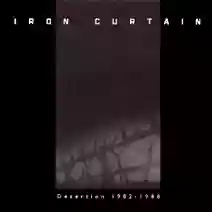
Iron Curtain: Iron Curtain. That cold and invisible line dividing Euro-American West from the realm of real socialism. I haven't analyzed the band's lyrics in detail. I can't, therefore, tell you if they contain political and social reflections. What is certain, however, is that these American guys lived in the midst of the "Cold War". The specter of nuclear catastrophe and the awareness of living in the country "symbol" of the Western block must have prompted them to make some considerations on the matter. The album cover well exemplifies this concept. Division, distance, and incommunicability. Also, and above all, in existential terms more than geopolitical ones.
Melancholic sounds, never disturbing and always traversed by a slight icy layer. It's not an album but rather a collection that gathers the scattered material of the band.
Okay, these Americans won't change your life! But they will certainly be able to project you into a now-distant era. Perhaps with a bit of nostalgia.
Loading comments slowly
Summary by Bot
Iron Curtain’s Desertion 1982-1988 is a synth-wave collection that balances melancholy and lighter moments, evoking the 1980s Cold War era. While flawed by indie production and gloomy tracks, it offers intriguing and danceable tunes. Fans of early Depeche Mode and New Order will find this underground gem worthwhile. The album encapsulates existential division more than politics, delivering nostalgic synth pop with subtle depth.Tracklist Videos
Iron Curtain
American new wave/synth-wave group active in the 1980s, revisited through the compilation Desertion 1982–1988. Their sound blends melancholic textures with accessible, danceable moments.01 Reviews
