
 •
Rating:
•
Rating:
THE REVIEW
Nightmares and succubi are demons that, at night, visit first the young maidens and then the young men, sneaking under their sheets and taking advantage of their unconscious state to carnally unite with them.
Besides these sex-hungry demons (but who isn't, after all), Inkubus Sukkubus is the name of the English gothic rock band, perhaps the most famous in recent years. The main characteristic of the group is the love for paganism, the Wiccan culture and everything that revolves around the natural esoteric cult.
All their discography is, in fact, permeated with witch prostitutes, magical experiments connected to nature, vampirism, satanism but not for its own sake and used as bait to attract teenage sympathies, but meant as a doctrine to be adored with related dogmas and rituals attached. In short, in the age-old dilemma that periodically arises regarding the numerous groups that deal with these themes, asking if they are serious or just pretending, for Inkubus Sukkubus the answer is obvious: they're serious.
And this is, in my opinion, the big limitation of Candia Ridley, the charming vocalist and seductive succubus who moves sinuously with her mini black dresses on stage, and of Tony McKormack, a versatile musician and lover, like Candia, and scholar of neopaganism. The two seem so convinced that, in the long run, they end up losing credibility. In short, after more than a decade, it seems time to vary the themes of their lyrics a bit and refresh the group's image.
Musically speaking, the same considerations could be made, since all their albums, in the end, seem very similar to each other. Talking about one, I would practically be describing their entire production.
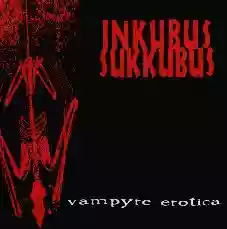
"Vampyre Erotica," for example, is definitely a good work characterized by intense gothic rock rides ("Heart of Lilith", the title track, "Hail the Holly King", "Wake of the Christian Knights"), with backgrounds of threatening bells and horror keyboard carpets, and with more classical and symphonic pieces ("Hell-fire", "Whore of Babylon"). Very beautiful and the album's pinnacle for this writer, then, is the sweet folk ballad "Sweet Morpheus", where the melodious singing of the demon-siren Candia Ridley excels.
In the long run, however, the songs end up, as already mentioned, sounding all alike, just as the continual reference in the lyrics to demons, fairies, vampires, and more becomes tiresome.
In short, for those who love the genre, it is definitely a band to keep an eye on, but in all honesty, I would not recommend them to novices to get into this type of music.
Loading comments slowly
Summary by Bot
Inkubus Sukkubus's album Vampyre Erotica is a solid gothic rock record immersed in pagan and Wiccan themes. The band shows serious commitment to their esoteric subjects, though the repetitive focus on demons and vampirism may limit broader appeal. Musically, the album offers intense gothic rides and classical symphonic pieces but lacks variety across their discography. Fans of the genre will appreciate the work, but newcomers might find it less accessible.Tracklist Lyrics Videos
Inkubus Sukkubus
Inkubus Sukkubus is an English gothic/pagan rock band fronted by vocalist Candia Ridley with Tony McKormack. Their music frequently explores pagan, Wiccan and vampiric themes.01 Reviews
