
 •
Rating:
•
Rating: THE REVIEW
There are no longer any in-between seasons. Or at least we wish there weren't. Think about it, everything would be much simpler. If it's not white, it's black, if it's not hot, it's cold, to hell with imperceptible shades and continuous searches for an improbable and fragile balance like the legs of a small fawn, confused and frightened by the complexities of this world. That's how young Icarus must have felt too, thrown into a deadly trap because of his father and forced to face his childhood and inexperience in circumstances so unjust and hectic as the escape from the Minotaur's labyrinth.
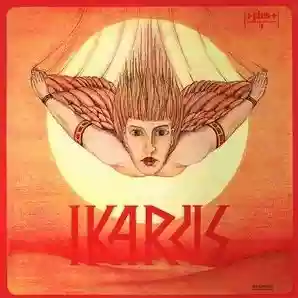
It is said that the boy, during the acts that led to his death, sinned out of arrogance... Could it be that Jochen Petersen (remember the guest on the Tomorrow's Gift album?) made the same mistake? He founded his own record label (the +Plus+) at a time when as many were born as were sinking and produced an album hoping it would be the first of a long series. It wasn't. His label "fell from the sky" after releasing very few titles, and Ikarus remained discographically stuck to their self-titled debut in 1971.
The fusion between progressive and jazz-rock that permeates this work, made in Hamburg, was achieved through the efforts of the aforementioned flautist leading the project (responsible for alto and tenor sax, flute, and clarinet, as well as the second guitar), in addition to those of bassist Wolfgang Kracht, guitarist Manfred Schulz, keyboardist Wulf-Dieter Struntz, drummer Bernd Schroder, and singer Lorenz Köhler; the latter immediately at the forefront with the strongly moralistic text of "Eclipse", where, after a first moment dominated by the guitars and the bass, follows a long organ digression, at times surrounded by the warm mantle generated by the keyboard, similarly to what happens in "Early Bell's Voice", where the piano, after a touching solo introduction, intensifies the organ surges on which the duets, performed in unison, of guitar and sax rely, here in such a union that they appear as a single musical entity. The two members of the rhythmic section battle it out during "Mesentery", while the flute, light and carefree, flies above them, waiting to be replaced by the saxophone's aggressiveness during the first minutes of the following "The Raven", later subdued by the expansive hegemony of the guitars, which gently push the piece, aided by the return of the piano, towards a calm drift.
The flight of these guys ends here, as sudden and irreversible as it was for the mythological character from whom they took inspiration and who, it seems, shared with them much more than just a name.
Thinking about it, in the end, it wasn't just presumption or naivety that drove Icarus to chase the burning desire to fly higher and higher, but a longing for revenge and individual pride that manifested in the wish to go directly from the black of his life, seen as a bargaining chip by his father who would have been happy to sell him as a slave just to return to his Athens, to the white of the clouds painted in the sky and the sensation of total freedom that arose from those magical evolutions. A life, therefore, was extinguished in its moment of maximum splendor, after tasting the truest and most intense joy ever imagined... Wasn't it perhaps worth it?
Loading comments slowly
Summary by Bot
Ikarus’ self-titled 1971 album delivers a refined blend of progressive rock and jazz fusion created by talented musicians led by Jochen Petersen. Despite its limited discography, the album showcases intricate instrumental duets, rich keyboard textures, and thematic depth inspired by mythology. The record captures a powerful yet short-lived artistic journey. The review praises the album’s complexity and emotional resonance, likening its fleeting brilliance to the myth of Icarus.Tracklist Videos
