
 •
Rating:
•
Rating:
THE REVIEW
She thinks she missed the train to Mars, she’s out back counting stars
With great dismay and disappointment a few days ago I realized that on Debaser NOBODY has ever written a review about the Hum.
And yet listening to their second work it’s clear how they influenced a large number of bands that often achieved much more success than they did.
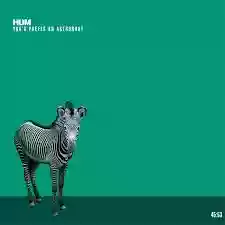
But who are these four nerds? Hum formed in the late 1980s in Champaign, Illinois, and after releasing a demo and a first album, Electra2000, which demonstrated the excellent capabilities of the members but suffered from an inconsistent tracklist and insufficient production, they released this "You’d Prefer An Astronaut" in 1995.
With this album, their sound becomes more cohesive and incorporates strong shoegaze influences (Red House Painters and Codeine above all) partially abandoning the post-hardcore of their beginnings.
However, it is not easy to determine the stylistic coordinates in which to place Hum, as listening to this work I often thought about how they have, undoubtedly unintentionally, created stylistic templates later followed religiously by the best Alternative and Nu Metal bands that formed in the years of its release, with Deftones above all. Even Chino Moreno included "You’d Prefer An Astronaut" among his favorite albums, and indeed, it has everything: compact and heavy metal riffs, dreamy vocals, and surreal lyrics.
The show opens with "Little Dipper", a perfect opener, powerful and direct and among the best of the album. You immediately notice the fundamental characteristics of the group: a precise and imaginative drummer, a bass that, rather than follow the guitar line, creates a melody in its own right (something I love) and the voice of the singer and guitarist Matt Talbott, which is nothing special; indeed more than singing Talbott just murmurs his surreal and romantic lyrics (which often also have to do with astronomy) which perfectly renders the general sense of melancholy that permeates every song ("Suicide Machine", "I Hate It Too"), rarely alternating with screams that recall their hardcore origins. Then follow some of the best songs ever released in the 90s, "The Pod", the beautiful "I’d Like Your Hair Long" but above all the big single "Stars", the song that, with its modest radio success due to an appearance in "Beavis And Butthead" and in a Cadillac commercial, led this album to sell almost 250,000 copies in the USA. "Stars" is the perfect song, endowed with wonderful riffs and an epic crescendo among feedback and guitar walls. The band even got to play it live on MTV 120 Minutes and on the Late Night Show with Conan O'Brien and from these live performances, it’s clear why they couldn't achieve the great success they deserved, not because they weren’t able to reproduce the songs with fidelity and passion (on the contrary, from this point of view they were fantastic) but more because of the image. In years when to attract attention you needed a good-looking and somewhat angry singer that appealed to teenagers (did someone say Nirvana?) it was clear that a skinny frontman with thick glasses singing while looking down didn’t exactly ignite the fantasies of alternative girls.
Taking these considerations into account, it is nonetheless obligatory to reiterate how this is an incredibly innovative and ahead-of-its-time album, especially in an era when there was practically only grunge, and how Hum are among the most underrated bands ever, despite having released three of the best albums of the 90s; they will indeed publish their third and final work in 1998, "Downward is Heavenward", as incredible as this if not more.
If you didn’t know them, get to know them.
And so I give myself away, to everybody everyday
And so I give myself to you, and you need it more than I do
And so I give myself away, unto everybody everyday
And so I give myself to you, and you need it more than I do
Loading comments slowly
Summary by Bot
This review highlights Hum's 1995 album 'You'd Prefer an Astronaut' as an innovative and influential work in alternative rock. Despite limited commercial success and a less marketable image, the album features a cohesive shoegaze-influenced sound, dreamy vocals, and impactful lyrics. The reviewer praises the band’s musicianship and notes their significant influence on later bands like Deftones. 'Stars' stands out as the iconic single that brought the album moderate radio attention.Tracklist Lyrics Videos
Hum
Hum are an American alternative rock band from Champaign, Illinois, formed in 1989. They are known for fusing dense, heavy guitars with shoegaze and space‑rock atmospheres across albums like You’d Prefer an Astronaut (1995) and Downward Is Heavenward (1998). After a long hiatus, they returned with Inlet (2020).03 Reviews
