
 •
Rating:
•
Rating:
THE REVIEW
It is the story of a great friendship broken... even before an artistic collaboration prematurely interrupted.
Robert Arthur (Bob) Mould and Grantzberg Vernon (Grant) Hart met in St. Paul, a suburb of Minneapolis, thanks to marijuana and the records the latter sold to the former. The mutual love for the Ramones firmly ties the days of the young bourgeois from New York with those of the beleaguered proletarian from the Minnesota town. Greg Norton is (and will forever be in this story) the glue that pushes the two to form a band and write songs. Grant inherits the drums from the premature demise of his older brother, who was hit by a car driven by a drunk. The quartet (the lineup also included the keyboardist Charlie Pine, who was fired before the first gig) scoured all foreign languages in search of an acronym that would be the perfect business card... after discarding the initial idea of Qu'est-ce Que C'est, taken from "Psycho Killer" by the Talking Heads. A famous board game popular in the seventies in America comes to their aid... Husker Du? (do you remember? in Danish and Swedish), from which they will remove the question mark and add the umlauts (to make it appear more "metallic") becomes the trademark of the greatest American indie band ever.
Eight years, a live debut, an EP, and six albums.
The blind fury of the primordial hardcore sculpted with blood and sweat into the grooves of that sublime unlistenable monolith that is "Land Speed Record" is replicated live in the studio on "Everything Falls Apart" as an enduring testament to how Mould and Hart's unity of intent (modern-day Lennon-McCartney and/or Jagger-Richards) is almost perfectly fused in unison. With the mini "Metal Circus" the nervous hypertension finds in the noisy anxiety the rock to crash upon... so it can sublimate into the absolute masterpiece "Zen Arcade", one of the Ten Commandments of Rock. It is a time of arrivals and (re)departures, "New Day Rising" and "Flip Your Wig" are the two volumes in which the golden rules of indie to come are impressed, the textbooks on which all the best minds of American underground music will study. Meanwhile, distribution problems and unpaid royalties with the "small" SST and a timid interest from the majors in the phenomenal trio, move the Huskers to Warner Brothers, which, besides its infernal industrial machine, guarantees Grant and Bob complete freedom and total control over their work... certainly, not even "Candy Apple Grey" grants them fame, although, as it happened for the Velvet Underground, anyone who bought one of their records at the time would then try to form a band. We are in the dreadful year of 1987... "Warehouse Songs And Stories" is their double artistic epitaph and denotes, even more markedly than the previous one, a splendid artistic maturity in composing, often accused of being weariness or even a lack of ideas and loss of inspiration. The misunderstandings between Mould and Hart are exaggerated to the extreme by the latter's heavy heroin addiction and are, by their own admission, at the center of the problems that lead to the suicide of their manager David Savoy; a fatal blow that leads to their dissolution during the promotional tour of "Warehouse".
The magic is over, forever.
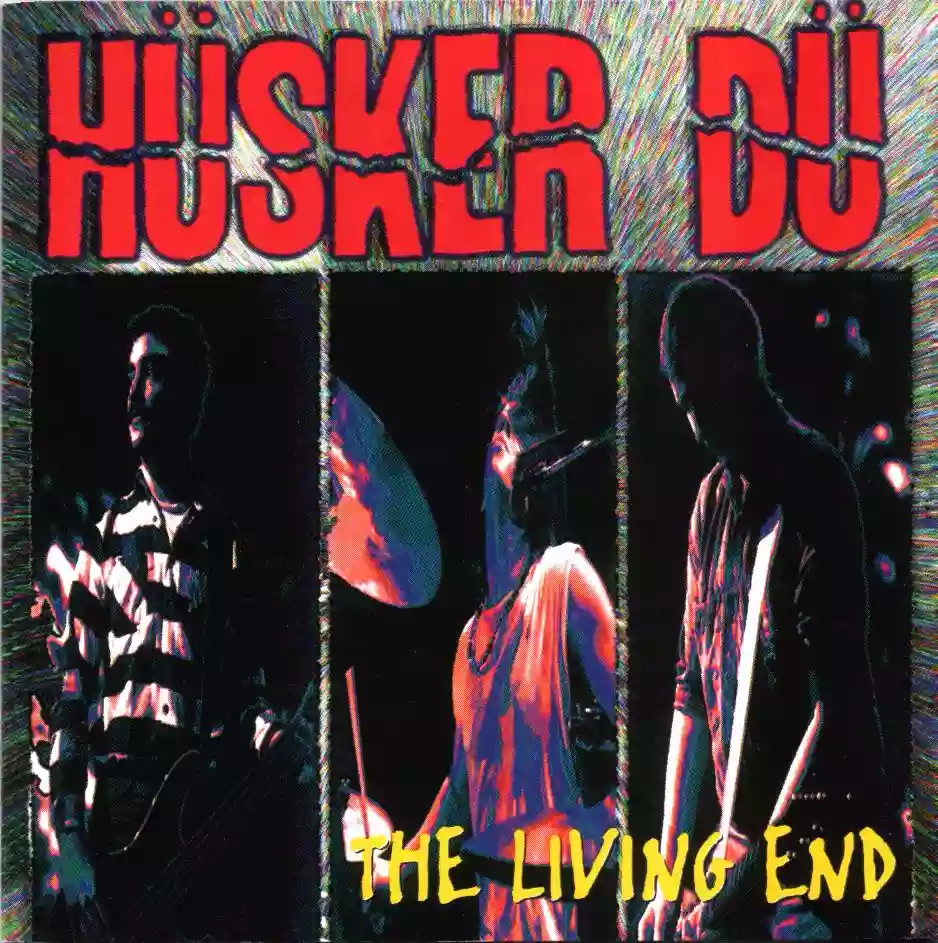
Seven years later Warner Bros. gifts us this live (Mould claims he never listened to it) that captures 24 tracks taken from various dates of their final (interrupted and never resumed) tour, perhaps one of the many sordid commercial moves concocted by the white collars of the record companies, but which allows the music that the three managed to unleash on stage to be heard in all its splendor, even for those who at the time were objectively too young and clueless to see them. Certainly, it is painful to hear the chasm of tension that separated the two (ex)friends, for example, Grant shouting to Bob "It's Not Funny Anymore" who immediately returns with "Hardly Getting Over It", or Mould's inadvertent prophecy predicting the future in "Friend, You've Got To Fall" and immediately Hart pointing out that the magic has flown away... "She Floated Away". Incredibly compact and cohesive, it is a record that cannot be judged, whatever the judgment, "The Living End" is simply to be lived, loved and abandoned; just as they did in that damned space-time wrinkle twenty-two years ago... remembering the words of music critic David Fricke "There was a time when Hüsker Dü was the fastest band on Planet Earth."
Dü You Believe In Magic...?
Loading comments slowly
Summary by Bot
The review traces the rise and fall of Hüsker Dü, emphasizing their influential indie punk legacy and the tension-filled final live album, The Living End. It highlights key albums and the band's artistic growth while underscoring the personal struggles that led to their breakup. Despite internal conflicts, the live recordings showcase their powerful stage presence, making the album a vital experience for fans. The review describes The Living End as both a historical document and an emotional farewell.Tracklist Lyrics Videos
Hüsker Dü
Hüsker Dü were an American rock band from Minnesota, best known as a Minneapolis trio (Bob Mould, Grant Hart, Greg Norton) who helped expand 1980s hardcore punk into melodic, emotionally charged alternative and indie rock. Their run from the early 1980s to 1988 is frequently cited as hugely influential, with Zen Arcade often treated as a landmark release.25 Reviews
