
 •
Rating:
•
Rating:
THE REVIEW
The people who, in life, leave an indelible mark are truly few. The friend with whom I shared that piece of asphalt enough to roll a ball for endless hours and scrape the same knee thousands of times, the grandfather who showed me his starting pistol used in the war and told me, quite a few years before I read the Voyage, about the stupidity of human beings, are among those who changed me the most from the inside.
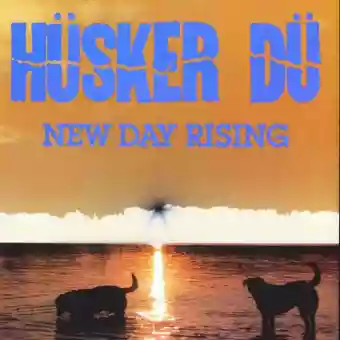
There are albums that, like people, are destined to be a part of me until I kick the bucket. When I bought "New Day Rising" on a smoky and freezing January afternoon where – I like to remember – it seemed that the fog was the continuation of the gray trail of cigarettes and the cold drafts of air also wanted shelter in the sleeves of my coat, it immediately ended up in the most privileged section of my shelf, in the row of Great Loves, next to the other records with which I have made a pact of affection (almost of blood), namely "You're Living All Over Me", "Bleach", "Milo Goes to College" and "It's Alive"; all those records that pushed me, on another afternoon, to buy a knock-off Stratocaster, for a few euros, and to start playing/abusing it to unleash my frustrations. The magic of rock, within me, was born with them.
Born in the turning year 1985, it is an album completely different from its predecessor, from that "Zen Arcade" for which I feel an even greater love, but very different. For "Zen Arcade" I feel an esoteric love, an admiration with almost mystical contours, perhaps because it is the first album where I touched the feeling of perfection, where I saw all meanings perfectly blend with their signifiers; perhaps the esteemed Hüsker Dü felt the same way, as from their supreme Masterpiece, they did not extract any singles, granting it, perhaps by chance, that ethereal dimension, that timeless beauty perfectly ascribable from its context. This is not the same case for "New Day Rising", which is the one that truly fulfilled the revolution of the Hüskers and that, in January of '85, said almost everything that was to be said in the following decade.
It was the first album I bought from my imaginary friends Bob, Greg, and Grant and it is almost like a damn photo gallery of my – not yet finished, thank God - adolescence. I remember when I faced head-on my anger against everything and everyone, listening to "Girl Who Lives On Heaven Hill" and the bleeding vocal cords of Hart; of that "I Apologize" that, listening to it, seemed like a pat on the back from Mould, companion of the same pains. And what about the countless times, laying on a bed, I listened to that whisper immersed in the muddy sound of his Flying V in "Perfect Example"? Or of "Celebrated Summer" which, veiled with that irresistible melancholy, still makes me escape a bit from my high school routine and still makes me dream a bit that it is possible not to become like everyone else and of "I Don't Know What You're Talking About", which I would have wanted to shout in the faces of many people. "Terms Of Psychic Warfare" is perhaps the song I feel most attached to and it brings back memories of when, coming back from school, I tossed my bag in a dusty corner of my room, started it, bounced to the rhythm of that unforgettable crescendo and, forgetting about everything and everyone, sang along with Hart "c'mon, babe... there are the terms!". But I would not want to overlook "59 Times the Pain", almost an echo of the quarrels with my conscience, or of "How to Skin a Cat", the soundtrack of my paranoias and the memories they drag along, still alive and pulsing inside me.
"New Day Rising" is the album where the two souls, musical and not, of Mould and Hart visibly separate (in "Zen Arcade” they were almost a single entity), with the former perfecting his fuzzy sound wall, here elevated as a work of art, adding a new emotional tension almost as if he were playing the strings of his own feelings and the latter, after memorizing his old Beatles and Dylan records, evolves hardcore and guarantees a future for the next musical generation. "Books About UFOs" bears witness to it, a ballad genuinely smelling of the sixties (if I say Lennon-esque it sounds cliché), as if these were two profoundly different but equally troubled souls, held together by the mild Greg Norton, perhaps always a bit in the shadows but worthy of lavish praise for his always perfect bass lines, among the most beautiful ever heard.
The Hüsker Dü are that group that made me realize that an overweight pile of crap starting to play his deceased brother’s drums, who died very young hit by a freaking hit-and-run driver, that a pudgy homosexual fleeing the most hypocritical and respectable bourgeoisie (like J Mascis, another of my romantic heroes) and that a shy guy with a mustache who, in order not to be completely blinded by the spotlights, goes back to running a restaurant have much more to say than any other jerk. They nurtured me, shaped me, and showed me – I believe – the way. And, yes, damn it, to Greg, Bob, and Grant I owe at least a beer.
Loading comments slowly
Summary by Bot
New Day Rising by Hüsker Dü deeply influenced the reviewer’s youth and emotional landscape, representing a revolutionary punk rock milestone. The album stands in contrast to its predecessor Zen Arcade with a rawer, more direct energy. Each band member’s impact and distinct style shaped the sound, with memorable tracks evoking personal and rebellious memories. This album is cherished as a lifelong source of inspiration and identity.Tracklist Lyrics Videos
Hüsker Dü
Hüsker Dü were an American rock band from Minnesota, best known as a Minneapolis trio (Bob Mould, Grant Hart, Greg Norton) who helped expand 1980s hardcore punk into melodic, emotionally charged alternative and indie rock. Their run from the early 1980s to 1988 is frequently cited as hugely influential, with Zen Arcade often treated as a landmark release.25 Reviews
Other reviews
By Festwca
It’s incredible how the songs are as catchy and engaging as pop music but at the same time imbued with the violence and desperation typical of hardcore.
Music written and played with heart on sleeve, impulsively, leaving one breathless with the sincerity and violence of the emotions.
By Nevadagaz
"An (im)perfect sonic storm that overwhelms, disturbs, and at times takes your breath away."
"The songs are among the best the boys have ever written, brimming with pathos and always strong and moving."
