
 •
Rating:
•
Rating:
THE REVIEW
The Painting That Is No Longer There (and Perhaps Never Existed)
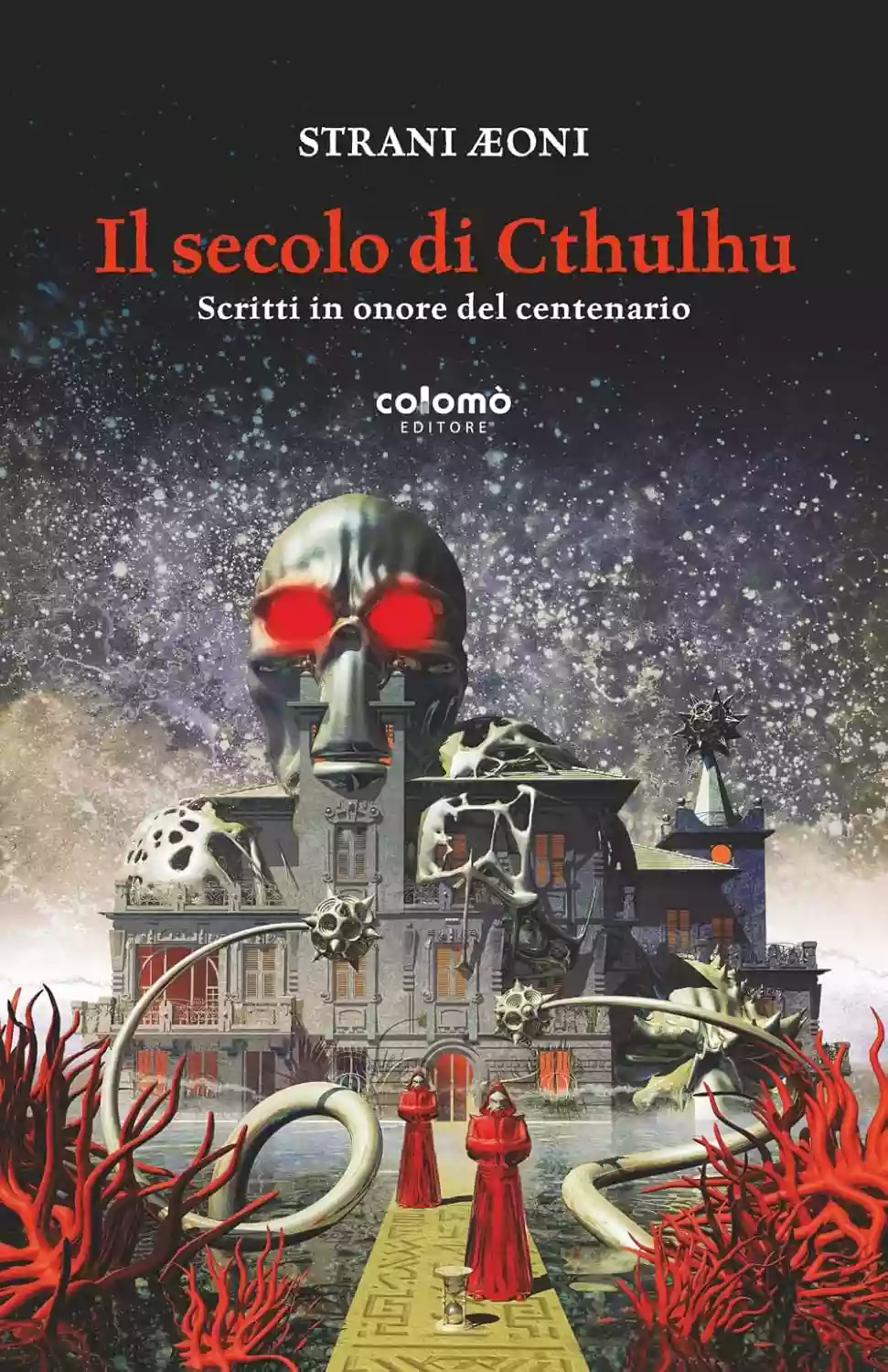
At a certain point, during an interview, Giuseppe Lippi casually lets something slip. The original painting by Karel Thole for the cover of I mostri all’angolo della strada… can no longer be found. There’s no clear official story. No specific event. Only traces: changes of hands, archives, oversights, perhaps irreversible mistakes. And, as often happens with things we can't pin down, the emptiness begins to work on its own. Because something that remains missing long enough stops being a lost object. It becomes a story that tells itself. And that’s where Il secolo di Cthulhu comes from. Or at least: from here it takes one of its possible forms.
The book revolves around two anniversaries: one hundred years since The Call of Cthulhu by H. P. Lovecraft and sixty years since Thole’s historic cover. But more than a celebration, it seems like an attempt to chase an absence. And, like all things that chase an absence, it ends up multiplying it. The opening essay by Pietro Guarriello is probably the most solid part: it reconstructs the birth of The Call of Cthulhu as a tangle of influences — from Margaret Murray to Lord Dunsany to Arthur Machen — showing how Lovecraft is more a convergence than an origin.
Then come the stories, and the missing painting becomes an unstable center of gravity.
There are those who hunt for it inside Mondadori (L’architetto di Cthulhu by Mauro Palazzi), those who use it as a trigger for a terminal Milan by Flavio Deri, and those who turn it into a fatal mistake (Il passaggio by Irene Visentin). And then there is Paolo Sista, who shifts everything to another level: Villa Thole is not a place of research, but almost a point of equilibrium. As if the painting had not disappeared, but simply returned where it belonged. Stefano Sbaccanti brings the discussion back to cults, with shadows reaching as far as Aleister Crowley.
Daniele Corradi, instead, seems to write from the sidelines, almost within a personal tension with the figure of Giuseppe Lippi. Because, in the end, one question remains that doesn’t concern the book itself, but its mechanics.
The suspicion remains that the idea behind the project is more unsettling — and more successful — than the stories themselves. And this feeling does not go away. On the contrary, it’s what lingers the longest. In the end, the point isn’t the painting.
The point is that it keeps vanishing, even as we talk about it.
Loading comments slowly
Summary by Bot
The review praises 'Il secolo di Cthulhu' as a fitting tribute to Lovecraft's enduring influence on horror literature. Highlighting the book's depth and homage to cosmic horror, the reviewer appreciates its celebration of Lovecraft's centenary. The work is recommended for fans and newcomers alike who wish to explore the origins and impact of Lovecraft's chilling universe.
Howard Phillips Lovecraft
Howard Phillips Lovecraft (1890–1937) was an American author whose weird fiction reshaped modern horror with a materialist, cosmic perspective. His work introduced enduring settings and entities and profoundly influenced later literature, film, games, and pop culture.12 Reviews
