
 •
Rating:
•
Rating:
THE REVIEW
And there are still people who conceive art as a world disconnected from the political sphere. Go tell that to Henry Cow and all those who wove the unique fabric of the Seventies. Pure artistic forms, endowed with universal beauty, obviously have nothing to do with politics, discussions on the highest systems, or religion. But strangely enough, since the late Sixties, it has always been the left-wing intelligentsia promoting festivals and becoming the flagbearers of the artistic environment.
There is the endless list of those who love India (Popol Vuh, Battiato, Incredible String Band...), those who create concepts on Ancient Egypt (Agitation Free with “Malesch” and Ash Ra Tempel), and those who form engaged protest panoramas.
In this last category, one undoubtedly finds the evergreens of the Canterbury English scene. Beyond the infamous Soft Machine of guru Robert Wyatt and the enchanted journeys of Caravan, in 1973, one encounters a phenomenon called “Rock In Opposition.”
In this area, a multitude of influences is generated, ranging from free jazz to prog forms closer to King Crimson and Van Der Graaf Generator. The turbulent politics of that period perfectly fit into the acrobatic minds of these geniuses. They even came to Italy to play, precisely at the Festa di Unità Proletaria in 1978 in Cervia. Bands like Henry Cow already make people shout for a miracle with their debut records, so mature and without imperfections.
The proposed cocktail is an exceptional avant-garde jazz rock, full of odd times and a good dose of improvisation, without egocentrism or mind-boggling cacophonies. To the lack of melody, homogeneous structures contrast, nonetheless, which manage to keep the thread of the discourse for the listener. It seems like a challenging endeavor, but the surprising beauty of the tracks makes the sound flow a wonder.
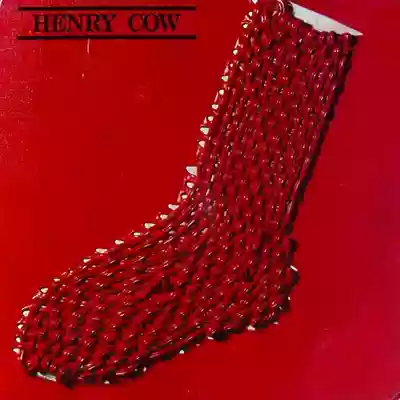
In 1975, strange things happen to Henry Cow, namely the achieved consecration with the masterpiece “In Praise Of Learning” and the merger with the quirky Slapp Happy. Consequently, Dagmar Krause joins as the vocalist, an atypical animator of German feminist circles. With her, a decidedly darker album is realized, with fewer jazz instrumental exercises and greater lyrical verve and pathos. They plunge the Middle Ages into music without half measures, where everything is hidden and laden with gloomy scenarios.
The left-wing nursery rhyme of “War” serenely shows the album's atmosphere. An absurd non-sense holds the mind prisoner in an aleatory world, devoid of reality. “Living In The Heart Of The Beast” is the unreachable zenith. A work equivalent to “Moon In June” by Soft Machine, that is, those miracles that rarely occur in today's art scene. A lied mixed with infernal jams, where moments of calm alternate, thanks to Moore’s piano phrases, with unimaginable forays of drums and guitar. The soft sound of the bass blends perfectly with Krause's melodramatic tone. This masterpiece track definitively glorifies the emphatic declamation of the singer, a true bohemian catapulted into modern days, and the technical and instrumental craftsmanship of the rest of the combo.
The album could end here, but three moments await us: Krause flaunting witcheries in “Beautiful As The Moon Terrible As An Army,” the cacophonic electronic mantras of “Morning Star,” and the sarabande of “The Long March,” a noisistic concert of violin, cymbals, and other wonders. The great step has been taken, the great gift for humanity given.
In 1978, they continue to delight us with “Industry” from “Western Culture,” thus concluding the story of Henry Cow, a band to which no adjective has yet been assigned, precisely because it doesn't exist in the lexicon of languages. You just have to let your ears and mind enjoy it.
Loading comments slowly
Summary by Bot
Henry Cow's 1975 album 'In Praise of Learning' stands as an avant-garde jazz rock milestone, merging political engagement with innovative musical forms. Featuring Dagmar Krause's haunting vocals, the album delivers complex, improvisational compositions with emotional depth. Its dark, challenging themes and superb craftsmanship position it as a unique and timeless masterpiece within the 1970s progressive and Rock in Opposition movements.Tracklist Videos
Henry Cow
Henry Cow were an English avant-prog and experimental rock group formed in Cambridge in 1968 by Fred Frith and Tim Hodgkinson. As founders of Rock in Opposition, they fused complex composition with improvisation and political intent before disbanding in 1978.06 Reviews
