
 •
Rating:
•
Rating:
THE REVIEW
For the Wilson sisters, 1980 is a year of transition. We left them two years earlier with their ballads and rock pieces stamped with Led Zeppelin style, and now we find them with different sounds, dangerously flirting with the edgy tones of the punk explosion.
The girls are still in great form: Ann’s voice is always magnificent and astonishing, and Nancy’s arpeggios rock like never before. The marked difference is in the band’s lineup, which is completely overhauled, because the Fishers leave the band when their engagement with the sisters ends. Thus, for the first time, guitarist Howard Leese is alongside Nancy, who gradually becomes the historic axeman that will accompany the girls over time through various records and lineup changes.
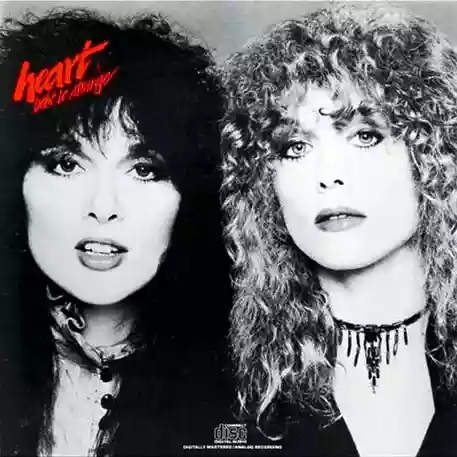
The elves, caravans, fairytale landscapes, and crystal spheres of the epoch-making Little Queen are therefore abandoned to make way for the aggressiveness of a 1980 as transgressive as ever. This is already noticeable from the cover: the sisters' look is completely changed, with curly and voluminous perms instead of long, straight, hippie hair.
"Bebe Le Strange" is therefore a typical transition album, in some ways strange, as if the musicians themselves didn’t know whether to continue on their own path or completely shift towards a different direction. The classically rock verses are accompanied by faster and more brutal refrains, even though the Jimmy Page-like passages and Robert Plant-like vocals are still present. After all, Nancy and Ann will never manage to abandon these influences, which had inspired them so much at the start of their career.
New extensions on the old sounds are experimented with, and the title track itself is the most clear proof: the verses of "Bebe Le Strange" recall a nostalgic Seventies style, while the chorus is stylized with more modern prototypes, and it is precisely this contrast so fascinating that makes the song very good, and the album captivating.
The album therefore presents sudden style changes: from the mellotron of the sweet and engaging "Down On Me" to the aggressive ultimate punk song "Break", passing through a classical acoustic guitar in "Silver Wheels". The work of singer Ann in these pieces is truly amazing: her ability to navigate the highest notes leaves one speechless.
With fervor, the album continues, and energetic can be defined "Rockin' Heaven Down", whose themes take up the life on the road, and the pounding chorus of "Even It Up", where Nancy improvises as a lead guitarist delivering a scream-worthy solo.
Even tribal drum sounds continue in the surreal "Strange Night", while the dreamlike "Raised On You" and "Pilot" are once again excellently passed tests. The choice of closure is also bizarre, a very sweet "Sweet Darlin'", an emotional and poignant ballad that one would not expect as the conclusion of a super-energetic album.
"Bebe Le Strange" is therefore a very varied album, perfect to listen to in moments when one is not clearly thinking of a preferred genre, as it can satisfy all requests. Aahhh, if changes were always like this!
Loading comments slowly
Summary by Bot
Bebe Le Strange marks a transitional period for Heart in 1980, blending their classic rock roots with emerging punk sounds. The Wilson sisters deliver powerful vocals and innovative guitar work amidst lineup changes. The album showcases diverse musical styles, from aggressive riffs to emotional ballads, making it an engaging and varied listen. Despite its experimental nature, the record retains a solid connection to their Led Zeppelin-inspired origins.Tracklist Lyrics Videos
Heart
American rock band fronted by sisters Ann and Nancy Wilson. Rose in the ’70s with hard/folk rock, then dominated ’80s AOR with chart-topping power ballads and sleek production.04 Reviews
