
 •
Rating:
•
Rating:
THE REVIEW
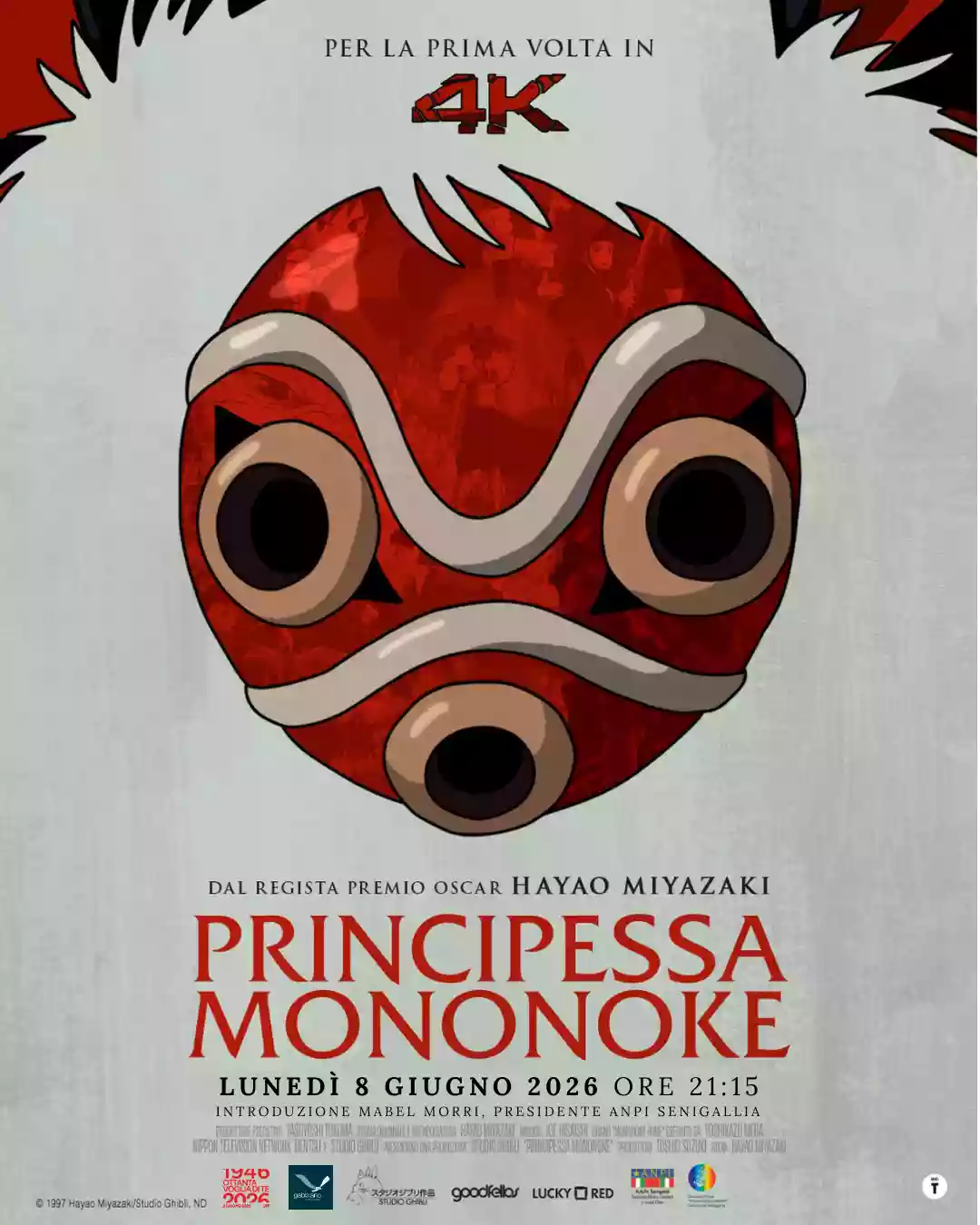
Princess Mononoke: three hours of ecological preaching disguised as a movie
If there were an award for the most overrated film in animation history, Princess Mononoke would be a very serious contender. For decades, it's been treated as a sort of untouchable sacred text, when in reality it’s a work that confuses depth with heaviness, complexity with confusion, and poetry with interminable contemplative silences.
Plot: chaos disguised as a masterpiece
The story seems written by someone who simultaneously had ten different ideas and refused to give up on any of them.
Curses, animal gods, feudal wars, forest spirits, iron mines, environmentalism, class struggle, mysticism, personal redemption: everything is tossed into the same stew pot. The result is not a rich plot, but rather a scattered one.
Halfway through the movie, it often feels like the author is changing topics every twenty minutes. The protagonist moves from one situation to another without any real strong narrative progression. Events seem to follow one another more by the author’s will than by any natural dramatic logic.
Ashitaka: the most anonymous protagonist on the planet
The main problem is that the central character is probably the least interesting one.
Ashitaka is so perfect, balanced, understanding, and morally impeccable that he comes across as almost artificial. He never really makes mistakes, doesn't grow in any significant way, and has no memorable inner conflicts.
He’s the classic saintly protagonist: he looks at everyone with a wise expression, utters solemn phrases, and keeps riding toward the horizon.
A character designed more to be admired than remembered.
Mononoke: icon more than character
San has become a huge cultural symbol, but if you look at her coldly, she isn’t a particularly nuanced character.
She spends much of the film swinging between anger and hostility. Her development is minimal compared to the time she occupies on screen. Much of her fame comes from her aesthetics and iconic looks rather than the actual writing.
The supporting characters: all interesting, none explored
One of the most evident issues is that the film keeps introducing intriguing characters only to leave them unfinished.
Lady Eboshi is perhaps the best figure in the story, but the film uses her more as a political symbol than as a human being. The wolves, the boars, the spirits, the warriors: they all show up, say a few important lines, and then disappear into the big allegorical blender.
Duration: an eternity
The more than two hours feel like much more.
Japanese animation of the 90s had a certain obsession with contemplative lulls. Here, that tendency reaches almost caricatural levels.
Characters observing the landscape.
Characters walking.
Characters riding.
Characters staring at other characters.
Characters staring at trees.
Characters staring at giant deer.
After a while, it feels like the film is trying to convince you of its depth simply by slowing everything down.
Music: beautiful but repetitive
Joe Hisaishi's compositions are often praised as absolute masterpieces.
They are certainly elegant, but the film tends to use the same emotional registers over long stretches. Many themes constantly push the sense of wonder and melancholy until they become predictable.
It’s a soundtrack that accompanies the images well, but rarely surprises.
Animation: sacrilege to say it, but it has aged
Here we enter forbidden territory.
For years, it’s been said that the animation in Princess Mononoke was timeless. In reality, many sequences clearly show the technical limitations of the era.
The movements often feel stiff compared to contemporary standards. Some backgrounds are magnificent, but many characters have extremely restrained performances. Those who grew up with modern productions may find it much less impressive than nostalgic fans claim.
The problem with "serious" animation
The film embodies one of the most frequent clichés attributed to certain auteur-oriented eastern animation: the idea that for a story to be deep, it has to be slow, symbolic, enigmatic, and full of silences.
Many people walk out of the screening convinced they’ve witnessed something huge simply because they didn’t understand everything. But incomprehensibility is not automatically depth.
Sometimes a confused film is simply a confused film.
The environmental message: as subtle as a jackhammer
The moral is often described as complex and nuanced.
In practice, the film spends two hours repeating that nature and humanity are in conflict and that both sides are right and wrong at the same time.
An interesting concept, but repeated so many times it loses impact.
Final verdict
Princess Mononoke is often regarded as a pinnacle of animated cinema. Watched without the filter of critical veneration, it may instead appear as a verbose, scattered, narratively messy film more interested in its own symbolism than in its characters.
For some, it’s a philosophical masterpiece.
For others, it’s two-plus hours of giant wolves, angry gods, ecological monologues, and people staring at the forest with deadly seriousness.
Loading comments slowly
Summary by Bot
The 2026 4K edition of Princess Mononoke receives a lukewarm response, with the reviewer praising its visual upgrade but criticizing the lack of new magic. While technically impressive, the re-edition is seen as underwhelming in capturing what made the original special. Fans may be disappointed by the absence of meaningful enhancements beyond resolution.
Hayao Miyazaki
Hayao Miyazaki (born 1941, Tokyo) is a Japanese film director, animator and co-founder of Studio Ghibli. Renowned for hand-drawn features blending ecology, flight and folklore, his films include My Neighbor Totoro, Princess Mononoke, Spirited Away and The Boy and the Heron.17 Reviews
