
 •
Rating:
•
Rating:
THE REVIEW
It doesn't surprise me that on Debaser there is only one review about Harold Budd, but this doesn't make me feel relieved. This American artist of great stature in contemporary music history has always remained marginal to most people's eyes... perhaps because of his naturally reserved character or because he champions a very personal sonic line; however, I don't believe this justifies a recognition that has remained at the level of critics and insiders. And to think that Budd has recorded albums with a myriad of well-known artists (from Brian Eno to John Foxx), making a significant contribution to various cultural areas.
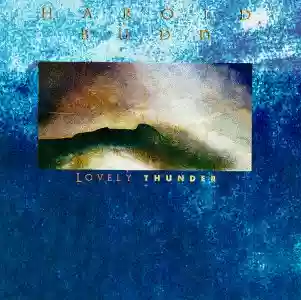
"Lovely Thunder" is an album from 1986, which continues a discourse begun with the legendary "Pavilion Of Dreams" and consolidates the foundations of Budd's thought through the styles most congenial to him: electric pianos of great delicacy, dreamy atmospheres, rarefied melodies immersed in liquid layers of keyboards. An emotional trait very close to Eno's ambient, but pervaded by a discreet intimacy that fully reflects its author's personality.
Budd (born in 1937) has always declared that he doesn't feel like the genius people have described, and in his recordings, he has approached many illustrious colleagues with humility. His music is the dreamlike and modest stroke of an approach to the world experienced inwardly and with wonder, without prejudices and without exaltations. The first tracks of this album trace ancestral paths that gently touch the water and narrate fascinating tales of places that could be in our hearts or before the eyes of an alien child. Incidentally, the vibrant waterfalls of tracks like "Sandtreader" or "Ice Floes In Eden" also echo in the album he recorded that same year with the Cocteau Twins: that "The Moon And The Melodies" which mixes the suggestions of 4AD-inspired dream-pop with the sonic textures of pianos elaborated with massive doses of chorus.
The second part of the album (at the time, side B) is instead occupied by a single track lasting over 20 minutes. "Gipsy Violin" is the title: a title that says everything and nothing, as it has no apparent ties to either the Gypsies or the violin... but fills the mind with landscapes at times relaxing and at times unsettling, becoming more adherent in expectations to the album's title than to that of the track itself. Among oceanic backgrounds of prehistoric scents and esoteric-flavored excursions, the long suite remains suspended in the ether, creating a thread of suspense that abandons all genres to become just music, in the most abstract sense of the term.
Certainly, one cannot talk about new-age, as someone has done when writing about Harold Budd. The content and motivations of works like this are far removed from any academia and any fashion. Here, rather, there are all the essences of ambient music tout-court, experienced precisely with an intimate instinct that tells of its author without complacency. Romanticism and restlessness blend together, manifesting a precious sonic jewel.
Loading comments slowly
Summary by Bot
Harold Budd's 1986 album Lovely Thunder is a refined example of ambient music featuring delicate electric pianos and dreamy soundscapes. The album continues the path started with Pavilion Of Dreams, combining emotional intimacy with ethereal melodies. Notable for its collaboration context and unique style, it offers listeners both relaxing and unsettling sonic journeys, especially in the extended suite Gipsy Violin. This work stands apart from typical new-age labels, embodying pure ambient essence through Budd's modest yet profound musical vision.Tracklist Videos
Harold Budd
Harold Budd was an American composer and pianist associated with ambient and minimalism. He collaborated with Brian Eno on Ambient 2: The Plateaux of Mirror and The Pearl, and with members of Cocteau Twins. His work emphasized silence, restrained piano, and luminous atmospheres. He died in December 2020.09 Reviews
