
 •
Rating:
•
Rating:
THE REVIEW
When my brother revealed to me the identity of that skull that appears in the beautiful Gorillaz video "Dare", I was really upset. No, it couldn't be Shaun Ryder, leader of the beloved Happy Mondays, that Michelin man, with teeth so damaged as if a "billladen" had exploded in his mouth. Truly unrecognizable, perhaps too much so even for a survivor like him: the image of devastation and of what excesses (of all kinds, he didn't deny himself anything...) can produce. Gradually, the astonishment gave way to a strange feeling, a mix of guilt and relief.
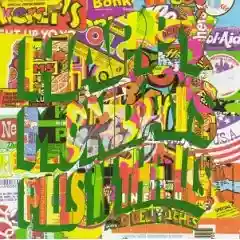
I haven't forgotten that Shaun, at a certain point in life, was one of my idols, like Ian Brown, like Tim Burgess, like Bobby Gillespie. When "Pills 'n' Thrills and Bellyaches" by Happy Mondays came out, the so-called "Manchester scene" wasn't just a subgenre to be used in academic critical-musical disputes. In the early '90s, albums like "Some Friendly" by the Charlatans, the eponymous album by the Stone Roses, "Life" by Inspiral Carpets were released along with "Phills...", all characterized by a warm, very warm fusion between brit-pop tradition and club culture, acid house, "pump the bass" rhythms, and a sincere, contagious, irrepressible desire for liberation. An exciting recipe that would find another excellent version in "Screamadelica" by Primal Scream. From "Madchester," as the city had been renamed during that period, came an impetuous disinhibiting wind, a shout of joy for the imminent end of the Iron Lady with all that her unfortunate period had meant for English society and beyond. A "spring" that lasted a short time, a flare that left more than a few "burned" on the field, but that was a more genuine "movement" than others, which captured a sincere desire for rebellion, suppressed for too long, of the twenty-something generation of that period. I was among them. And the fact that I didn't want to, or couldn't, due to bourgeois common sense or simply a lack of courage, participate in the "party" is totally secondary. Although I was desperately committed to finishing my studies, I lived in that phase as split: part of me was with Shaun and the others, with whom I secretly shared the musical aesthetics and the rebellious lifestyle.
The album in question is a powerful concentrate of energy, a perfectly successful synthesis, I know it will seem strange, of anarchic attitude, distorted "rock" guitars, elements of funky & soul, with a rhythmic base borrowed from a shabby rave-party. In some episodes, like the opening "Kinky Afro", in "God's Cop", in the cover "Step On" acid takes over and you find yourself dancing uncontrollably, repeating the unrepeatable phrases recited more than sung by Shaun, almost incomprehensible due to his dialectal pronunciation and his perpetually slurred mouth. In "Dennis and Lois" and in "Holiday" the black component prevails: always sustained, pumped rhythms, also supported by Motown-style '70s choirs. But the extreme versatility of the Happy Mondays, their blessed state, can be verified by listening to the most "deviant" episodes like "Grandbag's Funeral", which has an almost psychedelic taste, or the alluring "Bob's yer Uncle", with a flute borrowed from the Philadelphia sound, very Afro percussion, and an intoxicating vocalist that seems to, rather than accompany the piece, express the peak of pleasure.
Yes, I felt a certain sense of guilt and an indefinable relief seeing how the elder Ryder has ended up. The guilt comes from the fact that I somehow used him. I don't know, it's hard to explain, but it's as if with his wild and above, well above, the lines life, he somehow paid for everyone; even for me, a fearful and overly rational rebel. But perhaps it is right this way. Music is also an opportunity to live vicariously, to share an imagery without fully identifying with it; to be able to tell your children that the guy in the cartoon so messed up was once a friend of dad's.
Loading comments slowly
Summary by Bot
This deeply personal review reflects on Happy Mondays' Pills ’n’ Thrills and Bellyaches as a powerful fusion of brit-pop and acid house. It celebrates the album's energetic and rebellious spirit within the Madchester scene, embodying youth culture and musical innovation. The reviewer connects emotionally with Shaun Ryder's wild lifestyle and the album's lasting impact. Despite feelings of guilt over Ryder's excesses, the album remains a treasured symbol of liberation and authenticity.Tracklist Lyrics Videos
Happy Mondays
Happy Mondays are an English band formed in Salford in 1980. Central to the Madchester scene, they fused alternative rock with dance/acid house influences, released key albums like Bummed (1988) and Pills 'n' Thrills and Bellyaches (1990), and were associated with Factory Records. Fronted by Shaun Ryder, with dancer/percussionist Bez.03 Reviews
