
 •
Rating:
•
Rating: THE REVIEW
We all remember the strange coincidence involving the release of Dream Theater's "Live Scenes from New York": it was released exactly on September 11, 2001, and had a cover featuring a flaming apple with the Twin Towers clearly visible. After the attack, the copies already on sale were immediately withdrawn, and the album was re-released with a different cover.
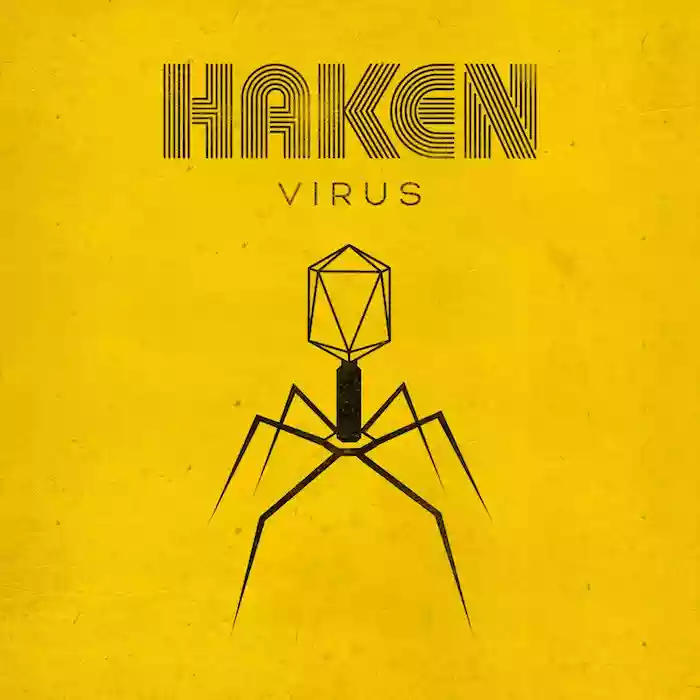
And here a similar coincidence occurs: "Virus," Haken's sixth album, was conceived alongside "Vector" as early as the end of 2017, as a natural sequel to the latter; who would have expected that an album titled "Virus" would be released right in the middle of a global pandemic? But unlike the Dream Theater case, this time no changes were made. When the pandemic erupted, Inside Out even contacted the band offering them the option to change the title to avoid controversy; however, the band chose to keep the planned title, consistent with the already written project. As far as I'm concerned, they made the right choice, both because any reference to SARS-CoV-2 is purely coincidental and because changing the title would have meant not only going against their project, making it inauthentic, but also bowing to the rhetoric of political correctness, which has recently reached really unbearable and ridiculous levels.
We had described "Vector" as the true metal turning point of a band that only had a limited number of metal elements, keeping its madness and genius unchanged. "Virus," on the other hand, makes the group's metal soul even more dominant and protagonist, sacrificing its genius and originality, lacking precisely the element that was probably the band's strength, the one that inflated the interest towards it. Yes, when you're about to press play, you need to prepare psychologically for the fact that you won't find particular flashes of genius; you need to prepare for what might be the band's least outlandish album. The big loser is undoubtedly keyboardist Diego Tejeida, whom I've often praised as the new Jordan Rudess or even as "a Jordan Rudess with much more courage to dare"; here, however, he is distinctly inaudible, weighed down by the overwhelming guitars, even more so than Rudess was in Dream Theater's most metal work, "Train of Thought." We thought Haken's "Train of Thought" was definitively "Vector," when instead the band had a more deserving shot up its sleeve for this title.
So it's a heavy record, the heaviest of the band, increasingly related to a certain djent style; Henshall and Griffiths' 8-string guitars are battered like never before. Nevertheless, the abandonment of the search for original solutions does not make the record less interesting; it simply shifts the focus from inventiveness to technique. If the keyboardist loses power, his king's throne is occupied by the drummer; Raymond Hearne offers his best performance here, his drumming is a sophisticated yet clean and orderly web of strikes, never chaotic. The spotlight is also on the guitar interplays, more intricate and cerebral than ever; guitars and drums often create a network worth following closely and which can confuse less attentive listeners. It seems paradoxical, but this time Haken manages to be difficult without being quirky in their way, inviting attentive listening while sounding in a somehow more traditional manner.
The compositional peaks, where power and technique marry best, are reached in the two longest compositions: the 10 minutes of "Carousel" and the 16 minutes of the suite "Messiah Complex" (inexplicably split into various audio tracks that do not have a life of their own when taken individually; it’s high time to put an end to this practice), closely followed by the slightly softer and smoother "The Strain." The two opening tracks, "Prosthetic" and "Invasion," are instead much more power-driven, the first, in particular, being a Fear Factory-style jackhammer that certainly does not leave listeners indifferent. There's also room for a simple and melodic track, "Canary Yellow," which might seem downright banal in isolation but within the album assumes a very specific role, breaking up the relentless pace and highlighting Ross Jennings' melodic voice. The vocalist has always been somewhat the weak link of this band (I’ve heard him referred to as a "poor man's Jon Anderson"), a voice that's unremarkable, flat, and lacking dynamism, sometimes even slightly annoying, but this track is an exception. Here, Ross manages to convince without doing more than usual; he indeed seems like the right voice for the track, it would be hard to imagine it with another voice. One wonders if in a primarily melodic band this singer would work better… The very short, slow, and concluding "Only Stars" presents some strange murmurs that bring a little typical band creativity back.
It is perhaps the band's least daring and courageous album, based on more or less established technical clichés and playing with them wisely. I'd probably rank it last in order of preference, but it smashes just enough with its incredible energy. However, I hope this is not the definitive direction of the Haken sound and that in their future works, the more imaginative and surprising Haken return.
Loading comments slowly
Summary by Bot
Haken’s Virus is a heavy, technically impressive album that embraces a dominant metal and djent style, but sacrifices the band’s signature originality and creative flair. The album features standout drumming and intricate guitar work, though the keyboards are subdued and the vocals remain unremarkable. While energy and craftsmanship are strong, the album feels less daring and inventive than previous releases. Virus stands as a solid but less inspired continuation of Vector, appealing to fans of technical metal but perhaps ranking lower among the band’s works.
Haken
Haken are a British progressive metal band formed in London in 2007. Known for blending adventurous prog-rock ideas with modern metal, their key albums include Aquarius (2010), Visions (2011), The Mountain (2013), Affinity (2016), Vector (2018), Virus (2020) and Fauna (2023).08 Reviews
