
 •
Rating:
•
Rating:
THE REVIEW
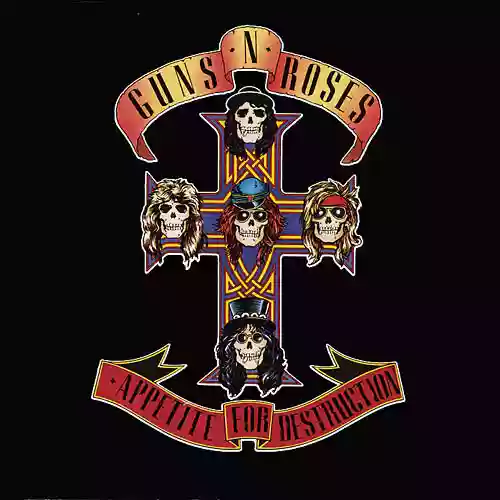
With this album, Guns N' Roses made their debut on July 21, 1987, in the grand panorama of world rock. It sold 33 million copies worldwide, and the American magazine "Rolling Stone" ranked it fourth in the list of the top 100 debut albums of all time. That said, the cosmic resonance of this undeniable success does not bestow the American band's record product with a seal of quality a priori. After the whirlwind creativity of the '70s, the following decade was decidedly cacophonous in long stretches. Enzo Jannacci called the '80s "ugly music made only with drums," and Fabrizio De André described them as an "interminable odyssey in agony," and they were right. And Guns N' Roses, in their mediocrity of talent, were the greatest representation of it. The loudest, most obnoxious, and flashy meteors of rock. Axl Rose, the leader and frontman of the group, is remembered more for his look like a warehouse worker in full existential crisis than for his vocal skills. Slash, a raw and rough guitarist and insufferably praised by many, went down in history for his post-drunken tramp hairstyle. "Appetite for Destruction" is a cheap, annoying, and transgressive album, like the entire Guns discography. Drums everywhere and at any cost, synthesizers cranked up, and the result is just noise, noise, and more noise. In the album, we find the band's most famous tracks like "Welcome to the Jungle," born from a personal incident of Axl Rose while he was in Seattle with a friend, "Paradise City," which starts slow only to erupt into a chorus with a terrible overlay of choirs and finish with a punk-style fury, and "Sweet Child O' Mine," which starts with a lysergic and improbable guitar solo only to end even worse; all in all, it never stops intoxicating with its mediocrity. The American band had a music without a future that could have, if it ever had, made sense only then. Fragile against the passage of time, irreversibly dated now, a child of an insipid and light-hearted era like that of the '80s. A syrupy and linear music, totally empty and not to be missed at all. In short, everything to be forgotten, for those who lived through it.
Loading comments slowly
Summary by Bot
This review critically examines Guns N' Roses' debut album, Appetite for Destruction, arguing that despite its commercial success, the album represents a noisy and mediocre example of 80s rock. The reviewer dismisses the band's musical talents and iconic tracks as dated, obnoxious, and lacking enduring quality. Ultimately, the album is portrayed as a reflection of the less appealing aspects of its era, with little value to remember.
Guns N' Roses
American hard rock band formed in Los Angeles in 1985; breakthrough debut Appetite for Destruction (1987); long career marked by major lineup changes and high-profile releases.61 Reviews
