
 •
Rating:
•
Rating:
THE REVIEW
An ancient legend about the Japanese says: they can be as sweet and sentimental as few others, but, when necessary, they can transform into beings more ferocious and bloodthirsty than a hyena. Leaving the well-known kamikaze aside, let's think about music. On one hand, we have the saccharine and pathetic J-pop, and on the other, the absurd cacophonies of Merzbow, Massonna, and CCCC. Shall we talk about visual arts? They are capable of producing the well-known tear-jerking anime, while at the same time, terrifying cornerstones of splatter cinema like "Tetsuo," "Grotesque," or "Tokyo Gore Police."
It's precisely the more feral and wild aspect of the Land of the Rising Sun that we will examine today.
Guitar Wolf will never reach the extremes of Mr. Masami Akita, but allow me to say, they are capable of giving a lot of kicks in the butt to thousands of so-called "punk bands" from the West.
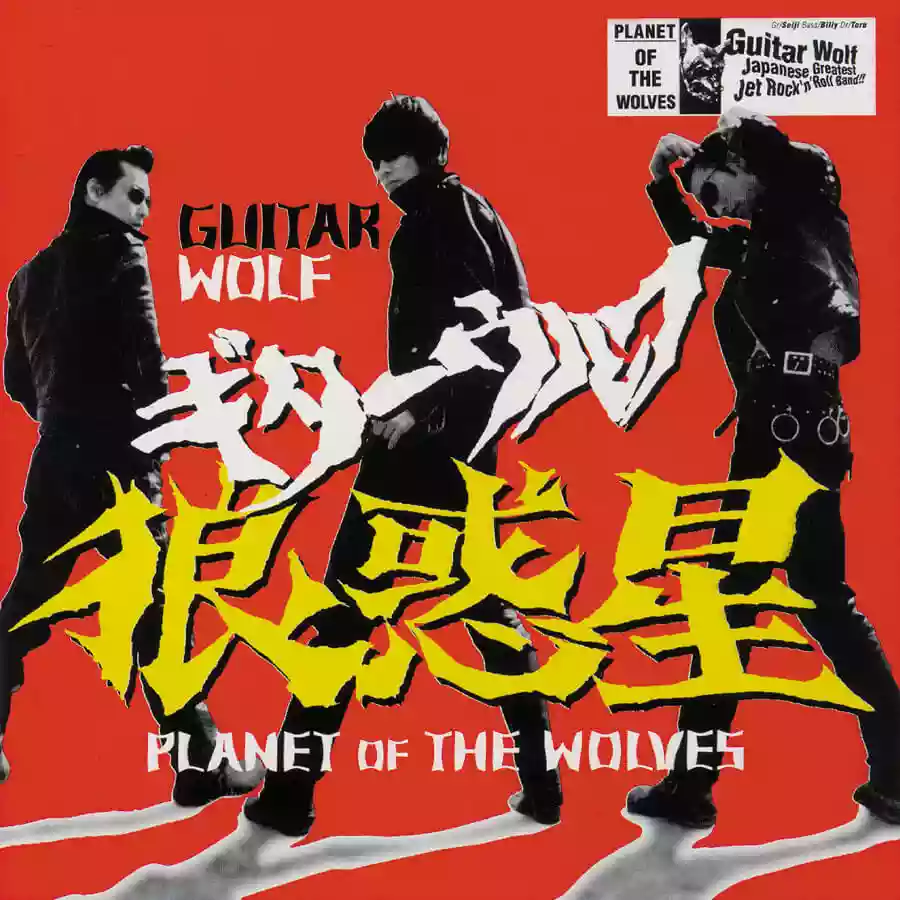
Born in 1987, contemporaries of the lesser-known The Stalin and Friction, Guitar Wolf has established itself as one of the most famous and respected punk 'n' roll bands in Japan. In 1997, ten years after their first cries, they crafted their third album: lots and lots of punches to the face!
Their mix is not complex: take the Sonics, the Iguana of "Raw Power," the early Cramps, and the Germs by D'Arby Crash. Add a lot of anger and sweat, and finally, you'll get a vague idea of what you'll encounter when you put their music on the stereo.
The opening "Kawasaki ZII750 Rock N' Roll" is a punch in the stomach. Simple structure, as required by the genre, lo-fi production, and a strong desire to martyr both vocals and instruments. "Planet of the Wolves" pays tribute to the proto-punk of Stooges and MC5. Short, instrumental, and intense. "Invader Ace" starts with a feedback capable of piercing your eardrums and continues on the notes of a wild garage rock. In the album, as if that weren't enough, there are covers of rather well-known names. A bewildered version of "(I Can’t Get No) Satisfaction," some renditions of Link Wray, and a tribute to their fellow countrymen Teegenerate.
If my words are not enough... tune into their frequencies and we will discuss it again!
Loading comments slowly
Summary by Bot
This review highlights Guitar Wolf’s 1997 album Planet of the Wolves as a powerful and raw punk rock experience. The band channels influences from proto-punk legends like The Stooges and MC5, delivering intense, lo-fi tracks with aggressive vocals. The album features covers of iconic rock songs and stands out in the Japanese punk scene for its ferocity. Overall, it's a recommended listen for fans of wild and primitive punk rock.Tracklist
01 Jett Love (02:01)
02 エネルギージョー (01:44)
03 Let's Get Hurt (02:53)
04 惑星ハート (02:52)
05 カンフーラモーンの恋 (01:51)
06 オオカミ惑星 (02:33)
07 ファーイーストマン (02:29)
08 インベーダーエース (03:19)
09 モーターサイクルレザーボーイ (02:23)
10 レッドロカビリー (03:06)
11 ワイルド ゼロ (03:47)
12 Rumble (03:34)
13 サティスファクション (03:32)
14 カワサキ ZII 750 Rock'nRoll (02:02)
15 オールナイトでぶっとばせ!! (01:58)
Guitar Wolf
Guitar Wolf is a Japanese garage-punk trio formed in 1987, self-styled as Jet Rock’n’Roll. Renowned for ferocious, feedback-drenched shows and a leather-clad aesthetic, they reached international cult status and starred in the B-movie Wild Zero. Key releases include Planet of the Wolves, Jet Generation, and Rock 'n' Roll Etiquette.04 Reviews
