
 •
Rating:
•
Rating: THE REVIEW
As we know, family is important. It is everything in life. It is that safe harbor where one docks when the sea is stormy, where one takes refuge in difficult times.
In the mid-90s, the ocean lapping the shores of California and Berkeley in particular was particularly stormy. Green Day were fresh off the big success of “Dookie” and the lukewarm reception of “Insomniac”, yet still consecrated to a global audience and on the rise as a band. The overwhelming success, shift in perspective, and fatigue did the rest, throwing our boys into a deep identity crisis. The European tour was cut short, burdened with anxiety, plenty of alcohol, and ultimately a collapse.
And here comes the family. During the reflection period by the home fireside, Billie Joe, Mike, and Tré didn't sit idle. As awareness blossomed and maturity stretched over the eclectic personalities of the trio, three dozen tracks came to light.
Exactly two years after the last release, on October 10, 1997, “Nimrod” was released, the fifth studio album. Still on Reprise Records and still accompanied by the group's mentor, Rob Cavallo.
Another change, yet another substantial dose of risk to take, “Nimrod” was also this.
This album is the farthest thing from a concept album and the definition of pure punk, even in the face of the Californian variant of the genre. Each track is an independent reality, albeit tackling themes that have now become a sort of imprinting for the band. This fifth work was born with the aim of breaking the typical punk rock constraints, while still staying the course. The songwriting, always entrusted to Armstrong, is as usual of quality. It spans widely. “King for a Day” is a ska punk piece, with its brass section, “Last Ride In” has surf rock influences. “Hitchin’ a Ride” opens with the Middle Eastern violin of Petra Haden from That Dog, guided by an eclectic bass making it a typically rock’n’roll track, winking at rockabilly. “Worry Rock” was compared by critics to pieces by Elvis Costello and the riffs of “Redundant” recall the guitars played in historic Byrds pieces. There's no shortage of more frenzied punk with “Platypus (I Hate You)”, at times devastating in the riffs and drumming.
There's also the ballad, “Good Riddance (Time of Your Life)”, which became a trademark over the years. It was supposed to be part of the “Dookie” tracklist but was discarded at the time, as it was not pertinent to the album's theme. A romantic plucking guides Billie Joe's voice, singing a melancholic text dedicated to the failure of his first important relationship. The protagonist of the narrated events is the same girl who inspired “She” (Dookie), “Whatshername” (American Idiot), and “Amanda” (Tré!). Strangely and incomprehensibly, the gentle damsel has nothing to do with Armstrong's historical wife, Adrienne Nesser.
As previously mentioned, this album tackles more reflective and mature themes compared to previous works. Billie Joe Armstrong concentrates on fatherhood and the role of a husband. With “The Grouch”, somewhat contrary to the trend but for reflection's sake, it addresses the fear of aging, gaining weight, even becoming impotent and losing one's ideals. With “Walking Alone”, the thought shifts to friendships lost over time or those that could fade due to inattention.
Being that the tracklist's content is highly heterogeneous, one can quickly move from reflection to goofing around, as punk effectively intends.
And so “Nice Guys Finish Last”, the carefree opener, returns to tackle the theme of success and the arrogance of figures maneuvering the music industry. “Jinx” and “Prosthetic Head” are pure goofing off, and with self-deprecating lyrics, they remind us that Green Day still has no intention of taking themselves too seriously.
The album title references a Biblical character, a hunter, but the reference's purpose is anything but noble. The term “Nimrod” is actually used by Americans to call someone stupid, referring more than anything to the namesake hunter protagonist of the Looney Tunes, Elmer Fudd, sarcastically nicknamed this by Bugs Bunny.
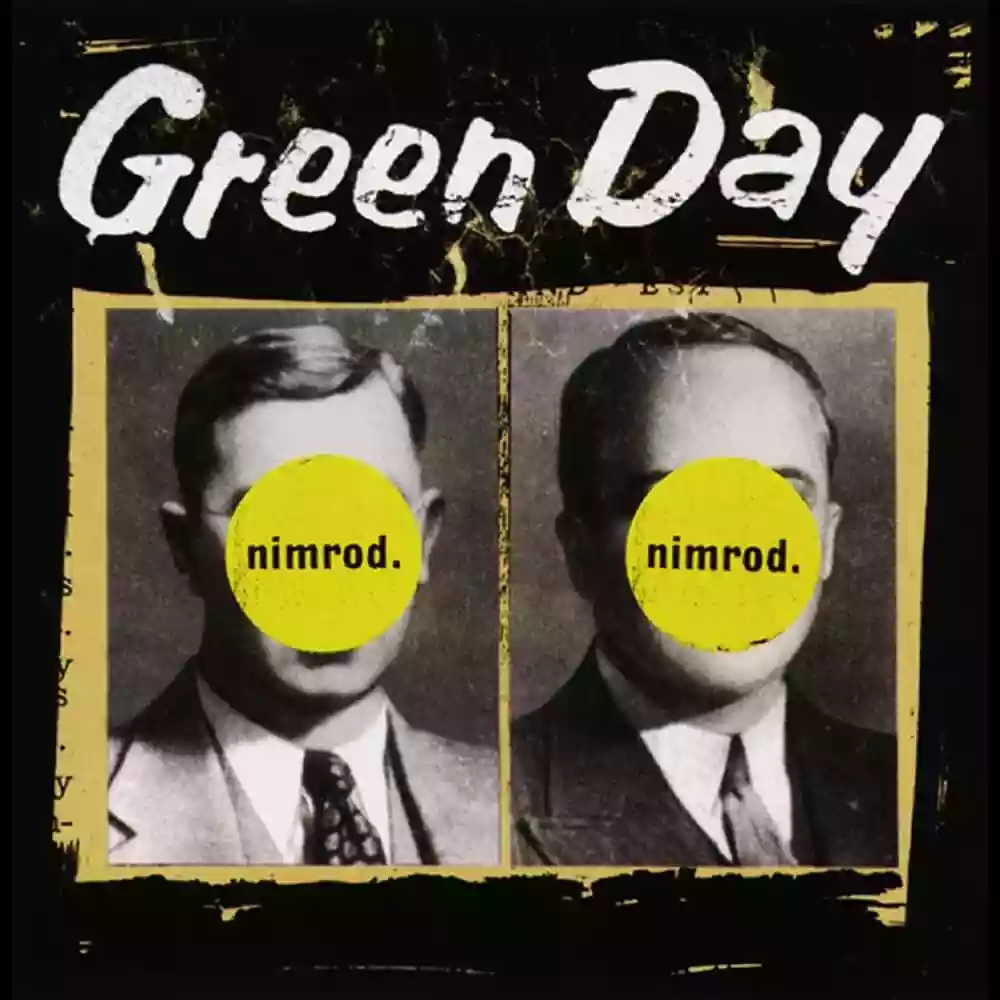
The cover was created by Chris Bilheimer, a graphic designer friend of Armstrong, who had already made some covers for R.E.M. Bilheimer was inspired by some election posters he had seen around town. The candidates' faces had been torn away, as if wanting to deprive the subjects in the photograph of their identity. Which ultimately is precisely what the eighteen tracks composing the tracklist want to convey.
The story tells that “Nimrod” debuted with both lights and shadows. The promotional tour began with a public revolt at the spaces of Tower Records in Manhattan, during the live performance of the first autograph session. Green Day did not appreciate the harsh criticism from the music press, accusing them of having lost their punk soul. Criticisms later echoed by the fourteen hundred people present at the event. The matter ended with Cool hurling a bass drum into the crowd and Armstrong's attempted emulation of the gesture, this time with a monitor. A resolution only avoided thanks to the providential intervention of the store manager. This didn't deter Billie Joe, who left Tower Records only after having smeared the store windows with various writings, including “Fuck” and “Nimrod”. Reality or fiction for commercial purposes?
It remains for posterity to make the difficult judgment.
The version published last year, on the occasion of the album's twenty-fifth anniversary, contains a demo, “Irritate Me”, initially discarded from the original tracklist, and a cover of “Allison” by Elvis Costello, along with thirty bonus tracks and live versions.
“Nimrod” is yet another breaking album that took away a good chunk of Green Day's followers but gained them new approvals and a new fan base. It is also a courageous and mature work, heterogeneous and very powerful. Together with Dookie and Insomniac, it forms a solid trilogy for the band's activities in their first decade of music. And it has undoubtedly carved a deep groove, whether one chooses to acknowledge it or not.
Loading comments slowly
Summary by Bot
Green Day's Nimrod is a pivotal 1997 album representing maturity and eclecticism in punk rock. Despite mixed initial reactions, it broke punk norms with diverse styles and reflective lyrics. Key tracks like "King for a Day" and "Good Riddance" highlight the band's growth. The 25th anniversary edition adds rare demos and live tracks. Nimrod remains a bold declaration of Green Day evolving while staying true to their roots.Tracklist Lyrics Videos
Green Day
American rock band formed in 1986 in the East Bay area of California. Core members: Billie Joe Armstrong (vocals, guitar), Mike Dirnt (bass), Tré Cool (drums). Known for blending punk energy with melodic hooks.62 Reviews
Other reviews
By ste84
Two years before the "Enema Of The State" boom by Blink 182, Green Day had already created their masterpiece!
The real gem is in the simplicity of "Time Of Your Life", in those strings that give you goosebumps!
By SandydeiNovanta
Let's admit it; by now, they are a band for girls totally incapable of understanding or remotely grasping the concept of rock.
This is pop-punk, and it’s now sad that bands like the Doors, Hawkwind, Velvet Underground, Led Zeppelin no longer exist because they are pressed by the mainstream commercialism of record companies.
