
 •
Rating:
•
Rating:
THE REVIEW
Announcing a trilogy is equivalent to fueling extremely high expectations, because only by creating something massive and epic do you make the saga truly grand, memorable, and worthy of the name.
The Green Carnation, to be honest, had already done something grand in 2020, returning to the scene after 14 years and rekindling a discography that would have been a pity to end definitively after 5 albums, especially having achieved much less than they truly deserved. Now, fewer years have passed, “only” 5 (still a biblical span for my taste), yet a justified amount of time considering what was brewing: the band was working on a trilogy, not just one but three albums to be released between 2025 and 2026.
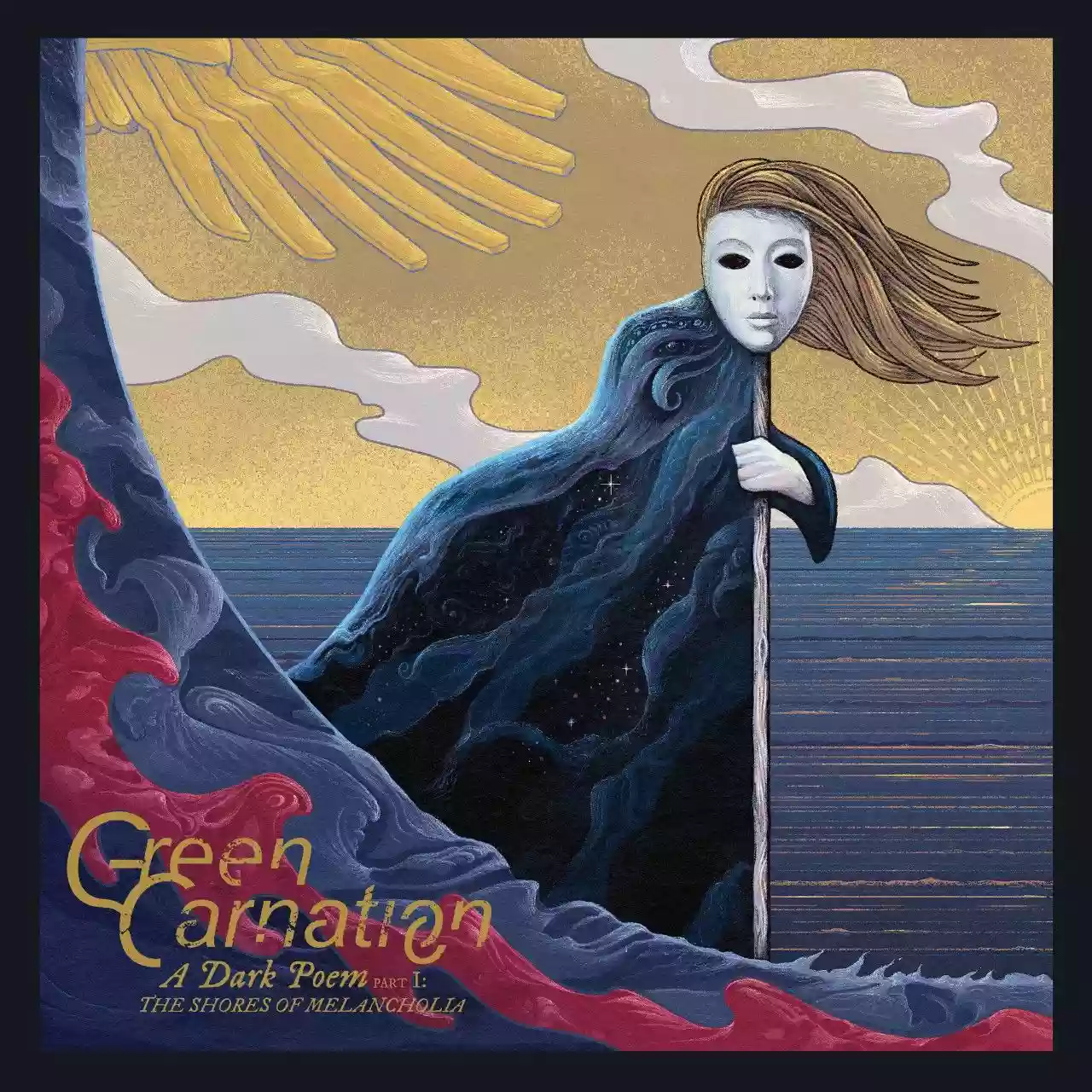
The first chapter was released in September 2025. And I must confess: I expected more. The characteristics are few and simple, all more or less already known, though sometimes a bit polished: guitars are solid and weighty, undoubtedly metal in style but with a rockiness that suggests a certain hard rock aftertaste, a sharp, incisive, metallic bass, an organ that isn’t too thick, atmospheric and orchestral openings, cautious and moderately anguished rhythms. Fundamentally, it’s a prog/gothic metal typical of the band’s most canonical productions, those that defined works like “Light of Day, Day of Darkness” or “A Blessing in Disguise.”
The problem is that everything is very basic; it doesn’t take off, it doesn’t soar as it should. The decision to focus on medium-long tracks (generally over 7 minutes, one exceeds 9) may not be the happiest. From a song that goes over 7 minutes, you’d expect a certain variety, an evolution, a hint of theatricality; instead, everything proceeds much too linearly, with the usual main heavy guitar riff and the usual melodic opening. What pervades the tracks is a sense of stasis and even superficiality, compositions never properly expand as one would expect. Paradoxically, the previous album “Leaves of Yesteryear,” which on paper was less ambitious, seemed richer and delved much better into the atmospheric side. If the goal was just to make a heavy record, they might as well have kept the songs shorter and made something more “catchy” like “The Quiet Offspring.”
That said, this doesn’t mean the album lacks interesting moments or more or less successful tracks. "In Your Paradise" is the one that concentrates the most good ideas, "Me, My Enemy" is the best developed atmospherically (and it also features a good deal of sonic variety), while "The Slave That You Are" is a pleasant surprise, quite atypical for Green Carnation, with its almost extreme black metal, made up of violent guitars, pounding double kick and screaming. The flute is well used in the already mentioned "In Your Paradise" and "Me, My Enemy"—a minimalist and clever use, which doesn’t try to mimic Ian Anderson, Andrew Latimer, or even Peter Gabriel, just a few sharp, fitting notes. The electronic loops that appear in "In Your Paradise" and "Too Close to the Flame" also stand out, brighter in the former and more disguised and hidden within the guitar riffs in the latter.
The album has received rather enthusiastic reviews and high scores here and there, a series of praises the band has shamelessly showcased on their social media channels. I don’t know what struck fans so strongly. Perhaps they were satisfied with the powerful, solid sound? I prefer to keep a lower profile: where others gave it a 9 or 9.5, I’ll stick to an honest 7, no more. They made a by-the-book album, certainly solid, faithful to their trademark, but it deserved another gear, something I hope they’ll engage for the next two chapters.
Loading comments slowly
Summary by Bot
This review explores Green Carnation's 'A Dark Poem, Pt. I: The Shores of Melancholia.' The writer provides a thoughtful analysis of the album's atmospheric approach. Musicianship and production are observed with a critical eye. Overall sentiment is measured, neither highly enthusiastic nor condemning. The review is useful for listeners seeking an in-depth perspective on the album.
Green Carnation
Green Carnation is a Norwegian progressive metal band known for stylistic shifts across doom, gothic, prog, heavy rock, and acoustic settings. After five varied albums (2000–2006), they returned with Leaves of Yesteryear (2020) and launched the A Dark Poem trilogy in 2025.05 Reviews
