
 •
Rating:
•
Rating:
THE REVIEW
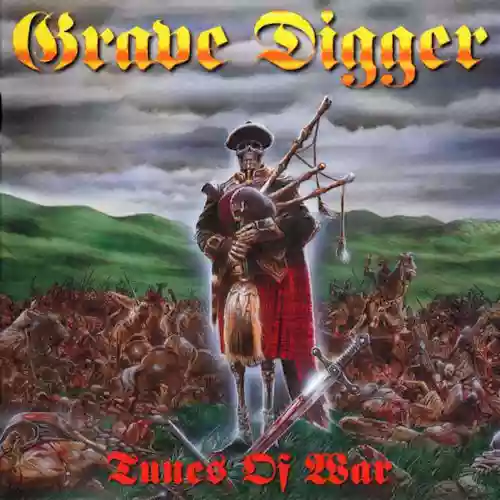
From the eighties to the brink of the two thousand, Grave Digger's discography has gone through three distinct phases: the classic trilogy, from traditional heavy (Heavy Metal Breakdown, Which Hunter, War Games); the dark trilogy, from powerful and gloomy heavy (The Reaper, Symphony of Death, Heart of Darkness); and the medieval trilogy, from epic heavy (Tunes of War, Knights of the Cross, Excalibur). This album, from 1996, represents the first act of the third era of the band, an album where the dark atmosphere of the previous “Heart of Darkness” is replaced by the heroic and warlike feel of this magnificent milestone.
“Tunes of War” is composed of thirteen tracks of monolithic heavy metal, interpreted by the unhealthy and ungracious voice of Chris Boltendahl, it’s a fascinating concept on the Scottish revolution, a work that abruptly altered the songwriting style of the band, replacing the horrific themes of previous works with a true historical reportage set to music. A revolution, indeed, not only in the lyrical sense: the choruses have become pompous and evocative while, at the performance level, the pieces have assumed heroic, romantic, sometimes even tragic tones, as often happens in musical transpositions of works focused on the medieval era.
After the intro "The Brave” (a metallic remake of the Scottish anthem, complete with bagpipes), the album opens with an explosive riff and a gallop adorned by Boltendahl's hysterical scream, which kicks off two prodigious anthems: “Scotland United” and “The Dark of the Sun”. “William Wallace” is pure speed metal with a melodic break in the refrain, "The Bruce” is cadenced and martial, with a chorus that seems like a catchphrase. “The Ballad of Mary” is an almost symphonic slow piece that paves the way for three brief episodes of irresistible hard 'n' heavy: “The Truth”, “Cry for freedom”, and “Killing Time”. “Rebellion” is one of the hits of this album: opened by an arpeggio and a massive chorus, it then explodes into a mid-tempo that offers an instrumental with a Celtic flavor. The album closes with the dramatic outro "The Fall of the Brave".
Those who own the original version will have noticed that the booklet is very well curated, complete with historical sources, enclosed in the didactic sections that appear between texts. A well-chosen decision that should help the listener to discover/rediscover the extraordinary power of this unrepeatable masterpiece.
Federico “Dragonstar” Passarella.
Loading comments slowly
Summary by Bot
Grave Digger's 1996 album Tunes of War marks the start of their medieval trilogy, replacing dark themes with heroic, historical storytelling. The album features powerful heavy metal with evocative choruses and a Scottish revolution concept. Memorable tracks include 'Scotland United,' 'William Wallace,' and 'Rebellion.' The well-crafted booklet enhances the listener's experience with historical context. Overall, a monumental and unrepeatable masterpiece in metal history.Tracklist Lyrics Videos
Grave Digger
Grave Digger are a German heavy metal band led by vocalist and founder Chris Boltendahl, active since the early 1980s. The reviews highlight their consistency, rough vocal trademark, and a strong run in the 1990s with concept-driven albums, especially The Reaper and the medieval-themed releases.19 Reviews
