
 •
Rating:
•
Rating:
THE REVIEW
There are many ways to handle one's success. There are those like Jimi Hendrix, Janis Joplin, Kurt Cobain (and you can add as many as you like) who cannot bear the weight and inevitably give up. Then there are some groups that arrive too early compared to others and due to the misunderstanding of the majority of the audience, they disband, only to reform twenty years later, maybe with some new members (the Stooges, the New York Dolls, and so on). Finally, there are those groups that, having reached astronomical success, do not give in to the passage of time; they fight, struggle, drag themselves on their elbows, yet after 10 years you still see them there, and after 20 too, and after 30 they try again and maybe even succeed. The Rolling Stones belong to this last category today, still capable of being on Mtv (not that it’s a merit, let’s be clear) and up until about a decade ago, so did the Grateful Dead.
Now, I won’t tell you who the Grateful Dead are because if you don’t know them, you just have to type their name on Debaser or Wikipedia, and you'll get enough information; and if you still haven’t listened to anything of theirs, start with Aoxomoxoa, Live/Dead, Anthem Of The Sun, definitely not with this album.
I was telling you that until 1995, the year of Garcia's death and the consequent disbandment of the band, the Grateful Dead had made it. They had gone through their original material (that acid-psychedelic sound that they themselves had helped create at the end of the '60s), survived the hardening of the sound in the early '70s, made it through the years of prog, punk, disco music, and heavy metal unscathed. And they found themselves, a bit winded truthfully, in 1987, after countless live albums that testified to their ideal dimension (even touring with Dylan in a tour later documented by the poor Dylan & The Dead), with Jerry Garcia afflicted by the usual drug addiction issues, after a full 7 years since their last studio effort.
It was thus that the Dead entered the studio for the penultimate time, hopeful of repeating the small success they had with their last single released in 1980: "Alabama Getaway".
Instead, they found themselves just a few months later incredibly celebrating their best-selling album of all time, propelled by the single "Touch Of Grey", a sort of self-tribute revisited in an '80s key, somewhat akin to some of the commercial rock-pop of Dire Straits, but surely buoyed (I think) also by the enthusiasm of the survivors of the psychedelic era, who saw in them a sort of symbol that resisted every era. Notable too is "L.A. Fadeaway", showing how good rock blues can be ruined with Garcia's voice altered by some electronic devilry and annoying effects that pop up from time to time. "Tons Of Steel" is in my opinion one of the weaker compositions, a sort of energetic ballad in the style of Bruce Springsteen in the '80s, as banal and commercial as it gets. Finally, the two best compositions, one "Throwing Stones" which, although not exempt from the flaws of the previous two, stands out for a fun and singable chorus. To conclude, "Black Muddy River", a slow and delicate celebratory ballad reminiscent of the Grateful Dead of American Beauty.
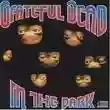
So what to say in conclusion? The album is undoubtedly an attempt to get closer to the sound that was prevalent in those years while trying to maintain that spark of personality (see the various guitar solos typical of their sound) to be recognized. Honestly, I too am dubious about the rating; compared to the aforementioned masterpieces, it would deserve a one, one and a half to be generous. But it's also true that such an album cannot be compared to the works in their heyday; it would be unjust and unfair to them. So I give it a nice three, unconcerned with the horrible cover, unconcerned with the fact that if Jerry Garcia were still alive, he would wipe the floor with that pirate Keith Richards and his mates, just as he did in the '80s, just as he even did (and here I hope not to cause an uproar) in those distant '60s.
Loading comments slowly
Summary by Bot
The reviewer reflects on the Grateful Dead’s enduring legacy leading up to their 1987 album 'In The Dark.' While not their strongest work, it features the hit 'Touch of Grey' and shows their attempt to adapt to the 80s sound. The album is contrasted with their classic psychedelic era, earning a cautious but respectful rating. Ultimately, it is seen as a respectable yet flawed effort that keeps their spirit alive.
Grateful Dead
The Grateful Dead were an American rock band formed in 1965, closely associated with San Francisco’s counterculture and known especially for improvisational live performances followed by the Deadhead fan community. Their career effectively ended after guitarist and singer Jerry Garcia died in 1995.15 Reviews
