
 •
Rating:
•
Rating:
THE REVIEW
Why have the Grateful Dead never been too considered by the Italian public or critics? And why is this album - very interesting, although certainly not a masterpiece - never talked about?
I doubt there is a conspiracy by our deviant secret services against the psychedelic - folk - roots - ethnic rock band of the late Jerry Garcia, so, excluding reprisals against my review, I take on the delicate task of introducing the reader to this album.
I apologize if I'm too brief, but in about forty minutes I have a train to catch, so I will necessarily have to be quick: please forgive the brevity, which forces me to be quicker than usual, notwithstanding this preamble.
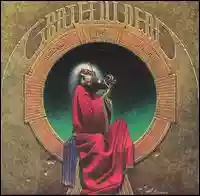
Released in '75, when the group had already given its best and the summer of love had turned to autumn, "Blues for Allah" codifies the sound of the mature Deads in a lucid ensemble of songs with delicate acoustic tones, complemented by some electric inserts which do not, however, disturb the peaceful progress of the whole, which, having abandoned any experimental or disruptive ambition, reconnects to a U.S. musical tradition that saw, in those years, the primacy of Byrds' epigones like the Eagles, the Doobie Brothers, and, in some respects, the less jazzy Steely Dan... those for Do It Again to understand, or Reelin' in the Years.
The music is essentially simple and straightforward, saved by the craft, the dreamy singing, and Garcia's always clean and bright guitar, well supported by the rest of the group. Meditative music in some aspects, certainly relaxed... even though not always easy to listen to, given that the Deads' melodies always have a zigzagging course that dulls the commercial impact and doesn't always allow memorization, even when it seems to flow through our insides like the fresh water of the moon's fountains.
A separate consideration should be given, however, to the concluding title track, a piece that alone is worth the purchase or at least the listening of the album: here the times become more expanded, the atmospheres of the Grateful Dead's live jam sessions are reproduced in the studio-lab, the contrast between electric tension and acoustic relaxation marries perfectly into the song's bluesy sway, enriched by a hypnotic and at the same time almost ritualistic chant, which in some respects ties back to the group's psychedelic vocation.
Definitely one of the band’s most inspired pieces, probably one of the most interesting tracks of the '70s, even if over here people went crazy for the English-brand prog and, at the time, the late hard rock of the Zeppelin and the remains of Deep Purple.
That said, a four out of appreciation - also to encourage listening - to the album, and a goodbye to everyone, because I'm running to catch the train, blasting the Deads on my iPod.
Loading comments slowly
Summary by Bot
Blues for Allah, released in 1975, showcases the mature sound of the Grateful Dead with a mix of acoustic calm and electric inserts. The album blends folk, psychedelic, and roots rock influences, though it lacks commercial memorability. The title track stands out as a hypnotic, ritualistic piece embodying the band's live jam spirit. Despite limited recognition, this album deserves attention for its craft and unique atmosphere.Tracklist Lyrics Videos
Grateful Dead
The Grateful Dead were an American rock band formed in 1965, closely associated with San Francisco’s counterculture and known especially for improvisational live performances followed by the Deadhead fan community. Their career effectively ended after guitarist and singer Jerry Garcia died in 1995.15 Reviews
