
 •
Rating:
•
Rating:
THE REVIEW
In 1981, after the disco music era ended, following LPs like "Fame," "Muse," and "Warm Leatherette," the top model Grace Jones, Jamaican but raised in New York, a famous cover star and inventor of the female gay iconography, released "Nightclubbing" for Island Records, an album full of nuances and sonic contaminations between different genres (reggae, funk, electronic), stylistically one of the most excellent and representative of the eighties.
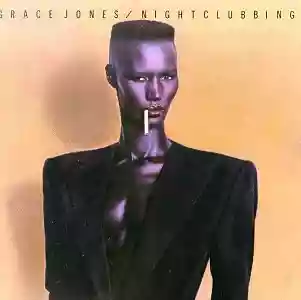
This project, which constituted a real artistic and public triumph for the singer, while exemplary like the previous works in every aesthetic aspect, proved to be a work notably more valid and complete from a purely musical side. For this proposal, just like the preceding albums, illustrious names collaborated, including Interview's art director Richard Bernstein, who designed the album packaging, and director/photographer and Grace’s boyfriend, Jean-Paul Goude, who took care of the artist's image, including the music videos. The memorable cover of the album showcases the model in all her androgynous, austere, and slightly unsettling charm (very short haircut, dark jacket, cigarette in mouth) while the musical part produced by Chris Blackwell, the boss of Island Records, was recorded in Nassau, Bahamas, and benefited from the significant contribution of Sly and Robbie in the rhythm section, a fundamental musical framework of the work.
The LP opens with the sharp and gentle "Walking In The Rain" characterized by a reggae cadence and a nocturnal and rainy atmosphere, continues with "Pull Up To The Bumper", the most successful track, marked by a funky groove and urban sounds. "Use Me" and "Nightclubbing" are covers of Bill Withers' piece (unrecognizable from the original) and Iggy Pop. It proceeds with the brief and light "Art Groupie" and offers a nod to Astor Piazzolla, master of the new tango, with the song "I’ve Seen That Face Before", a piece of unmistakable charm, later made famous as the soundtrack for a provocative dance in a nightclub by the sensual Emmanuelle Seigner in Roman Polanski’s film Frantic. "Feel Up" features Caribbean sounds, while "Demolition Man", a song written by Sting, is characterized by a rhythm between rock and reggae. The work concludes with "I've Done It Again", a piece sweeter and calmer than the previous ones.
Following "Nightclubbing" were "Living My Life," "Slave To The Rhythm" produced by Trevor Horn, "Inside Story," and "Bulletproof Heart." From the early nineties, after the successful single "Sex Drive," the career of the former top model began to wane amidst financial issues and legal troubles; nevertheless, Grace Jones remains today a post-modern icon, an unparalleled reference for both the disco era and the eighties, probably because, as Andy Warhol used to say during that period, 'Grace.. is perfect!'
Loading comments slowly
Summary by Bot
Grace Jones' 1981 album Nightclubbing is a definitive 80s release that blends reggae, funk, and electronic music with artistic sophistication. Produced by Island Records and featuring contributions from Sly and Robbie, it includes memorable covers and original tracks. The album's iconic visual identity enhances its status as a cultural milestone. Nightclubbing marked a peak in Jones' career and continues to influence the music and fashion worlds.Tracklist Lyrics Videos
Grace Jones
Jamaican singer, model, and actress who rose from late‑70s disco (Portfolio, Fame, Muse) to the Compass Point sound of Warm Leatherette and Nightclubbing, scoring iconic tracks like Pull Up to the Bumper, I’ve Seen That Face Before (Libertango), and Slave to the Rhythm. Returned in 2008 with Hurricane.06 Reviews
