
 •
Rating:
•
Rating: THE REVIEW
Anyone who has no idea who Gorguts are can get an idea by reading the other reviews (also on this site) of “Considered Dead” and “The Erosion Of Sanity.”
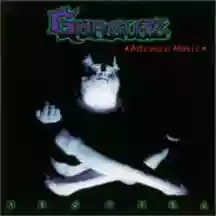
Regarding “Obscura,” it can no longer be strictly labelled as Brutal Death metal because the influences of other genres are “so many and such” that they throw labels into the closet: released in 1998, five years after the previous work, it laid the foundation for the new path taken by many Brutal bands at the end of the '90s and still continued today. I can't help but compare it to the subsequent “... And Then You'll Beg” by Cryptopsy, which is undoubtedly a product of this CD, and which I will soon review. Listening to the first three songs was enough for me to realize I was facing an album completely outside of every stilema and convention: honestly, I wasn't very struck by the rhythms (even though they are complex and quite innovative), but by the absolutely inconceivable guitar sounds from the human mind. Absolutely limping and scratchy riffs are accompanied by extreme, precise, and never boring drumming, while the singer-guitarist gives another proof of being a talented instrumentalist as well as a good growler. His vocal style hasn't changed at all from the previous work and remains on tones that are never too low and not at all gurgling. Were it not for the particularly gloomy tones and the absence of Jazz-Fusion inserts, this record could be classified as Mathcore. But as mentioned above, the notes played (however disharmonious) produce very dark “melodies.” The guitarists use a distortion with a particularly metallic and rusty sound that makes the substance of the record much more disorienting and pounding: although it's strange that in a record of this genre it isn't the drums leading the game, undoubtedly in “Obscura” it plays a rather marginal role. Not the rhythms, but the sounds are used by Luc Lemay and his companions to stun the listener in a flood of reasoned noise: needless to specify what excessive technical skill is needed to perform pieces like the twelve contained in the album. In fact, the Gorguts had already demonstrated in the previous “The Erosion Of Sanity” a proficiency that places them in the Olympus of extreme metal, so I will simply say that in “Obscura” they have further improved.
But if my review ended here, I would overlook fundamental details: the vortex of madness created by the four is not just made of frenetic guitars and frantic rhythms: what is most surprising is the articulation of the pieces where fundamental parts have the voice and daring juxtapositions (such as the inclusion of a piece performed with the viola in “Earthly Love”). The work is chiseled, the notes are placed close to each other to create creaks and unpleasant sensations that dull the listener's senses. Listening is difficult and not very fluid, also due to a mixing process that is far from crystal clear. However, the work is not monolithic; each song has its own particularities and does not blend with the others: boredom is banned from “Obscura,” which, in return, causes a considerable sense of physical and emotional exhaustion once listening is complete. The emotions triggered by such a record are many, and very few are positive: the lyrics are criticizable for dwelling on the taste for oriental wisdom and for not coherently expressing the strength of the feelings triggered by the music.
An epic and exhausting album, highly recommended to those craving peculiar and unusual sounds, but highly discouraged for the faint-hearted or purists of the genre: "Obscura" can appeal only to lovers of hallucinatory and confused music, but despite the sound being anything but light, it’s by no means certain that a CD of this type will appeal to those seeking exclusively violent music. Excellent, laborious, and unprecedented.
Loading comments slowly
Summary by Bot
Gorguts' Obscura redefined Brutal Death Metal with groundbreaking fusion of genres and unprecedented guitar sounds. The album's complex, disorienting riffs and dark melodies showcase exceptional technical skill. Though challenging to listen to, it delivers a unique emotional and physical intensity. Recommended for adventurous fans seeking unusual and highly innovative extreme metal.Tracklist Lyrics Videos
Gorguts
Gorguts are a Canadian technical/avant‑garde death metal band formed in 1989 and led by guitarist/vocalist Luc Lemay. Celebrated for dissonant, complex compositions, they released landmark albums including Obscura (1998) and returned with Colored Sands (2013) and the EP Pleiades' Dust (2016).06 Reviews
Other reviews
By Gabrielegilli
Obscura represents the pinnacle of Gorguts, the mechanically monumental fresco of a genius mind called Luc Lemay.
After an hour and two minutes of listening, one is left in a 'Sweet Silence,' a disturbing snapshot of our twisted psyche.
