
 •
Rating:
•
Rating:
THE REVIEW
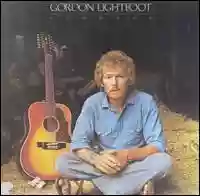
The brilliance that seemed lost with "Old Dan's Records" reemerges with class and naturalness in 1974 with "Sundown"; a beautiful and commercially successful album that managed to climb the charts, reaching the first place in Canada and, for the first and only time, in the US Billboard 200, becoming the best-selling album of Gordon Lightfoot's career, driven by "Carefree Highway" and especially by the title track "Sundown," which became his most successful single, surpassing "If You Could Read My Mind."
Although it shares many traits with the previous "Old Dan's Records," including a certain lack of immediate impact, "Sundown" nevertheless manages to grow powerfully with each listen, standing out for a renewed stylistic pursuit, expressed in the use of instruments previously unheard of for Lightfoot, such as the English horn and the Moog synthesizer, as well as a greater presence of percussion and electric guitars, still quite accompanying but nonetheless well-presented, perceptible, and characterizing. Although not as much as "Summer Side Of Life," "Sundown" is an imaginative and creative album, "Somewhere U.S.A." with its sly and relaxed country is the perfect backdrop for a journey through the boundless semi-desert plains of Texas or Arizona. "High And Dry" falls into Gordon Lightfoot's "nautical" theme and is a lively and playful up-tempo with light and ironic reflections where the singer-songwriter duets with a female voice in the chorus. This characteristic identifying theme is also connected, with much more depth, to the undisputed apex of the album, "Seven Islands Suite": long, slow, and rhythmic, accompanied by orchestrations and a creeping Moog synthesizer, it has a hypnotic and twilight charm. Here the sea becomes a sort of place of the soul, providing a cue for reflections of a more general and introspective nature, in perhaps the most enigmatic text ever written by our artist. Not only "Seven Island Suite," but much of the album presents a reflective and almost cerebral mood: the brief and highly refined "Circle Of Steel," a subtle and dreamlike folk enriched by bells and accompanying choirs, with an English horn that hints at the title track's melody, features equally cryptic lyrics; "Is There Anyone Home" and "The Watchman's Gone" continue the musical discourse begun in "Don Quixote" with "Beautiful" and continued in much of "Old Dan's Records," enriched with synthesizers in the former case and orchestrations in the latter, with a sound leaning towards blues. These are meditative songs with a nuanced and almost ethereal charm that only emerges after a few careful listens; this style is also expressed in the successful single "Sundown," a refined metaphor once again inspired by the problematic love life of the singer-songwriter, with an effective bass line that sets the tempo for the melody, seductive enough and decidedly more passionate and earthy than the two previous episodes; which finally flows into "Carefree Highway," serene and liberating, enriched by a touch of orchestral airiness.
In an album that is too nuanced for long stretches to capture on the first listen, Gordon Lightfoot once again relies on the element of surprise to close, but this time not with epic compositions in the style of "Cabaret" or "Patriot's Dream," but with a simple, poignant ballad, "Too Late For Prayin'," one of the best ever written by the minstrel of Toronto, rich in melancholy and bitter disillusionment, yet engaging and emphatic enough to immediately strike the listener, right to the heart, thanks to the always masterful orchestrations and a vocal performance of great intensity and pathos that brings the chapter "Sundown" to a close. Despite the commercial success it garnered, it is not the best nor the most immediate album in the singer-songwriter's discography, but it represents an important turning point in his artistic path, a turn that through "Cold On The Shoulder" in 1975 would reach its definitive fruition with "Summertime Dream."
Loading comments slowly
Summary by Bot
Sundown marks a significant artistic resurgence for Gordon Lightfoot, blending thoughtful folk melodies with innovative instruments like the Moog synthesizer. Its commercial success includes chart-topping singles like "Sundown" and "Carefree Highway." The album's reflective and nuanced mood rewards patient listening, highlighted by standout tracks such as "Seven Islands Suite" and "Too Late For Prayin'." It represents a vital step in Lightfoot's evolving sound leading to future classics.Tracklist Lyrics Videos
Gordon Lightfoot
Gordon Lightfoot (1938–2023) was a Canadian singer-songwriter and guitarist from Orillia, Ontario. A defining voice of folk and country-folk, he rose in the 1960s and reached a 1970s peak with hits like If You Could Read My Mind, Sundown, and The Wreck of the Edmund Fitzgerald. His storytelling, melodic craft, and clear baritone influenced generations across folk and pop.09 Reviews
