
 •
Rating:
•
Rating:
THE REVIEW
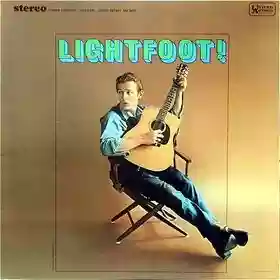
Fourteen songs of disarming simplicity: voice, acoustic guitar, and some sporadic bass lines, no percussion, no surrounding arrangements to speak of: this is all young Gordon Lightfoot needs to debut in the music market with a masterpiece, which will prove to be just the first, memorable piece of the career of this extraordinary singer-songwriter who will build his legend over the next ten years without ever making a mistake, becoming a cult artist among the most recognized, admired, and covered of all time.
Composed in 1964 but published by United Artists only two years later thanks to the interest of Albert Grossman, "Lightfoot!" immediately impresses with the class and mastery with which Gord manages to express such varied sensations and sounds with an absolutely simple and essential style, as well as the very high average level of the compositions: "Lightfoot!" contains at least half a dozen classics of the Toronto folksinger; above all, the legendary and often-covered "Early Morning Rain," a song that fully represents the spirit and style of this album, whose marvelous lyrics imbued with sadness, self-pity, and bitter irony consecrate Lightfoot as a master of words with few equals in his genre, while also giving further meaning to a melody that in its simplicity is impregnated with the epic and poignant charm of great classics and expresses the most strictly folk side of this album, also found in the sweet and bucolic "Steel Rail Blues" and "Ribbon Of Darkness", wonderful and moving frescoes of loves to rediscover (the former) or definitively lost (the latter) and in "Long River", a serene and contemplative poetry of the wonderful scenarios of the Canadian mountains.
In addition to pure and simple folk, "Lightfoot!" also makes room for more elaborate songs closer to blues, among which stands out as a masterpiece a Phil Ochs cover, "Changes", with a melancholic mood yet terribly fluid, elegant, and caressing, the rhythmic "For Lovin' Me", another great warhorse of Gord's, and the shadowy "The Way I Feel" and "The First Time I Ever Saw Your Face", written by Ewan MacColl, father of the Kirstie made famous by the duet with Shane McGowan in "Fairytale Of New York", ending with "Oh, Linda", stark, bitter, and almost angular, based solely on Gordon's voice accompanied by an obsessive bass line, and "Peaceful Waters", with a nocturnal and almost mystical atmosphere, where Our one's deep yet clear voice is expressed in its most intense and characterizing interpretation; while they stand out as separate episodes, the third cover of the album, "Pride Of Man" by Hamilton Camp, the only song of the record to propose social themes, which will provide Gord with inspiration for his "Black Day In July" of 1968 and "Rich Man's Spiritual", another masterpiece with its cheerful and absolutely catchy and memorable melody surrounded by an ironic and genius text, which stylishly and lightly initiates a marvelous album by an artist considered in his home country as a true living legend, a reputation perfectly deserved thanks to the immense contribution provided to so many other artists and more generally to the music itself with a multitude of timeless classics that constitute an artistic legacy destined to last forever, worth remembering and reviewing.
Loading comments slowly
Summary by Bot
Gordon Lightfoot’s debut album Lightfoot! is praised for its minimalistic folk sound featuring voice and acoustic guitar. Released in 1966 but composed in 1964, it contains several timeless classics including Early Morning Rain. The album blends pure folk with blues-influenced tracks, showcasing Lightfoot’s mastery of lyrical storytelling. Its simplicity and emotional depth helped establish Lightfoot as a revered figure in folk music and a lasting influence on the genre.Tracklist Lyrics Videos
Gordon Lightfoot
Gordon Lightfoot (1938–2023) was a Canadian singer-songwriter and guitarist from Orillia, Ontario. A defining voice of folk and country-folk, he rose in the 1960s and reached a 1970s peak with hits like If You Could Read My Mind, Sundown, and The Wreck of the Edmund Fitzgerald. His storytelling, melodic craft, and clear baritone influenced generations across folk and pop.09 Reviews
