
 •
Rating:
•
Rating:
THE REVIEW
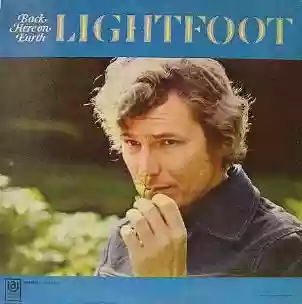
"Back Here On Earth" from 1968, the fourth studio album by Gordon Lightfoot: the title is a statement of intent, after the more orchestral sounds of "The Way I Feel" and "Did She Mention My Name?", more than good albums; but which today sound perhaps a bit disjointed and aged. The minstrel from Toronto takes a step back: returns to the essential, to acoustic, to pure and simple folk of his dazzling beginnings. However, "Back Here On Earth" is not a new "Lightfoot!", it lacks the charm, the poignant atmosphere, the bucolic, ancient, and timeless poetry of that disarming debut, but it is in every respect the second great album of our artist— a short and direct album, with an essential, straightforward, and vibrant temperament.
As in "Lightfoot!", the instrumentation here is stripped to the bone: voice, acoustic guitars, and bass, yet the album offers various styles and atmospheres, there's absolutely no room for boredom and repetitiveness. "Long Way Back Home" and "Unsettled Ways", are typical lightfootian folk songs with a waltz rhythm, simple and crystal-clear melody, with a touch of emphasis that immediately stamps itself in your head; "Long Thin Dawn" instead focuses on a lively and rustic sound, more American than Canadian in taste, the splendid "Marie Christine" and "Don't Beat Me Down", propose a true folk rock without electric current with robust and sustained arpeggios, well-marked rhythms and a sharp and decisive voice without being excessively rough: elegance and a certain touch of lyricism are indeed within Gord Lightfoot's strengths, and even "Back Here On Earth" offers moments of great songwriting, such as "Bitter Green", the album's lead single, which subtly tells, with tact and delicacy, the story of a lost love found too late, and for its scholarly style directly evokes the atmospheres of "Lightfoot!", "Affair On The 8th Avenue" is a ballad with smooth and distinctly noir atmospheres, filled with charm and suffering, and "Cold Hands From New York", narrates the disorientation of a stranger, trapped in the perils of the big city with an epic and decisive flair, like a true storyteller, and it is the longest and most refined song on the album, which closes softly with the brief and ecstatic "The Gypsy" and finally with the serene and liberating "If I Could", his personal manifesto and declaration of intent in which he sings "If I could stand like a rusty old man in his armor, if I could ride the steed that he rode in his time, I would turn his head away to the river and let him wander to the meadow grass, wild and free for everyone to see".
A great album, elegant, meticulous, that enchants with the beauty and evocativeness of the sounds and as always stunning lyrics, it's odd that it does not reach five stars; incredibly, Gordon Lightfoot has recorded at least four or five albums better than "Back Here On Earth", and that speaks volumes about the quality of our artist's repertoire, which, in the seven years following this album, will begin his unrepeatable golden age.
Loading comments slowly
Summary by Bot
Back Here On Earth, Gordon Lightfoot’s 1968 album, marks a return to pure acoustic folk after more orchestrated works. The album is concise, vibrant, and varied, with elegant and poignant songwriting. Memorable tracks like Bitter Green and Cold Hands From New York showcase Lightfoot’s storytelling and folk rock sensibilities. Though not his absolute best, it remains a compelling and refined folk record.Tracklist Lyrics Videos
Gordon Lightfoot
Gordon Lightfoot (1938–2023) was a Canadian singer-songwriter and guitarist from Orillia, Ontario. A defining voice of folk and country-folk, he rose in the 1960s and reached a 1970s peak with hits like If You Could Read My Mind, Sundown, and The Wreck of the Edmund Fitzgerald. His storytelling, melodic craft, and clear baritone influenced generations across folk and pop.09 Reviews
