
 •
Rating:
•
Rating:
THE REVIEW
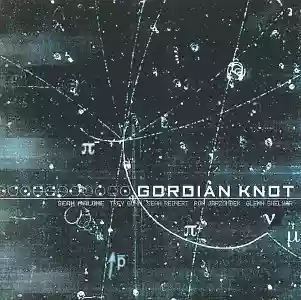
Year 1999, United States Of America, once again Mr. Malone offers us a moving album, this "Gordian Knot," the self-titled album of the best jazz metal band ever, capable of transmitting intense emotions to the listener thanks to its delicacy and extreme uniqueness. Played as usual on fantastic bass lines, the album is much more jazz and original compared to its successor, due to the heavy use of acoustic guitars that excellently merge with the electric ones, thus forming very refined and decidedly delightful musical interweavings. Accompanied on drums by the indispensable Sean Reinert (drummer in the Cynic and Aghora projects), Malone surrounds himself with top-notch musicians, including Trey Gunn and Glenn Snelwar on guitars and stick, but only for a few moments, the good John Myung.
The tracklist comprises 9 songs plus a splendid "bonus track," which will enter your heart and very difficultly will leave it, but let's analyze the 10 masterpieces present here one by one: it starts with "Galois," a song that opens in a decidedly atypical manner with a very peculiar keyboard accompanied by an almost eerie atmosphere. The 2 minutes and 3 seconds serve as an intro to the first real song of the album, I'm talking about "Code-Anticode," a track with very light and cheerful tones that moves between excellent bass lines and an excellent guitar melody, the drum session is developed mostly using the cymbals in a distinguished manner and the keyboard weaves fantastic melodies. The song proves to be very complex and intricate, rich in time changes and solos, perfectly executed by the guitar-bass duo. 6 minutes and 47 seconds of sweetness and fun that can only be defined as unique. Then we move on to "Reflection," a song that in the first half is anchored to Malone's glorious metal past and in the second part, reconnects to the sounds embarked upon in the previous episode, presenting itself as a unique and different track, a concentration of technique that between atmosphere changes and parts of classical guitar allows itself to be listened to with particular enthusiasm: an excellent song therefore that once again I am sure will manage to fascinate you. The very short "Megrez" proves to be excellent, which thanks to its very particular musicality, flows by leaving us open-mouthed and showing us the musical evolution introduced by the renowned Malone Reinert firm. A great instrumental piece that leads us to "Singularity," a piece divided between very tight riffs, solos with great charm, stunning rhythmic parts, and truly fantastic keyboards: once again rich in numerous time changes, the track's structure proves to be elaborate and complex without exaggerating. "Redemption's Way," the sixth track of the album, is certainly the most atypical among the pieces present here, presenting itself as a song played on percussion and stick. A decidedly sad and delicate song, I am sure it will hypnotize you, thanks also to the perfect contribution from the guitar and keyboards. "Komm Susser Tod, Komm Sel'ge," this is the title of the seventh episode of the album: the song is once again sad, this time almost autumnal... a jewel of rare beauty that shines with its own light. There are no adjectives to describe it, the emotional charge it releases is enormous, too much to be described in words. We then arrive at "Rivers Dancing," 7 minutes and 36 seconds of pure music, which between metallic atmospheres and others with a strong jazz flavor flows too, too quickly. The stylistic alternations found in the song highlight the extremely high technical level, especially regarding the bass lines, an excellent track therefore that will literally leave you stunned. "Srikara Tal" is the only song that gave me nothing, (being praised only for the immense technical impact), most likely because it is before the real masterpiece of the album: "Grace," there is nothing closer to musical perfection, sweet, light, particularly heartfelt, a moving instrumental, sad. The technical level (still exceptionally high, perhaps even too much) takes a back seat, thus highlighting the melodic aspect more; the song is disarming, proving too, too beautiful.
We have thus arrived, with much sadness, at the end of this splendid work, which I hope you will appreciate as much as I do. Enjoy listening, everyone.
Loading comments slowly
Summary by Bot
Released in 1999, Gordian Knot's self-titled album blends jazz and metal with emotional depth and technical skill. Featuring exceptional musicians like Sean Reinert, it uses acoustic and electric guitars to create delicate, intricate compositions. The review highlights standout tracks and praises the album's uniqueness and emotional impact. Overall, it's described as a moving and highly refined progressive metal masterpiece.Tracklist Lyrics
Gordian Knot
Gordian Knot is an American progressive rock/jazz fusion project led by bassist Sean Malone (Cynic). The group released two largely instrumental albums—Gordian Knot (1999) and Emergent (2003)—featuring guests including Bill Bruford and Sean Reinert.04 Reviews
