
 •
Rating:
•
Rating:
THE REVIEW
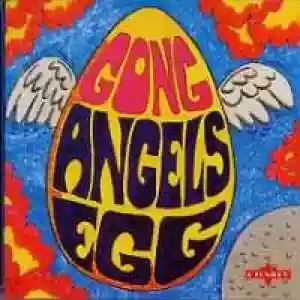
Eclectic, spatial, technical, jazzy… are just a few of the attributes that can describe this "Angel's Egg", the second chapter of the “Radio Gnome Invisible” trilogy by Gong.
The little green goblins led by Daevid Allen create a psychedelic prog-jazz opus that has little to envy from the previous work, and first chapter of the trilogy, “Flying Teapot”. Along with the subsequent “You”, Gong places a trio that in a certain art rock realm, would find equals only in Can (Tago Mago – Ege Bamyasi – Future Days) or King Crimson (Lark's tongue in Aspic - Starless and bible black - Red).
Several factors contribute to their success, from their fantastic performing abilities to their composition skills, from their stylistic approach to their surrealism, but it would be good to remember them most of all for their sense of fun. It can easily be stated that every step they took in producing and recording a record was done with joy, and indeed listening to and analyzing their lyrics cannot help but entertain. It is this strong exhalation of joy and freedom that makes this album great. Almost magically, everything can seem better and more optimistic when you play this music.
In the album, released in 1973, we find the sharp guitar of a young Steve Hillage, the jazzy percussion of drummer Pierre Moerlen, the psychedelic flair of Tim Blake's vital synths and Gilly Smyth's space whispers, the pulsating bass of Mike Howlett, the bold flights of Didier Malherbe's winds, and, of course, the crazy lyrics and the distinctive voice of that peculiar character Daevid Allen.
In the end, this album appears as one of the finest examples of both Canterbury Rock and space rock, a stunning combination; there are studio space effects combined with a jazz that meanders between funk and symphonic, there are the Pink Floyd of the Meddle era, there's the lysergic approach typical of Grateful Dead jams, there's the barrettian eccentricity, not only in the lyrics, there's the absolutely free Zappa style, all without sounding like any of these groups. And although the hippie/weirdo trademark might seem a bit outdated, the entire journey is strengthened by a peculiar modernity.
Already from the beginning of the first track “Other side of the sky” we can feel at the mercy of a fun trip, which becomes more and more enjoyable as we venture along with Zero The Hero. We are immediately caught by a Turkish-threaded chant, followed by Smyth's hisses, which together with the rhythm section make it one of the masterpieces of the album. We then arrive in India with “Sold to the Highest Buddha”, and Allen's more alienated side emerges, comfortably delighting in this wacky freak-song, before giving way to a free tail end.
“Castle Clouds” is a short bridge of spatial distortions, introducing what is undoubtedly one of the climactic moments, “Prostitute Poem”, a piece full of sexual innuendos, ghostly echoes, and moans in the singing, built on a waltz that recalls Parisian cafes, until a musical jet stream almost oriental in style glides by. “Givin my love to you” lets us continue the trip, taking us into some English pub, drinking and singing with friends, accompanied by music of clearly Gracious-like origin. The mellow song “Selene”, introduced by xylophones, is a mantric invocation that fades at the end; after the interlude of “Flute Salad”, an atmospheric flute solo by Malherbe, we arrive at “Oily Way”, and it is precisely here that it feels like being inside that flying teapot, tossed about by its sway, in a blend of jazz, prog, and misleading space elements. Tail ending this, “Outer Temple 1” and “Inner temple 2” are nothing more than a slowdown in flight, the first being Arabic, the second even more exotic, with a sax solo and an Allen glissando on guitar in the foreground.
The subsequent “Percolations” and “Love i show Y make it” seem almost to emerge from "Ummagumma": the first for gong and vocal laments, the second for vibraphone, marimbas, and an Allenian chant accelerated at the end, cannot help but remind one of the “Grant Vizier's Garden” Masonian. “I never glid before”, another masterpiece of the disc, perhaps the most "progressive", with almost Balinese sonorities, has its best moment in a solo by Hillage in a state of grace; groove, melody, and chorus do the rest. Essential.
The final chaos introduces us to the concluding piece, “Eat that phonebook coda”, imaginative and jazzy, which may be the least successful episode of the album… but in the end, these are trifles because such a journey is an unforgettable and highly recommended experience.
Loading comments slowly
Summary by Bot
Angel's Egg, the second album in Gong's Radio Gnome Invisible trilogy, is a standout prog-jazz work rich with eclectic styles and joyful creativity. Featuring impressive performances by band members such as Steve Hillage and Pierre Moerlen, the album blends psychedelic space rock, jazz, and surreal lyrics. It remains an influential masterpiece within Canterbury and space rock scenes. The review celebrates its sense of fun and modernity despite its 1973 release date.Tracklist Lyrics Videos
Gong
Gong are a psychedelic/progressive rock band formed in Paris in 1967 by Daevid Allen and Gilli Smyth, known for surreal humor and the Radio Gnome Invisible concept trilogy (Flying Teapot, Angel's Egg, You).11 Reviews
