
 •
Rating:
•
Rating:
THE REVIEW
Several months ago, I happened to talk about music with a Marxist-Leninist in his fifties. According to him, electronic music, with its obsessive rhythms and catchy melodies, was specifically created to numb the young revolutionary proletariat of the '70s and distract them from their struggles, confining them to discos and conveying the message of American capitalism.
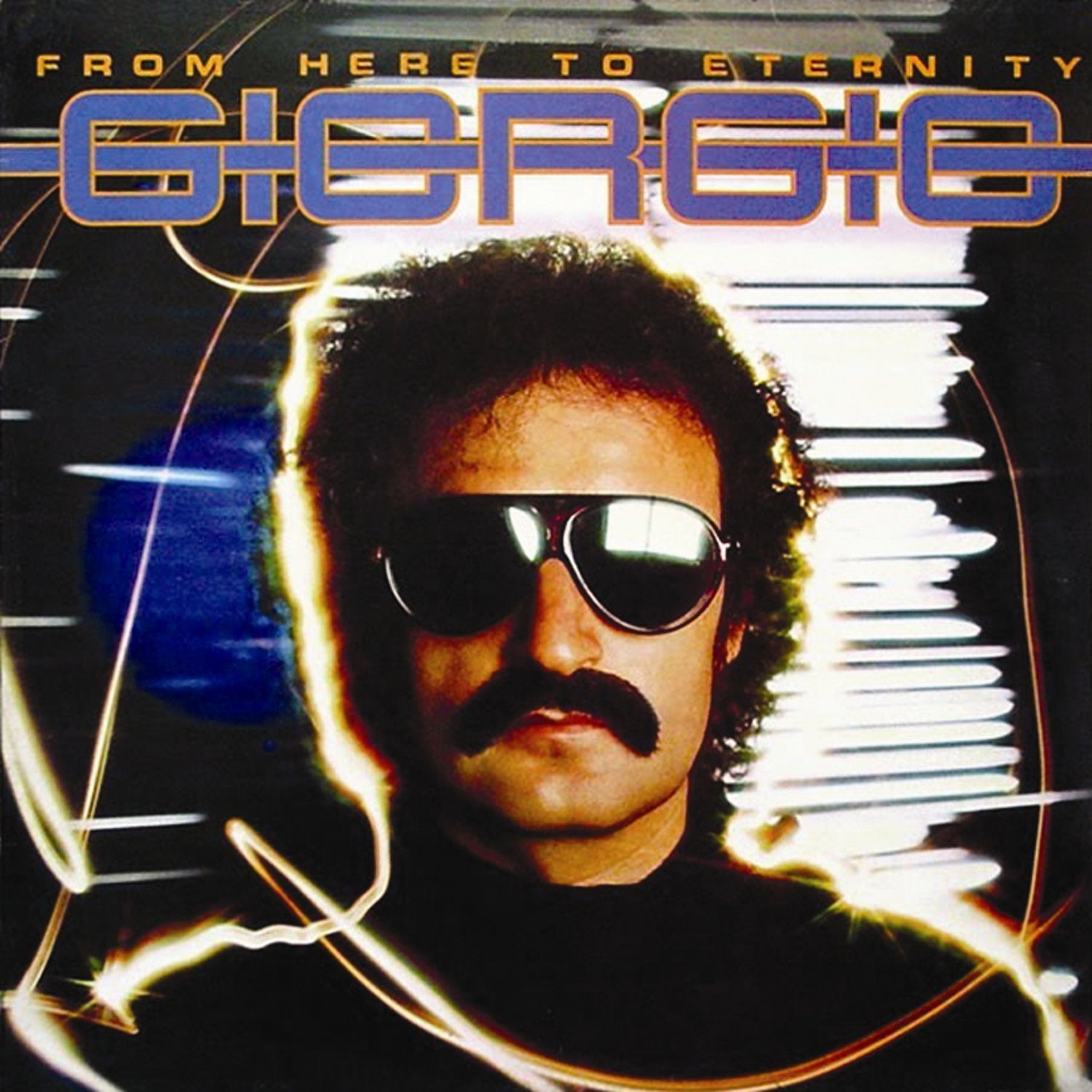
Avoiding responding to this nonsense, I immediately envisioned the occupations, protests, strikes, security services, and armed struggle participants, all dispersed or defeated at the dawn of the new decade, not by restructuring in factories, which went hand in hand with police repression, nor by the scourge of heroin that took out so many young people, but by my beloved G-I-O-R-G-I-O, much more resembling Moretti of the BR, than Gianni Agnelli.
And all this because, on the same days of this discussion, Moroder's new album hit the stores, 30 years after his last effort. I had skimmed through a few articles about it, but in the end, decided to skip the album of an old great one, who returned to the spotlight almost only thanks to a collaboration with a famous electro duo from Paris.
However, my brother, knowing my venial sin of passion for disco, which often and willingly led me to try various Saturday Night Fever spins (including the infamous "Passo del Ginecologo", performed with tightly drawn curtains) in private, thought it wise to gift me Déjà Vu in deluxe version, even buying it blind!
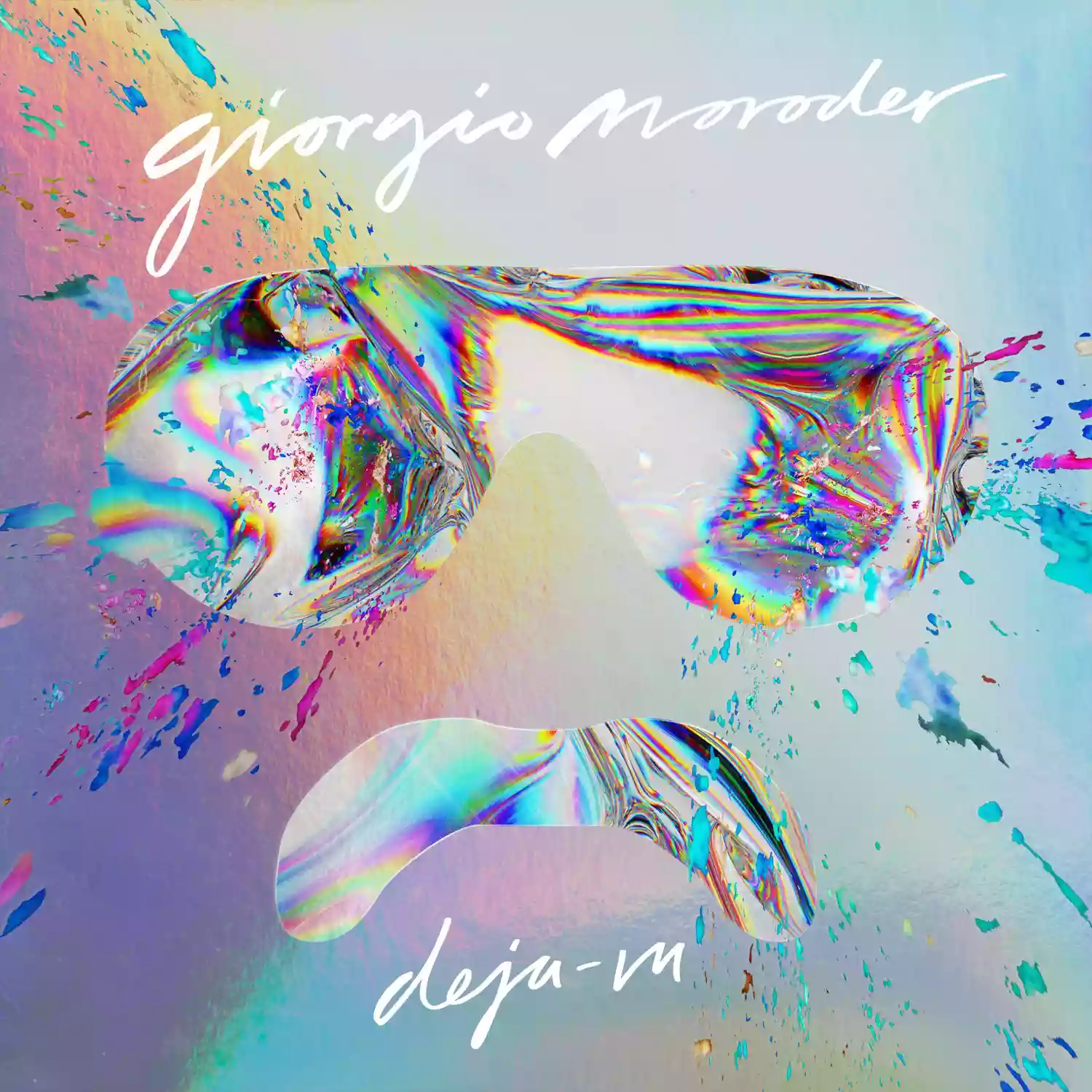
If the cover, flashing rainbows from GiGi's Carrera and metallic silver mustache, is a real dive into the past, the notes will soon make you realize that unfortunately, not all that glitters is revival. Faced with the tracklist, featuring significant collaborations with Sia, KYLIE MINOGUE, and BRITNEY SPEARS, one feels closer to wise Darius and the trust wanes.
The music, quite gaudy, does the rest. The most successful episodes are those where our artist minds his own business (two and a half tracks, if we exclude the valid bonus trackz) or where he still manages to unleash progressions, little guitars à la Nile Rodgers, and strings typical of his golden period (see tracks with Sia, Foxes, and Kelis). What remains, however, is a bending towards chart-pop that would not only fit in the discos of Jesolo or, in the best of cases, on RTL 102.5.
So, contrary to what the happiest episode of the entire album suggests, 74 (our artist's years) is not the new 24. At the same time, it's hard to get upset or wrinkle the nose too much: the spirit of once is still alive in many cases, and pop, like electronic, has changed face, heart, and audience from Donna Summer to Minogue, and we can't really blame Moroder for this, who in several recent interviews has even expressed surprise and regret on how times have changed since he was collecting Oscars.
In the end, what struck me positively was the feeling that Giorgio still enjoys making music for us quite a bit, beyond the obvious commercial operation, and that can only make me happy.
In conclusion, if you don't want to waste time reminding a veteran Maoist of the difference between structure and superstructure, you can follow the dance of socialist orthodoxy or, after a good dose of Italo-disco, follow me on the notes of the Butthole Surfers, because one thing is certain: The Mustache attracts Texan girls like honey attracts bears.
PS: Flo, don't hold it against me.
Loading comments slowly
Summary by Bot
Giorgio Moroder's Déjà Vu brings together his classic disco sensibility with contemporary pop collaborations, producing mixed results. While some tracks capture the spirit of Moroder's golden era, much of the album leans towards commercial chart-pop, not always convincingly. The review reflects on Moroder's enduring passion for music despite changing times, with a nostalgic look at his impact on electronic dance culture.Tracklist
Giorgio Moroder
Italian composer, producer and electronic disco pioneer. He shaped the sound of modern dance music, worked with Donna Summer, and scored films including Midnight Express, Scarface and Top Gun, earning multiple Academy Awards.05 Reviews