
 •
Rating:
•
Rating:
THE REVIEW
Let yourself be enveloped by the groove.
No, we're not in Curtis Mayfield territory, the approach is opposite and thus naturally complementary: as much as the former is anchored in the blaxploitation imagery in bringing the black soul to the public (including the white audience), the latter embraces its blackness towards a music as harsh in the lyrics as in the notes (a mandatory mention goes to "Pretty" Purdie, an exceptional drummer responsible for more masterpieces than you think).
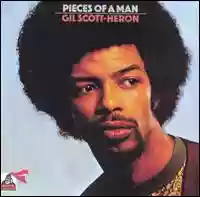
So what to say about this "Pieces of a Man"? Gil Scott-Heron came from the successful experiment of "Small Talk at 125th & Lenox," an album of recited poetry on a base of percussion (bongos and little else), and decided to bring his lyrics on universal themes such as the emancipation of black people and the plight that affects them (and afflicts them), primarily drug addiction, but also dedicated to intimate and private themes, on territories rich in soul, jazz, funk suggestions, acting a bit like a rapper, a bit like Marvin Gaye, a bit like a confidential singer of very personal late-night tales.
The opening is entrusted to his most famous piece, "The revolution will not be televised", a proto-rap on hard drums and powerful, deep bass, all accompanied by a clarinet, while the lyrics announce that "the revolution will put you in the driving seat", "the revolution will not make you look five pounds thinner", "the revolution will be live". A classic. The record then unravels along a series of excellent pieces, following essentially three strands: that of a funk colored at the borders of soul like "Lady Day and John Coltrane", a tribute to two fundamental exponents of black music; that of harsh invectives both in words and music (see "Home is where the hatred is", a bitter biography of drug addiction developed on a claustrophobic guitar loop); finally, that of the confidential song (essential in this regard is the title track, cinematic like never before, with the double bass flying light on the wings of a night tinged with alcohol, of missed hugs and kisses, longed and regretted, a faint piano and the warm and persuasive voice that sings solitarily its last piece before ending the evening).
In conclusion, it is worth mentioning the lengthy "The prisoner", which in composition resembles certain long daydreams of Bob Dylan (see "Sad Eyed Lady of the Lowlands" or "Hurricane"): with these compositions it shares the incessant repetition of a structure which, magically, does not bore, but rather emphasizes the minstrel's singing, who in this case, from the depths of a well that is more than suggested by the gloomy but tense atmosphere, recites his verses on imprisonment, fear, loneliness, and incommunicability.
What to say then? Let yourself be enveloped by the groove, by these atmospheres rare for their beauty, do yourself a favor, retrieve this album, which if not a masterpiece, is so close to one that it deserves the 5.
It's a public service announcement…
Loading comments slowly
Summary by Bot
This review praises Gil Scott-Heron's 'Pieces of a Man' for its unique fusion of soul, jazz, and funk, combined with powerful, socially conscious lyrics. Highlighting tracks like 'The Revolution Will Not Be Televised' and 'Home is where the hatred is,' the album addresses black emancipation, drug addiction, and intimate personal stories. The reviewer recommends the album as nearly a masterpiece, emphasizing its rare and beautiful atmosphere.
