
 •
Rating:
•
Rating:
THE REVIEW
Subtitle: "the transition from the '70s to the '80s, listening to three very different albums by Gianna Nannini. California, however..."
I aim to make amends for a long disinterest in Gianna Nannini, and I try to do so with this piece.
She is an artist I long rejected, being a disdainful youngster, perhaps because I started to endure her since Fotoromanza (1984), a song that was relentlessly hammered by radio and TV at the time, becoming very famous but, to me, unbearable. Rejecting and speaking as poorly as possible about a hugely successful pop product was certainly cool. That’s how it works—it's adolescent pop: finding identity and rejecting it is a work on identity. But being an adolescent forever is not mandatory. It's optional, so I've been told.
In old age, I realize that pop ("popular," as a category that also includes rock, please no offense) must inevitably become a product before being distributed, and only then can it fulfill its purpose by gaining popularity. But before the cellophaning, there can be a lot of reality, that of an authentic artist and their valuable works.
Gianna Nannini’s talent, I say now but never would have said before, is enormous. A very rare gift to have in such quantity. Enormous talent in what she says, in the need she has to say it, in how she knows to say it, in the musicality, in the voice that seems to never find a limit. One is constantly amazed hearing it hoarse and believing it’s always close to an insuperable margin, which instead she will overcome. Enormous talent in stage presence and communicative capacity.
The fact that this talent was bestowed upon a well-off person, in my opinion, is not useful information in evaluating her artistically. But it is emblematic for discussing a moment of transition in society and culture, and therefore for popular music. A moment she lived through fully and perhaps, precisely because of her family situation, ahead of the masses.
The transition from the '70s to the '80s was very delicate, not only for the aspects concerning music. During that period, the Italian imagination shifted from the totems of solidarity, emancipation through work (factory work), equality, unity, towards other values. The new totems sometimes opposed the previous ones, such as distinguishing oneself in society, perhaps with a high-income job, flaunting all the associated statuses; other times they were simply different themes that perhaps existed before but then became central, like that of sexual identity.
The discomfort to be expressed becomes personal, which is then discovered collectively; previously, it was a macro collective discomfort and class that was recognized as the source of personal discomfort. All this new feeling ties to the spread of a situation, or at least an imaginary, that until shortly before would have been stigmatized with the term "bourgeois."
Having quickly outlined it, I swiftly close this subject, because it’s vast, out of reach... and the music gets lost from sight.
Generally speaking, at that point Italian songs transition from addressing socializing and collective issues to delving into intimate and personal topics.
Nannini, objectively, speaks of introspection from the start of her career, so from the height of the '70s. It’s objective that it is in the '80s that she achieves the greatest success. It’s actually not entirely her who transforms. The concessions her lyrics make to reach the public seem few, aside from a progressive refinement likely brought by professional growth. What changes, leading to her success in my opinion, is the audience’s sensitivity in the succeeding decade, while the artist pretty much maintains her stance. This, speaking of the lyrics, themes, and values expressed.
Musically, it’s not the same, because there’s a transformation of sound and production, following their own path, in line with the period.
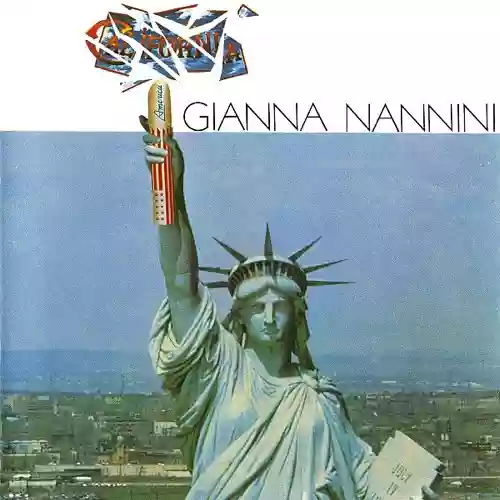
I find the three albums California (1979), G.N. (1981), Latin Lover (1982) emblematic to listen to from the perspective of sound and production choices, because there’s an unmistakable, exposed progression from the '70s approach and sound to that of the '80s.
The intermediate album, G.N., seems to me a forcibly stitched Frankenstein, as if the singer-songwriter continued to write for a certain old outcome, and in production, they tried to forcibly attach newer, more '80s choruses or anyway solutions and sounds.
In Latin Lover, I sense that everything comes together again in the new '80s version, in harmony with the new wave that dominates the radio. This, both in composition and arrangement and realization. In the '80s, Gianna Nannini would triumph in the market, a litmus test of the perfect harmony between her production and her time. It’s the moment of truly overwhelming success that starts from there on, so from the works from Latin Lover onwards. Before that moment, it’s not quite so: we find her in a workshop, going through intermediate phases from raw to pioneer, to mature pioneer, then to Frankenstein. For a musical journey in that transition, I recommend listening to the three albums mentioned above. There’s change, and it’s almost seen through transparency.
For my taste, California is, of the artist, the highest point of genuineness (already sufficiently matured) of the sound and the ensemble: the themes in the lyrics are very spontaneous, her typical ones, already well elaborated and developed here, but particularly lively, enthusiastic, and earthy. In '70s style, though! And for me, it’s her only case of maturity in the '70s, which will soon end, and for this, I find it particularly precious. I like it, in short; this is the extreme summary.
The album was produced by Michelangelo Romano, who was Roberto Vecchioni’s producer. Vecchioni collaborated on the lyrics.
Gianna Nannini evokes contrasting feelings, as is normal: if every artist is arguable, she is very much so. Full of talent, carrying difficult themes of personal, egocentric discomfort which some consider "reflexive," reflecting and anticipating a social upheaval, becoming even a stereotype. She mocks with her attitude and drags her words. But isn't rock a mockery? A shouted "Kiss my ass"? Perfect!
For all these qualities, I believe she is an artist towards whom to be open and well disposed, as well as interested. She deserves it and has represented her time.
Loading comments slowly
Summary by Bot
This review reconsiders Gianna Nannini's early work, focusing on her 1979 album California as a high point of raw musical and lyrical authenticity. It explores the cultural shift from the 70s to the 80s in Italy and Nannini's role in that transition. The album is praised for its earthy themes and genuine sound before her later commercial success. The review highlights the valuable collaboration with Roberto Vecchioni and production by Michelangelo Romano. Overall, it invites openness toward Nannini’s complex, talented artistry.Tracklist Lyrics Videos
Gianna Nannini
Gianna Nannini is an Italian singer-songwriter from Siena, frequently described in the reviews as a prototypical Italian female rocker thanks to her raspy, shouted vocal style and strong stage presence. Her early work moves from late-’70s rock (California) toward ’80s electronics/new wave, and her international breakthrough is tied to producer Conny Plank, with albums such as Latin Lover, Puzzle and Profumo often cited as career peaks.14 Reviews
Other reviews
By woodstock
An album that will be remembered more for its cover rather than the actual value of its songs.
She proposes herself as the only serious candidate to replace the late Janis Joplin (Anno Domini 1971), at least in Italy.
