
 •
Rating:
•
Rating:
THE REVIEW
He called it “objective music.” One of the intentions that drove it, assigning it the function of a tool in a broader scheme, was to redeem man from the “hypnotic sleep” into which the constant repetition of meaningless behaviors and automatisms had plunged him.
Describing the complex figure of Georges Ivanovitch Gurdjieff and the multitude of implications that would derive from it is an exercise I spare myself/you.
I therefore refer to another review present in DeBaser which, with the gift of synthesis, brilliantly fulfills the purpose regarding the genesis of his music.
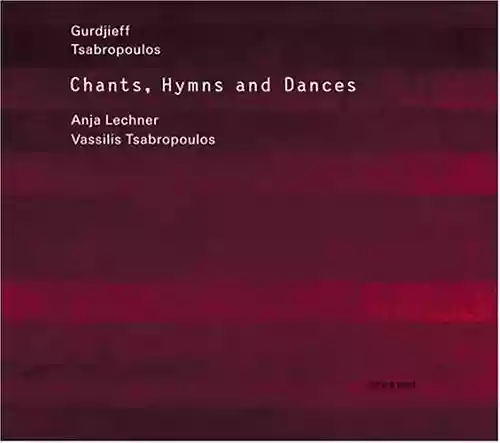
Starting from that album (which I dare to recommend for Celletti's personal sensitivity in execution) I arrived at this precious work published by ECM in 2004.
In this case, I try to adhere to a vow of greater frugality of words because the essence and essentiality nourish the tracks contained in this interpretation, the first transcription for piano and cello of Gurdjieff's music.
Its very clear molecules, capable of assimilating and aggregating sound particles arriving from the East with musical suggestions of Western folk origin, form a fluid body.
Which takes shape as the listening proceeds between the clarity of sound of Vassilis Tsabropoulos's piano and the lyricism of Anja Lechner's cello song.
Both with classical training, but also engaged in different directions, (jazz transfigured for Tsabropoulos - highly recommended "The Triangle" avant-garde for Lechner, in collaborations with Misha Alperin and Sylvie Courvoisier) they seem to effortlessly find perfect symbiosis in the execution of the tracks, slow and relaxed, often marked by delicate melodiousness.
Sometimes the task of drawing the melody is entrusted to Lechner's delightful touch, in others, it's Tsabropoulos's keys that outline it. The balance is always perfect and it always seems to obey the spirit of the author.
Three compositions by Tsabropoulos inspired by the traditional Greek Orthodox repertoire find a place, without interrupting the harmonious flow in which they are immersed, almost in the center of the album.
An album of great beauty.
A brief interval of time freed from the “hypnotic sleep”.
An highly recommended listen.
Loading comments slowly
Summary by Bot
This review highlights the 2004 ECM album featuring transcriptions of Georges Ivanovitch Gurdjieff's music for piano and cello by Vassilis Tsabropoulos and Anja Lechner. The album beautifully fuses Eastern and Western folk elements with clear, lyrical performances. Tsabropoulos and Lechner’s classical and avant-garde backgrounds complement each other, creating a relaxed, deeply melodic experience. It is praised as a significant, spiritually uplifting work that offers listeners a break from routine.Tracklist
01 Trois Morceaux Après Des Hymnes Byzantins (00:00)
02 Chant From A Holy Book (05:12)
03 Chant (05:40)
04 Interlude II (00:39)
05 Assyrian Women Mourners (06:07)
06 Armenian Song (02:16)
07 No. 11 (06:55)
08 Woman's Prayer (01:58)
09 Chant From A Holy Book, Var. 1 (06:12)
10 Bayaty (04:18)
11 Prayer (03:50)
12 Duduki (06:14)
13 Interlude I (00:43)
14 Trois Morceaux Après Des Hymnes Byzantins / I (05:00)
15 Trois Morceaux Après Des Hymnes Byzantins / II (04:52)
16 Trois Morceaux Après Des Hymnes Byzantins / III (04:09)
17 Dance (08:04)
Georges Ivanovitch Gurdjieff
Georges Ivanovitch Gurdjieff (died 1949) was a spiritual teacher and composer whose music has been described as "objective music" and intended as part of his broader teaching. Many pieces were arranged or performed in collaboration with others, notably Thomas de Hartmann.01 Reviews
