
 •
Rating:
•
Rating:
THE REVIEW
"Well, they say they like it, but in the market
It might not do well because it's too retro
They need more pa-pa, nothing like
Frank Zappa"
from"Blood From A Clone"
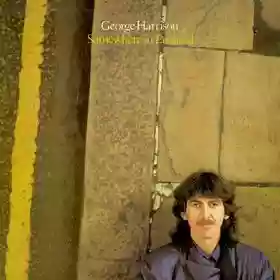
"Somewhere In England" saw the light in '81 and for Harrison its realization was very arduous. The first verses of the opening song, "Blood From A Clone," already explain a lot. George had the first version of the album rejected by Warner because it lacked commercial appeal. Disheartened and disappointed, he then recorded new, simpler songs to make the album more marketable. The result is a compromise work with some good things and a lot of convention that reveals Harrison's great disillusionment. However, "Blood From A Clone" is a pleasant track, with a breezy rhythm, an easy pop song with some snippets for Harrison's guitar. Despite everything, George manages to save a spiritual song recorded for the first version of the album, "Life Itself." A slow chant marks the typical reflective Harrisonian verses, "You are the absolute/You are my love/You decide the coming of the rain and bring the sun/You live in solitude and reveal the truth/You are the breath of life itself", it is a very beautiful, calm, and welcoming song with a very interesting final guitar solo. What surprises the most is that in "Somewhere In England" George records two covers of Howard Carmichael, one of the most important popular USA authors; "Baltimore Oriole" and "Hong Kong Blues" are pleasant tracks but do not add substance to the album. Even tracks like "Writing's On The Wall" and "Teardrops," the latter very catchy with easily engaging synth lines, do not lift the work from a mediocrity that betrays Harrison's reluctance to make an album partly different from how he had conceived it. But "Somewhere In England" turns out to be a great commercial success thanks to the leading single "All Those Years Ago." Dedicated to Lennon and recorded with contributions from Ringo Starr, Paul and Linda McCartney, and Denny Laine (although they never actually met in the studio), it is a song that remembers the departed friend with evocative and direct verses, "Now we're here sad and speechless/Because of someone, the devil's best friend." A pleasant and harmonious melody helped make it a successful hit.
The following year, George decided to make an album without any promotion. "Gone Troppo" turned out to be a remarkable failure, and Harrison left music for cinema.
Loading comments slowly
Summary by Bot
Somewhere in England, released in 1981, reflects George Harrison's struggle between artistic vision and commercial pressure. The album features both soulful tracks like 'Life Itself' and more marketable songs after Warner Bros. rejected the first version. Although it contains some pleasant covers and pop-oriented tunes, the album overall feels disjointed and compromised. The successful lead single, 'All Those Years Ago,' is a heartfelt tribute to John Lennon. This album marks a pivotal moment before Harrison temporarily stepped back from music.Tracklist Lyrics Videos
George Harrison
George Harrison (1943–2001) was an English musician, songwriter and guitarist, best known as a member of the Beatles. His solo work is frequently discussed around the landmark 1970 triple album All Things Must Pass, his spiritual songwriting, benefit work connected to Bangladesh, and later-career resurgence with Cloud Nine before his final album Brainwashed was released posthumously.21 Reviews
