
 •
Rating:
•
Rating:
THE REVIEW
This is hardly ever discussed, not even among music enthusiasts’ circles such as this one, but between the late sixties and early seventies, there briefly emerged a pop movement called Dutch Sound, also known as Nederpop. It consisted of a sizable group of Dutch bands who, more or less all at once, burst onto the scene with songs and ditties—obviously sung in English and infused more with American rhythm & blues than with the lingering beat from nearby England. Nowadays, there are barely any traces left of that brief season of glory enjoyed by those who frequented the cellars and dance halls of Amsterdam, Rotterdam, and so on… And you can't even find on the record market a decent compilation of the best Nederpop tracks, some of which even made a splash in the Italian Hit Parade.
I’m referring, from memory, to Tee Set with “Ma Belle Amie”, Shoes with “Osaka”, Golden Earring (later to become a fully-fledged hard rock band) with “Another 45 Miles To Go”, Mardi Gras with “Girl I’ve Got News for You”, Wallace Collection (actually Belgian) with “Fly Me to the Earth” and “Daydream”, obviously the trailblazers Shocking Blue with the evergreen “Venus”, and in particular George Baker, who together with his Selection broke through in 1970 with “Little Green Bag”.
They even came to perform it in my hometown, during one of those summer kermesse at the sports arena, a mixed bag and strictly in playback, between a Patty Pravo and I Nomadi, a Fred Bongusto and Sylvie Vartan, all introduced every five minutes or so by the lively Pippo Baudo. I was mesmerized by George’s Indochinese guitarist (or Filipino? Who knows!): small and thin, dressed in black, tall boots, long spaghetti-black hair, and strapped with a gleaming black Les Paul Custom that looked heavier than he was. What a cool guy! When I grow up, me too!
“Little Green Bag” is undoubtedly one of the most important legacies of that Flemish wave, probably second only to “Venus” in fame. Its reputation owes much to director Quentin Tarantino, a well-known vintage lover, who in 1992 placed it at the opening of his film “Reservoir Dogs”, bringing the track back into the charts in several countries. Every so often you can still hear it today on the radio, or on TV, perhaps as a soundtrack for some commercial. It’s a (obviously) white soul pop number with a driving, vaguely reggae beat—joyful and charismatic, in spite of its quite anxiety-ridden but above all cryptic lyrics.
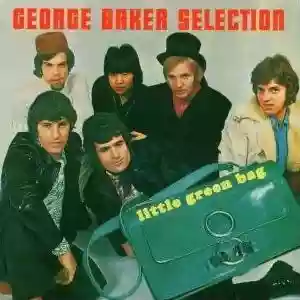
In fact, the track was supposed to be called “Little Greenback”, meaning the American dollar, and tells the story of a guy who, day and night, back and forth, left and right, searches for this thing but can’t find it. Apparently, someone mistakenly transcribed the title as “Little Green Bag”, and it stuck, thus making the lyrics even more hermetic and unresolved. At that point, they could even be read as referring to someone losing their mind because they can’t find their weed dealer, or perhaps to a man looking for the prostitute who always carries a little green handbag (the one on the cover…). Nobody really knows.
The 45 rpm single was released at the end of 1969, found success all across Europe the following year, and at this point, the self-titled album, opened by its hit, was also distributed with good results. However, the rest of the record isn’t much to write home about—no exceptions: pop tunes without even a fraction of the small melodic, rhythmic, or arrangement genius found in “Little Green Bag”. What a shame… It’s one of those cases where you end up picking up, and then gladly keeping, a record just for that one irresistible song it contains.
Loading comments slowly
Summary by Bot
This review offers a balanced perspective on George Baker Selection's 'Little Green Bag' album. It acknowledges both strengths and weaknesses. The rating given is 3 out of 5, indicating an average impression. The review explores the album's overall style and memorable qualities. It helps listeners set their expectations before listening.Tracklist Videos
George Baker Selection
Dutch pop group led by George Baker (Hans Bouwens), best known for the hits Little Green Bag (1969) and Paloma Blanca (1975). Little Green Bag later gained renewed fame via Quentin Tarantino’s Reservoir Dogs (1992).00 Reviews
