
 •
Rating:
•
Rating:
THE REVIEW
1972: Gentle Giant are now an established progressive band with two fantastic albums already under their belt, especially "Acquiring the Taste" which showcases all their great inventiveness. After several triumphant tours supporting Jethro Tull, even reaching our peninsula, they decide to create something different.
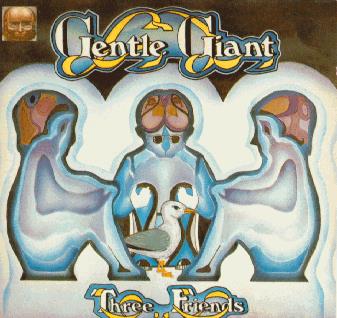
The third work of the English group is "Three Friends", a piece that many consider to represent their complete maturity. The record is a concept that tells the story of three friends who were schoolmates as kids and meet after many years recalling the times spent together and then recounting how their lives have passed in all this time.
It begins with the prologue that opens the scene introducing our three friends, informing us that although they used to always be together, their paths have divided because fate, changes, circumstances due to different opportunities and abilities of the three have separated them; musically, all the characteristics of the GG are present such as the particular and layered vocals, the odd time rhythms (typical of their way of conceiving prog) and, above all, Kerry Minnear's keyboards which, along with his vibraphone, are the absolute protagonists of the album.
The next song is "Schooldays" and, as the title suggests, it talks about the happy days the three friends spent when young before the abrupt encounter with life devoured their innocence. The atmosphere created is literally dreamy, in the literal sense, as the memories of the children remembering the carefreeness of running free by the sea are masterfully interpreted by magical instrumental parts, first sweet then more frantic, while leaving unaltered the feeling of dreaming.
With the next piece "Working All Day" comes the first of the three life stories which highlights more than anything the harsh impact with reality for the first of the three friends, who works all day feeling oppressed by his superiors without being able to get out from it: the dreams of youth have been shattered forever. The superb keyboard provides the backdrop, offering in the central part a solo at the limits of jazz truly delightful.
Then comes "Peel the Paint" the second story of one who chose a life as an artist, deluding himself that being free from chains would make him happy, but he too has to reckon with the passage of years. This is the toughest song of the lot in the sense that there's a real hard-rock guitar and sax riff in unison truly captivating; in the second part there's a jam that moves from blues to the most experimental prog: a true gem.
"Mister Class and Quality" deals with the life of the seemingly most fortunate of the three, having a nice house, a "big shot" job, and a beautiful wife; however, he wonders where he would be without his documents and elegant shirts, bitterly concluding that the world needs people like him to "give and take orders", once again the mocking result of our fate.
This masterpiece closes with "Three Friends" in which the magnificent chorus softly sings:
"Once three friends
Sweet in sadness
Now part of their past.
In the end
Full of gladness
Went from class to class."
Loading comments slowly
Summary by Bot
Gentle Giant's 1972 album Three Friends marks their musical maturity with a compelling concept about three childhood friends whose lives diverge over time. The album blends layered vocals, complex rhythms, and standout keyboards by Kerry Minnear. Each track tells a detailed story of personal struggles and reflections, making it a prog rock masterpiece.Tracklist Lyrics Videos
Gentle Giant
Gentle Giant were an English progressive rock band active from 1970 to 1980, frequently described (in these reviews) as among the genre’s most technically accomplished groups, known for multi-instrumentalism, complex rhythms, and choral counterpoint.16 Reviews
Other reviews
By sanvalentino3
Listening to them is an all-encompassing experience, an almost titanic effort.
"Three Friends" is the most accessible long-playing of the early Gentle Giant.
