
 •
Rating:
•
Rating:
THE REVIEW
After the fantastic atmospheres of the live album "Playing The Fool," Gentle Giant are forced, despite themselves, to seek their success in other sonic realms. As already manifested, around the late '70s, progressive is no longer a musical form that sparks massive public interest. Punk with its hard and fast guitars and pop with tracks of simple structure and immediate enjoyment are approaching. Gentle Giant understand that the course needs to be altered in some way.
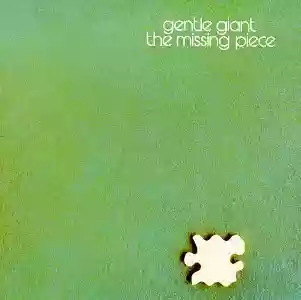
From the sessions following the 1975/76 tour, "The Missing Piece" (on Chrysalis) was released in 1977, the first Gentle Giant album that can be considered "Pop". To confirm what has been said, the proof is the publication of two singles (also on Chrysalis) taken from the album: "I'm Turning Around / Just The Same (Live)" in August 1977 and "Two Weeks In Spain / Free Hand (edit)" in October 1977, both with B-side tracks taken from previous LPs: respectively from "Playing The Fool" and "Free Hand". The group's great experience and technical quality still try to bring out the best from their background, presenting a record that is far from poor, composed of often short and relatively simple tracks. It is important to highlight how "The Missing Piece" is not a milestone in the band's repertoire (precisely because of the undeniable new pop tendency) but, listened to individually and not compared to the gems of past years, it earns quite an interesting judgment.
The album is artistically divided into two well-distinct sections, also coinciding with the two sides of the LP: side A with tracks of clear pop nature and quick assimilation, side B which in some ways still recalls the memorable progressive threads of the early '70s. "Two Weeks In Spain" is a fun and fresh electric guitar rock, sung by Derek (as almost all the tracks on the album), which describes the slice of English life distinctly separate from other world realities. Derek sings this track with a typical "Working Class" English accent, to reinforce the pretentious contents of the lyrics that mock fellow countrymen accustomed to going to Spain for vacation periods and spending their time and money in nightclubs and discos. "I'm Turning Around" is instead a splendid and delicate ballad that recalls, in the refrain, some of the deadly jingles dear to Peter Gabriel's Genesis. Standing out on the entire sonic scene are Minnear's indispensable keyboards (primarily Hammond organ) and Ray Schulman's magnificent bass lines on backing vocals. "Betcha Thought - We Couldn't Do It" is another high-paced and fun rock with Green's guitar (splendid solo riffs) and Weathers' drums in great shape. "Who Do You Think You Are" is yet another sunny pop with markedly funky-jazz traits but with the unmistakable Gentle Giant stamp. Very interesting is the guitar-bass and drum layout that is repeatedly performed alternately with the piece's refrain. Curious is the insertion, towards the end of the track, of a segment that recalls the old piece "The Runaway" from "In A Glass House," just before the vocal part "and yet all his joy is empty and sad…". "Mountain Time" closes side A with winking blues riffs and extraordinary bass-electric piano constructions. Perhaps the inserts in backing vocals by the chorus singers (a novelty for Gentle Giant) are too forced and not very suitable.
Side B incredibly takes us back to the glorious splendors of the past. Almost with disregard for the times, Gentle Giant detach from the pop-rock of side A to deliver more memorable progressive pages. The dizzying and medieval ballad "As Old As You're Young," the only song sung by Kerry's sublime voice and qualified by Minnear's incredible horde of keyboards, offers a brief madrigal insert and excellent electric solos by Green. "Memories Of Old Days" is the authentic gem of the album. Probably, among the best pieces in the entire repertoire of the Gentle Giant band. A rarefied atmosphere, introduced by Green's acoustic guitar and the faint sound of winds that transport the piece to Derek's lyrics, perhaps more suited for more tumultuous and screaming tracks. The continuous phrasing between the two acoustic guitars and the splendid keyboard choreographies evoke a long medieval dream. Excellent are the rediscovered rhythm changes and the disparity of rhythm that characterized the group's trademark in the older records. The song has clear and strong references to George Orwell's narrative entitled, in the original language, "Coming Up For Air". Extreme and intense is "Winning," where Derek can return to singing at full volume among long and curious instrumental passages. A sonic blend where no instrument assumes a predominant character, perhaps the bass is the guiding thread of the whole piece highlighting John Weathers' meticulous work on percussion.
"The Missing Piece" closes with the resounding "For Nobody," one of the most explosive tracks in the repertoire. A decisive keyboard performance introduces the track, built on a vigorous electric rock line.
Ultimately, "The Missing Piece" is an album (snubbed by the European and American charts) that blends Gentle Giant's rock with the pop that the charts demanded in 1977. A difficult but successful fusion work that does not entirely displease old fans and keeps Gentle Giant alive in the new musical landscape. Curiosity: in the track "Betcha Thought We Couldn't Do It," there is a twelve-string guitar riff taken from an unreleased track titled "Evil Woman". The track is believed to date back to the period preceding the release of the self-titled debut album from 1970.
Loading comments slowly
Summary by Bot
Gentle Giant's 1977 album 'The Missing Piece' marks a stylistic shift toward pop amid the waning popularity of progressive rock in the late '70s. The album balances catchy, simpler pop songs on side A with progressive, intricate compositions on side B. While not a landmark in their discography, it stands on its own merits as an interesting and successful fusion. Notable tracks include the pop-rock 'Two Weeks In Spain' and the progressive gem 'Memories Of Old Days.' The album reflects the band's effort to stay relevant while retaining artistic quality.Tracklist Lyrics
Gentle Giant
Gentle Giant were an English progressive rock band active from 1970 to 1980, frequently described (in these reviews) as among the genre’s most technically accomplished groups, known for multi-instrumentalism, complex rhythms, and choral counterpoint.16 Reviews
