
 •
Rating:
•
Rating:
THE REVIEW
(premise - the rating would be somewhere between 4 and 5 stars, as usual, I'll let you choose WHERE exactly)
Ok, let me start by saying that a review of Gentle Giant written by someone who calls themselves Panurge might seem a bit biased - and consequently unreliable, but by now, you must have got used to this sort of thing, so it doesn't seem worth getting paranoid about it.
You have probably already heard something about the Shulman brothers and associates, so a description of their style would be redundant. On the other hand, though, if you're reading these lines, it's because you want to hear it, or because you're waiting for me to say something stupid that justifies your well-placed criticism, or you are simply scratching your ovaries waiting for me to start talking about the album. Which I do immediately. Ahem.
If they told you that Gentle Giant makes the most complicated and complex music history can recall, full of polyrhythms, overlapping melodies, harmonies climbing over each other, time changes, and odd times by the dozen, etc., probably in your laborious little brain, visions of arid and withered lands where the primordial pleasure that music was born to provide has been definitively extinguished would form (unless you're flipped for this kind of thing).
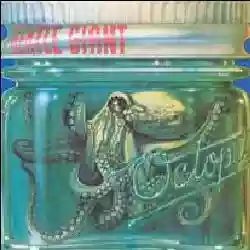
Listening directly to the music, it might be that such a terrifying vision does not form - in fact, despite the description that - proudly - I have elaborated (showing a remarkable sense of climax) is not exactly false, despite this I said, the extreme intricacy that characterizes the music contained in the album that you see well represented on your screens does NOT compromise the noble and animalistic nature of Music. To make a comparison with painting, that of Gentle Giant remains simple figurative art, even if highly refined - it does not degenerate, in short (at least in the period 1970-74) into that notional and meta-artistic self-indulgence that seems to drive certain critics crazy.Let’s take an example: initially, listening to "The Boys in The Band" one might consider all those time changes as ridiculous and unnecessary; after a few listens, however, one realizes it's not "complexity for complexity's sake," and indeed - one understands that the arabesque structure of the song is an integral and indispensable part of it, and even more notably, one realizes that the song (to put it in youthful language) "rocks." It rocks differently from everything we've heard rock before it, but it rocks. Well, the style, you already know, is prog-art-jazzy-medieval-rock (ah...), and it essentially always swings between the "gentle" side, in songs like the curious "Dog's Life," or "Think of me with kindness," perhaps a bit saxy ballad but structurally impeccable - and the "giant" side, which dominates the Rabelais-induced "The Advent Of Panurge," in "River" and the already mentioned "The Boys in the Band" - three masterpieces that would make this album worth purchasing even if all the rest were white noise.
Ah, and then there's the purely medieval gem of "Raconteur Troubadour," the thousand overlapping voices of "Knots" and "A Cry For Everyone," where different melodic lines chase each other etcetera etcetera. It makes me laugh to think that back then they were a "minor" band, while now I would probably fall to my knees with tears in my eyes if someone came out with such an album. No, maybe not. But it's cool to say so.
Loading comments slowly
Summary by Bot
Gentle Giant's Octopus is praised for its intricate yet accessible music, balancing complex rhythms and melodies with genuine emotional power. The reviewer highlights standout tracks like "The Boys in The Band," "The Advent Of Panurge," and "Raconteur Troubadour" as key reasons to explore this progressive rock gem. Despite its complexity, the album maintains an animalistic, soulful essence that sets it apart from overly cerebral prog. It's recognized as a timeless classic deserving more appreciation.Tracklist Lyrics Videos
Gentle Giant
Gentle Giant were an English progressive rock band active from 1970 to 1980, frequently described (in these reviews) as among the genre’s most technically accomplished groups, known for multi-instrumentalism, complex rhythms, and choral counterpoint.16 Reviews
Other reviews
By Vituperio
If I had to choose an album that encapsulates all the best features of progressive music without any negative side, without hesitation I’d choose Octopus by Gentle Giant.
Although progressive rock aimed to bring a breath of fresh air to popular music... critics often targeted the grandiose suites of prog’s champions, highlighting the excessive technical exuberance.
